Forbes contributors publish independent expert analyses and insights.
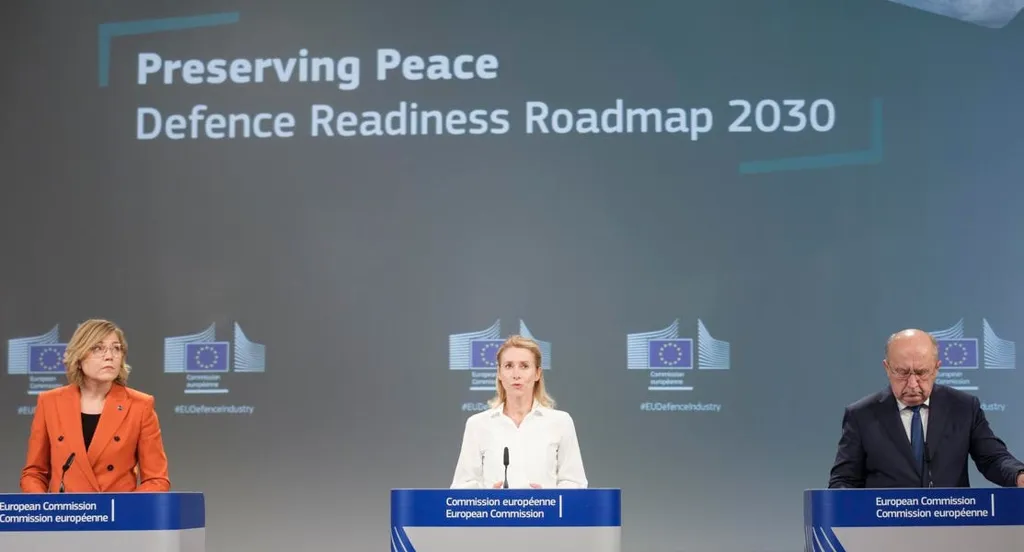
On December 15 and 16, members of the European Parliament gathered to debate new legislation to strengthen Europe's defense industry and national security. The measures discussed would see Europe "accelerate defence-related investments, simplify procurement, and enhance the European Defence Technological and Industrial Base." Major political groups in the European Parliament supported the proposed legislation on European defense, known as Readiness 2030. By the end of the session, members of the European Parliament decided to approve it.
The Readiness 2030 plan, previously known as ReArm Europe, seeks to rearm the European continent by "enabling the [defense] industry to produce quickly and efficiently." Additionally, European leaders want to facilitate the "rapid deployment of military troops and assets across" the European Union. The goal is to achieve these objectives by December 31, 2030. The Europeans have stated that achieving the objectives would bring "lasting peace and long-term stability for current and future generations." They also believe that Readiness 2030 would help boost technological innovation across the continent, support European competitiveness, and promote economic growth.
Readiness 2030 also unleashes the use of public funding in defense at the national level. The Europeans hope to mobilize up to €800 billion for defense investments. The plan also established the Security Action for Europe, which provides loans to EU member states to enhance their defense. But why was Readiness 2030 formed?
"This program was created to increase both the efficiency and scale of Europe's defense industry," Rachel Rizzo, a Senior Fellow in the Strategic Studies Programme at the Observer Research Foundation, told me in an interview. "Clearly, the unpredictability of the United States is a driving factor in this, but more so, Europe is waking up to the fact that it must provide for its own security, and it needs a strong defense industrial base in order to do so."
The Establishment Of Readiness 2030
Readiness 2030 began to take shape this year following comments by the Trump Administration on European security. At the start of 2025, senior U.S. officials said they would scale back their involvement in Europe, arguing that the Europeans needed to take greater responsibility for defense and security across the continent. This was made more apparent in the Trump Administration's National Security Strategy, published in December, which stated that the U.S. should prioritize "enabling Europe to stand on its own feet and operate as a group of aligned sovereign nations." This has forced European leaders to rethink their national security and defense, leading several European countries to increase their defense spending.
A change in U.S. defense policy with Europe, however, was not the only factor that drove the creation of Readiness 2030. Russia's full-scale invasion of Ukraine in February 2022 also forced European leaders to rethink collective security across the European continent. The war exposed several shortfalls within European military readiness, industrial capacity, and supply chains. As a result, several European countries bolstered their defense readiness by replenishing their weapons stockpiles, exploring new defense technologies and capabilities, and forming defense partnerships with Ukraine. This has strengthened Europe's defense industrial base, as countries are now coordinating defense production, aligning priorities, sharing technology and capabilities, and improving interoperability. Readiness 2030 aims to build on these defense and national security developments across Europe.
"Readiness 2030 was created to address these gaps [within European defense] by improving how European countries plan, finance, and deliver defense capabilities," Dr. Justina Budginaite-Froehly, a Nonresident Fellow with the Atlantic Council, told me in an interview. "Its goal is not simply to increase spending, but to spend more efficiently: aligning national investments with shared Europe-wide defense priorities, accelerating joint procurement strengthening the European defense industrial base, and ensuring forces are deployable interoperable sustainable in a high-intensity conflict. The program also seeks to reduce duplication among national militaries and to ensure that increased budgets translate into real Europe-wide capabilities rather than inefficient parallel systems at the national level. Ultimately, Readiness 2030 aims to ensure that Europe can take ownership of its own security thereby deterring aggression on the continent serving as a more capable credible partner within NATO."
Are The Europeans On Track For Readiness 2030?
The program's timeline, however, appears to be ambitious. Initially proposed in March and materialized in July, Europe's defense plan will require European states to allocate necessary funds for this initiative by December 31, 2030. But not all European countries have prioritized defense spending. For example, European countries such as Belgium, Italy, and Spain have been slow to increase their defense, citing budget constraints. Similarly, Austria, Ireland, Luxembourg, and Malta have had a history of low defense spending. This makes achieving the December 2030 target difficult for some European countries.
But if the Europeans were to work collectively on Readiness 2030, this could help address their concerns and shortcomings. Achieving the goals outlined in this European defense plan would boost cooperation across the continent.
"Readiness 2030 can act as a catalyst for strengthening Europe's defense posture by easing fiscal constraints incentivizing joint procurement expanding defense-eligible financing," Budginaite-Froehly told me. "By improving demand predictability boosting production capacity it should help reinforce the European defense industrial base close the most urgent capability gaps. At the same time a broader perspective is essential. Europe's ability to sustain a more ambitious defense agenda depends not only on military spending but also on economic resilience energy security technological capacity. Without aligning defense policy industrial strength technological innovation secure energy flows gains generated under Readiness 2030 risk being limited difficult sustain."
There are some indications that several European countries are making good progress in addressing their defense needs and in cooperating with other European countries across the continent. Should this progress continue, it would bode well for Europe's defense program.
"Some European countries like the Baltics Poland are spending above their targets," Rizzo told me. "Germany is also making significant progress especially as the Germans separated defense spending from their debt brake requirements which allows for the flexibility they need to spend more. I think overall it is on a good trajectory."
No one is certain whether European countries will be able to fulfill the commitments outlined in Readiness 2030. But for now, it appears that Europe is making good progress on this program. Should the Europeans succeed, this would help ease the burden on Europe's defense industry by increasing defense cooperation and collaboration, and promoting joint procurement thereby strengthening European supply chains. This, in turn, would result in a more secure European continent and ensure that Europe has the capabilities it needs for its defense readiness.
Defense experts will be anxious to see how Readiness 2030 unfolds. A successful transformation of Europe's defense industry could serve as a model for how security collectives, organizations, and countries around the world can strengthen their national security and defense thereby making the world a safer place.