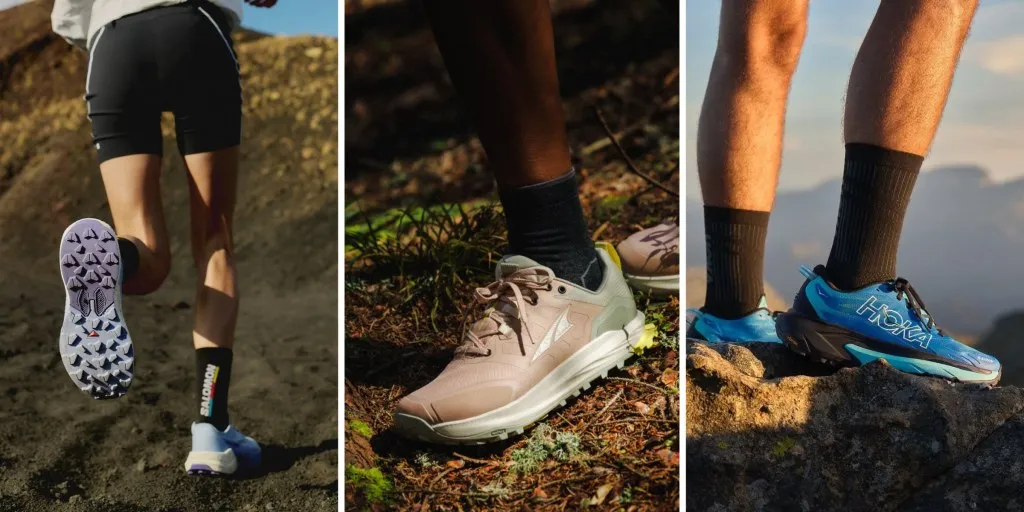
Trail running shoes provide support and traction crucial to taking on off-road terrain.
Running on secluded wooded paths and dirt roads can be safer and more comfortable in trail running shoes designed to tackle natural terrain, according to our experts. They offer great traction on uneven surfaces and protection against rocks and plants without the weight and bulk of hiking boots. I spoke with outdoor experts and a podiatrist to better understand trail running shoes and got their recommendations for top models.
My top picks come from a mix of expert and staff-recommended brands like Brooks, Salomon, Altra, and Hoka. Most of them have multiple width options, so you can find the best fit for you.
Dr. Miguel Cunha, a board-certified foot surgeon and the founder of Gotham Footcare, recommends these shoes if you are looking for a comfortable, versatile trail runner. The toe box is wide and accommodating, and the footbed is well padded and supportive of your arch, he says. The Mafate 5 also has some of the most substantial outsole and lugs on this list, with five millimeter lugs that provide excellent grip and traction when going uphill, says Cunha.
Cunha also recommends the Salomon Pulsar Trail series for a lightweight, responsive shoe that helps create a propulsive stride. This shoe is well-ventilated with a thick layer of fabric and padding in the upper. It has a single pull tab to tighten and loosen the laces -- no tying required. The rubber outsole has lugs measuring 3.5 millimeters, a nice middle ground for traction without slowing you down too much. And while I wouldn't call $140 affordable, these Salomon's do cost less than the other top picks on this list.
For speed and efficiency, Cunha recommends the Brooks Catamount. While I am a novice trail runner, Brook's Catamount shoes feel supportive and quick to me, with great traction from the triangle-shaped lugs while encouraging forward movement The lugs, combined with the shoe's light weight (the lightest on on our list) led to a fast, springy feel on dirt and forest trails.
While not advertised as weather-resistant, I've noticed the mesh upper does repel water slightly -- I wasn't afraid to take the Catamount out during damp or misty weather.
These water-resistant shoes are the favorite of Matthew Rowbotham, the program manager of geographic information systems at North Country Trail Association. He uses them for trail runs and single-day hikes. "These are great shoes for dealing with heavy dew on grass trails or slushy and snowy conditions," says Rowbotham.
Note that, unlike our other recommendations, these shoes have no heel drop, meaning a nearly flat footbed. Heel drop is the difference in cushioning between the heel of the shoe and the toe of the shoe: more drop means higher cushioning in the heel compared to the toe. A 0mm drop, like in this shoe, means level cushioning throughout. The shoes are also available in a hiking boot version.
I spoke with experts to better understand how trail running shoes differ from outdoor shoes and road running shoes. Combining their advice with NBC Select staff experience, I chose shoes using the following criteria:
Running shoe brands like Brooks, Hoka, Salomon, and Saucony make plenty of trail running shoes, giving you dozens of options to choose from. Our experts highlighted a few things to keep in mind as you shop.
To get the best fit possible, Cunha recommends going to a local running shoe store. Specialty stores typically have well-informed staff who are knowledgeable about trail running and trail running shoes.
He also recommends trying shoes on at the end of the day when your feet are most swollen. If they feel comfortable at the end of the day, they will most likely feel comfortable throughout a day of hiking, says Cunha.
Your environment can be a deciding factor in what trail running shoe to buy or whether to buy trail running shoes at all.
Trail running shoes tend to be very breathable, says Peikon. Anyone looking to run in mostly hot, dry weather may prefer trail running shoes over other types of outdoor shoes like hiking shoes and boots. On the other hand, if your natural climate is mostly freezing temperatures with lots of snow, you may want to opt for a hiking shoe or boot instead -- they tend to provide more warmth than trail running shoes.
For wet-weather conditions, a water-resistant shoe can help keep your feet dry, but only for so long. If you are doing a multi-day (or week) hike, Rowbotham recommends a non-weatherized, breathable shoe -- these will dry faster and more easily.
Trail running is very different from road running. It requires constant attention to the path in front of you and rapid adjustments to your gait and foot placement to navigate the terrain, says Cunha.
Beginners should start slow and small, says Peikon. Learn what you are comfortable with in terms of distance and terrain. Find trails (and trail groups) in your area to help learn what is and isn't in your comfort zone.
Speaking from experience: if you are an avid road runner, do not expect to go your typical road speed or distance on your first trail run.
At NBC Select, we work with experts who have specialized knowledge and authority based on relevant training and/or experience. We also take steps to ensure all expert advice and recommendations are made independently and without undisclosed financial conflicts of interest.