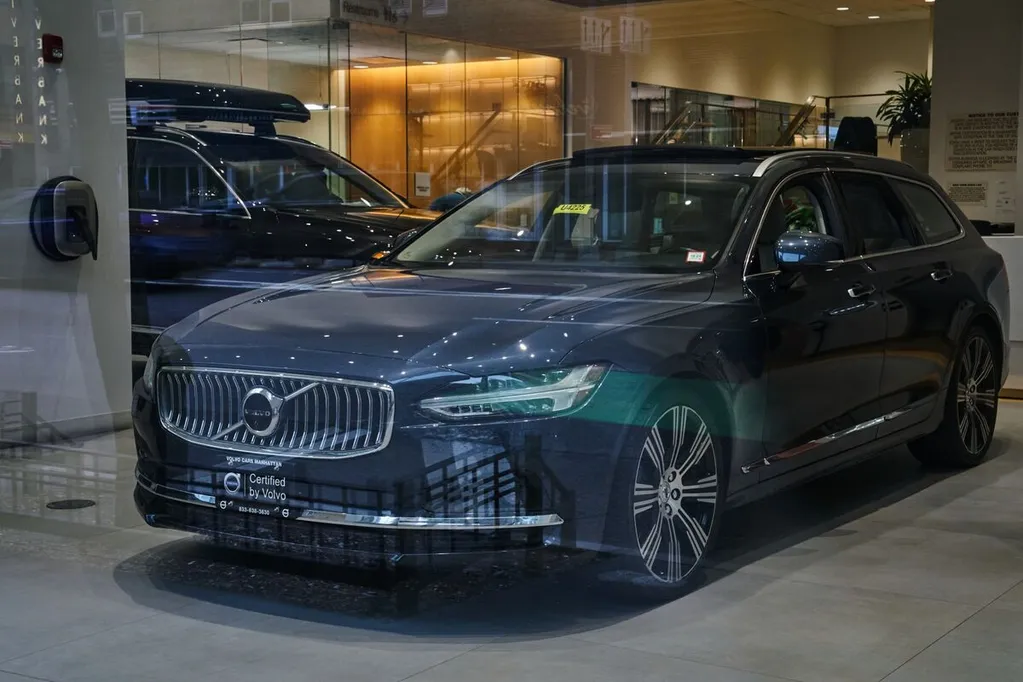
For motoring enthusiasts like me, station wagons are a near perfect package, combining spaciousness with sleek looks, exciting driving dynamics and decent fuel efficiency. Unfortunately my love of no-nonsense wagons (or estates as they're called in the UK, Kombis in Germany and "breaks" in France) is no longer widely shared.
A top Mercedes-Benz Group AG designer bemoaned this week that "nobody is buying them" anymore. Although the German automaker still offers several estates, it's hesitant about developing a wagon version of its mainstay electric C-Class. The average consumer has long since voted with their wallet: SUVs and crossovers rule the roads today. Yet I think the proliferation of boring "Chelsea tractors" could rekindle demand for something more unique.
Some people might think us dull, but station-wagon owners are really non-conformists -- like other maligned enthusiasts who enjoy vinyl records or craft beer. And with Chinese carmakers starting to embrace the form, driving one doesn't require scrimping on technology.
I fondly recall being ferried around with my siblings in a three-row Peugeot 505 in the 1980s. While the wagon's demise is often attributed to people not wanting to drive the same thing as mum and dad, it kept its appeal for me.
Now a parent myself, I've done plenty of miles on the Autobahn in practical estates such as the Skoda Octavia and Audi A4. Lately the gorgeously sculpted electric Audi A6 Avant e-tron is causing me to rethink my commitment to a two-wheeled commute. I keep spotting them in my Berlin neighborhood. Its excellent aerodynamics would guarantee plenty of battery range for my summer trips to the lake or Baltic Sea.
I'm fortunate to live in a country where families, dog owners and corporate road warriors haven't lost their affection for wagons. Although they've lost a bit of market share here over the past decade, Germany remains the biggest market for these vehicles by far. Around 15% of new cars here are estates, according to data shared with me by automotive research firm Jato Dynamics.
Outside Europe, which accounts for more than two-thirds of the world's wagon sales, it's a different story. In the US a once beloved body style has become an endangered species. The Subaru Outback -- for a long time America's most popular wagon -- now looks much more like an SUV. Volvo Car AB, a brand once synonymous with practical wagons, is stopping offering these models in the US because customers there "overwhelmingly prefer SUVs." Estates accounted for less than 5% of Volvo's worldwide vehicle sales in 2025.
The writing has been on the wall for a while in the US. The 1970s oil shock triggered a shift away from thirsty wood-paneled cruisers. The rise of minivans then made these cars feel even more old hat. Their fate was sealed by regulations granting pickup trucks and SUVs leeway to consume more fuel, whereas sedans and wagons were subject to more stringent targets. As high-riding SUVs took over the roads, their manufacturers made more money while their occupants felt safer, though regrettably nobody consulted pedestrians.
I'm skeptical that US President Donald Trump's gutting of these fuel economy standards will give wagons a second wind, as some in the administration appear to think.
For now, the wagons Americans seem most passionate about are high-performance beasts like the $125,000 BMW M5 Touring, a plug-in hybrid with a twin-turbo V-8 engine and 717 horsepower. Following stronger than anticipated demand, BMW is considering adding more of these sorts of vehicle to its US lineup. Yet the M5's price tag means cars like this will remain a niche proposition, however thrilling.
Given the popularity of SUVs, one might have expected China's automakers to skip wagons as they look to grab market share in Europe. I'm happy to see they haven't. Earlier this month BYD Co.'s premium brand Denza unveiled the €115,000 ($135,000) electric Z9GT "shooting brake" at a glitzy event in Paris. There's also a slightly cheaper plug-in hybrid version.
The Z9GT can slide sideways into tight parking spaces, which is handy for a vehicle that's 5.2 meters (17 feet) long. Using one of BYD's flash chargers, the battery can recover from 10% power to 70% in five minutes.
Denza has recruited actor Daniel Craig to woo customers who might otherwise fancy a €103,500 Porsche Taycan Sport Turismo—yet I'm skeptical whether an unfamiliar Chinese brand can succeed with such nosebleed prices.
Happily, China's wagon offerings aren't just targeted at the very wealthy. Zeekr’s sleek 7GT electric wagon starts at a more reasonable €48,000 while BYD’s “super hybrid” Seal 6 DM-i Touring can be yours for €27,000 in Germany. The price includes government purchase incentives and BYD’s discounts. Unlike EVs, Chinese hybrids haven’t been slapped with additional tariffs by Brussels.
This BYD wagon promises a combined gasoline and battery range of 839 miles, appealing from a fuel bill perspective. Electrified wagons—whether EV or plug-in hybrid—have lower frontal areas that can provide superior aerodynamics than SUVs. After a slow start, European and other Asian automakers have launched their own electric estates, such as the Volkswagen ID.7 Tourer and BMW i5 Touring.
To win over consumers who might otherwise pick a crossover, manufacturers might want to consider adapting wagon branding or designs. Kia calls its €30,000 K4 petrol estate a “Sportswagon,” which sounds a whole lot more fun.
The Dacia Striker, the latest offering from Renault SA's budget brand, offers a bit more ground clearance than a typical wagon and costs less than €25,000. Unfortunately it won't be available in the US where the average new vehicle now costs more than $49,000.
With so few wagons to choose from, reversing their decline looks close to impossible in America, though I hope BMW and others try. In Europe I'm more confident that the shift to electric and Chinese ingenuity will help preserve this do-it-all champion of motoring. Resistance to SUV hegemony will, though, need wagon fans like me to make a commitment. It's time I test drove that Audi.