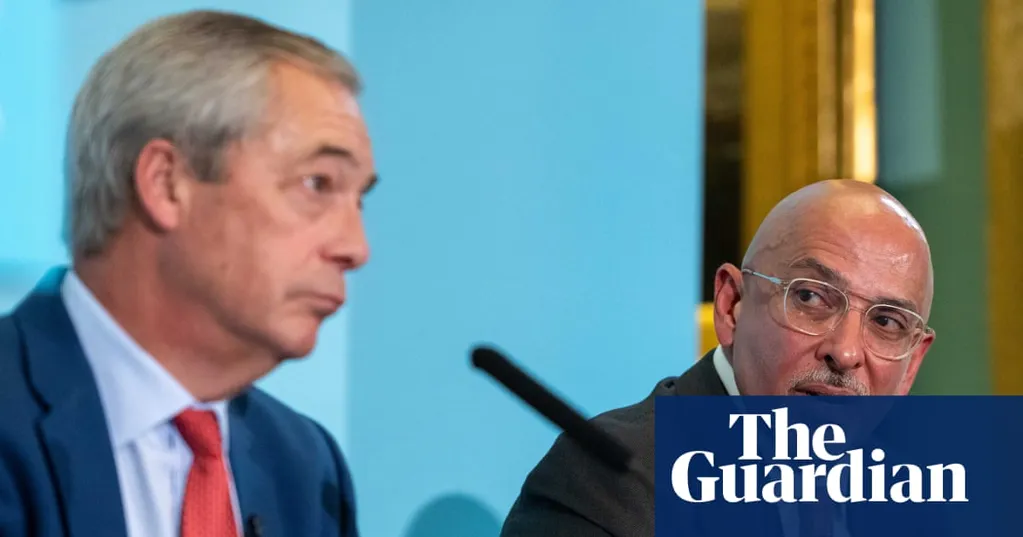
The views of the former Tory vaccines minister clash with those of high-profile members and the party faithful.
There was no shortage of ammunition for reporters seeking to pepper Nadhim Zahawi with questions when the former Conservative chancellor was unveiled as Reform's newest recruit on Monday.
But one persistent line of questioning seemed to draw a flash of real anger from the defector: did he reject the views of a doctor who was permitted by Reform to use the main stage at its annual conference to claim that the Covid vaccines, which Zahawi had himself rolled out as vaccines minister during the pandemic, were responsible for King Charles and the Princess of Wales' cancers?
Would he seek to change Reform's medical policies if they had been influenced, as the party's chair previously admitted, by the same vaccine-sceptic doctor?
"That was a really stupid question and it doesn't even deserve an answer," Zahawi told a Daily Telegraph journalist, repeating the line when another reporter asked it again.
Yet, away from the plush Westminster venue which Reform had chosen for Zahawi's unveiling, his recruitment has caused disquiet among Reform UK members for whom hostility to the Covid vaccine programme has become an article of faith.
Party Facebook groups lit up with a small but significant number of members saying they would be resigning their membership.
Combined with this, a strand of Islamophobia in the party's membership again reared its head. Fresh from their anger at the unveiling of Laila Cunningham as Reform's London mayoral candidate, Zahawi's recruitment was cast by some of the same vaccine sceptics as another example of a "Muslim takeover" of Nigel Farage's party.
Its head of policy, Zia Yusuf, has long been a target of racist ire from some Reform members and critics of the party on the right.
"Another ex-Tory and another Muslim and another that pushed the vaccine, sorry to say but Reform are losing my support rapidly," posted one member on a private Reform Facebook group, in response to Zahawi's defection.
The comment, on a group with 135,000 members including key figures in the party, was just one of many in a similar vein across it and other online spaces used by Reform members.
"Doesn't fill me with confidence, the vaccine deployment guy, a man who advocated for an amnesty on illegal migrants," added another.
Another added: "yes gonna be loads of us thinking same Especially us with badly disabled son caused by jib [sic] pushed by him."
While Farage initially provided qualified support for vaccines during the pandemic, he later shifted to a more sceptical view, and then towards hostility to the World Health Organization.
He was accused of "flirting with vaccine conspiracy" after falsely saying earlier this month that people were being told they needed to keep having Covid vaccinations every six months.
Other senior figures, such as Richard Tice, have long raised doubts about the safety and necessity of the vaccine. Last month, it emerged that a third of Reform's council leaders across the country have expressed vaccine-sceptic views, openly questioning public health measures that keep millions safe.
But such views in the party reached a nadir when a controversial doctor was given top billing at the Reform party conference and used his speech to claim the Covid vaccine caused cancer in members of the royal family.
The speech was delivered by Aseem Malhotra, a British cardiologist who was appointed as a senior adviser to the US health secretary and vaccine sceptic Robert F Kennedy, and who was described by Reform's chair, David Bull, as someone who had helped write the party's health policy.
The issue may continue to be the source of rifts in the party. Among 20 councillors who defected to the party last week - mainly from the Tories - was Dr Chandra Kanneganti, a former chair of the British International Doctors Association who has held policy leads at the British Medical Association and other respected health bodies.
While he cited the cost of living, immigration and pressure on public services as the reasons for his defection, Kanneganti said he would also be seeking to share his experience when it came to developing Reform's health policies and that he disagreed with the views expressed by figures such as Malhotra.
"I have a national expertise on this and I will hopefully be involved in the discussions," said Kanneganti, who was at the forefront of urging the public to get vaccinated and has spoken about how the pandemic exposed ethnic inequalities.
"I have only just joined but I will hopefully be able to express my views and guide a policy that is actually evidence based," he told the Guardian. "It's about following the evidence, while at the same time not forcing people to accept something they disagree with."
"Social media has a lot of false information on it but all the scientific evidence shows that getting vaccinated is much, much safer than not getting vaccinated; it's about getting that point across."
As for Zahawi, he refused several times last week to say if he had been given any assurances on Reform's position on vaccines before joining, but he did say: "I would not be sitting here, nor would Nigel be sitting next to me, if we didn't agree we did the right thing to get the vaccine programme to the nation."