SALT LAKE CITY (KSL) -- It's been just over six months since the assassination of conservative activist Charlie Kirk on the campus of Utah Valley University in Orem, Utah.
At the time, Utah Gov. Spencer Cox urged Americans to turn away from political violence.
"This is our moment," he said. "Do we escalate, or do we find an off-ramp? And again, it's a choice. It's a choice, and every one of us gets to make that choice."
Now, that phrase will adorn the governor's forthcoming book, "Off Ramp: How to Be a Peacemaker in an Age of Contempt." Cox confirmed he was writing a book on polarization late last year, and Penguin Press announced Thursday that the book will be released on Sept. 8, just days before the anniversary of Kirk's death.
A press release describes the book as "a practical guide to depolarization that teaches us how to disagree better at the dinner table, on social media and in American politics."
But six months since he called for an "off-ramp," has anything changed in the trend toward increasing bitterness in politics?
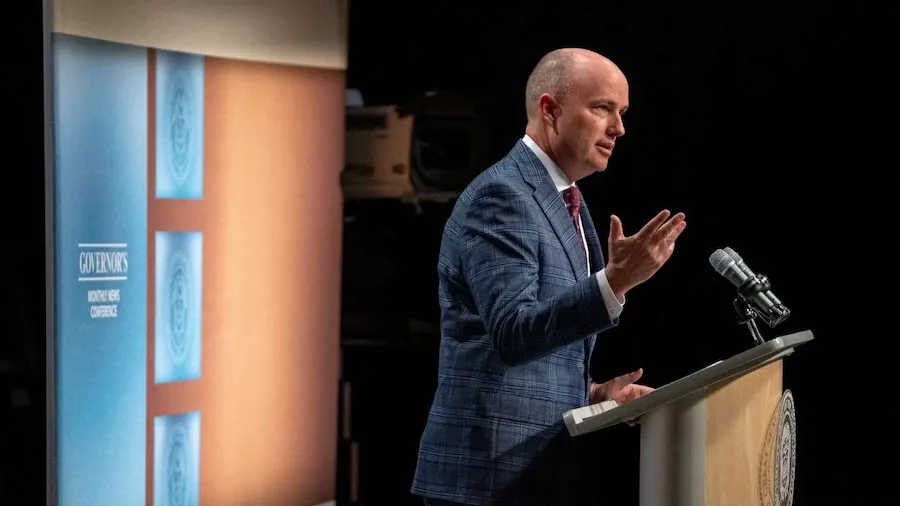
"I've been surprisingly hopeful about what's changing in our country," Cox said when asked the question during his monthly PBS Utah news conference on Thursday. "I feel like that pendulum is starting to swing back a little bit. It may be naive of me to say that we're a little less polarized now than we were six months ago, but if we're not, I do feel like it's waning -- that people are anxious, and more people want to do better."
The governor said more people are taking an interest in volunteering and community, which he said stems from people who are "exhausted" with the current climate and "desperate for normal right now."
"I think it's especially timely that we take a step back and understand that this constitutional order is the answer to our problems," Cox said. "It's the means by which we put people who are very different together, force them to come up with solutions together. I think we do that pretty well here in Utah, and I think our country could learn a few lessons."
Cox said he has been getting up early and staying up late to work on the book. And while potential presidential candidates often publish books in the run-up to presidential elections, the governor has said that's not in his plans.
"Not running for president. Have no interest in running for president," he said in November.
The governor also addressed a high-profile election bill being pushed by Utah Sen. Mike Lee, after Utah Lt. Gov. Deidre Henderson expressed concerns with the bill online. Known as the Safeguard American Voter Eligibility Act, or SAVE America Act, the bill adds photo ID and proof of citizenship requirements for voters across the country.
Proposed changes to the bill would also restrict mail-in voting, even in states like Utah where it is the norm.
Henderson said the bill would be "impossible to implement, on top of all its other problems," on social media Wednesday.
She noted that Utah law already requires voter ID and proof of citizenship to vote, and said the act would violate the constitutional right to a secret ballot because it would require voters to include a copy of their ID with ballots returned by mail.
Asked about the bill and the back-and-forth between Henderson and Lee, Cox thanked the senator for working to prevent non-U.S. citizens from registering to vote.
"The other side of this is we also have to make sure that people who are citizens aren't prohibited from voting," he said. "I look at the right to vote like I think of the Second Amendment, and I'm very cautious about anything that infringes our right to do that."
He said as senators debate the proposal, he is confident that concerns over implementing the bill will be worked out and that it could get "broad support."
"Running elections is very hard. The lieutenant governor has the hardest job, and so she's entitled to be frustrated when there's a lack of communication," he said. "We should have more communication with our federal delegation. Sometimes that's on us. ... Sometimes that's on them."
"I think we're all supportive, including the lieutenant governor, of the goals of the SAVE Act," he added. "It's just on how it's practically implemented so we can do it and keep people safe and make sure that we're not preventing American citizens from voting and taking away their constitutional rights."