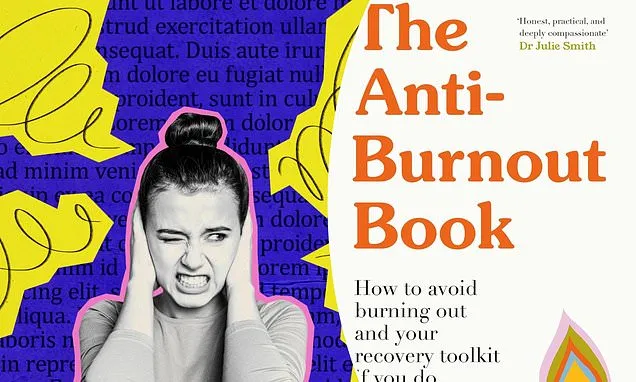
The clinical psychologist Dr Emma Hepburn was working at a health organisation, tending to its employees' mental wellbeing, when she noticed that she was burned out.
The tipping point, she writes in her new book, was when she was spending a rare weekend away with friends.
Feeling odd, she retreated to a room to be alone - and started shaking violently, eventually collapsing, exhausted, into bed.
Hepburn finally began connecting the dots between the symptoms she'd been collecting for months.
There was the hair loss. The eye twitch. The 'shutter' that seemed to come down in the middle of the day, after which her speech would become slow and slurred. A trip to the doctor confirmed it - she was burned out, having worked too hard, for too long, with too little rest.
'Burnout' was first used as a clinical term in the 1970s. Many now say they are experiencing it - 77 per cent of respondents in a Deloitte survey said they'd had it in their job; and a 2022 report showed that 66 per cent of US working parents met the criteria for it. The World Health Organisation (WHO) argues that burnout has to be related to work. But Hepburn prefers a broader understanding of the term, which can apply to those struggling with, say, unpaid caring commitments.
During her own period of burnout, she writes, she mainly felt like a zombie. Her sense of self-worth was shot; she couldn't derive any pleasure from things she used to enjoy - even simple actions like making her children dinner or replying to emails felt like wading through sludge.
The book is peppered with questionnaires to help readers discern if they might be burned out. There are also illustrations, which could prove helpful to those feeling too zonked to actually read.
We each, Hepburn shows with a doodle, have a 'capacity cup', which can be made to overflow by even the smallest of commitments: a favour for someone, an extra work project.
The Anti-Burnout Book is out now
Hepburn also explores the idea that stress is like cycling up and down a hill. When we apply ourselves to something - spend night after night slaving at our laptops, say - we are effectively cycling uphill.
But those periods must be followed with a downhill stretch, in which we rest. Hepburn isn't against stress altogether. But states of high adrenaline are not sustainable for the body or mind.
Many of us edge towards burnout, she argues, because we are chasing 'the mythical THERE'. Once we earn this promotion, we tell ourselves, or achieve that pay rise, we will finally be content.
Bitter experience has taught her that every time you reach that mythical land, a new 'THERE' twinkles on the horizon.
Confronting that fact is key to avoiding burnout, as are simpler acts: taking breaks, eating well, maintaining a sleep routine, trying to change your relationship to work itself, so it isn't the primary generator of meaning in your life.