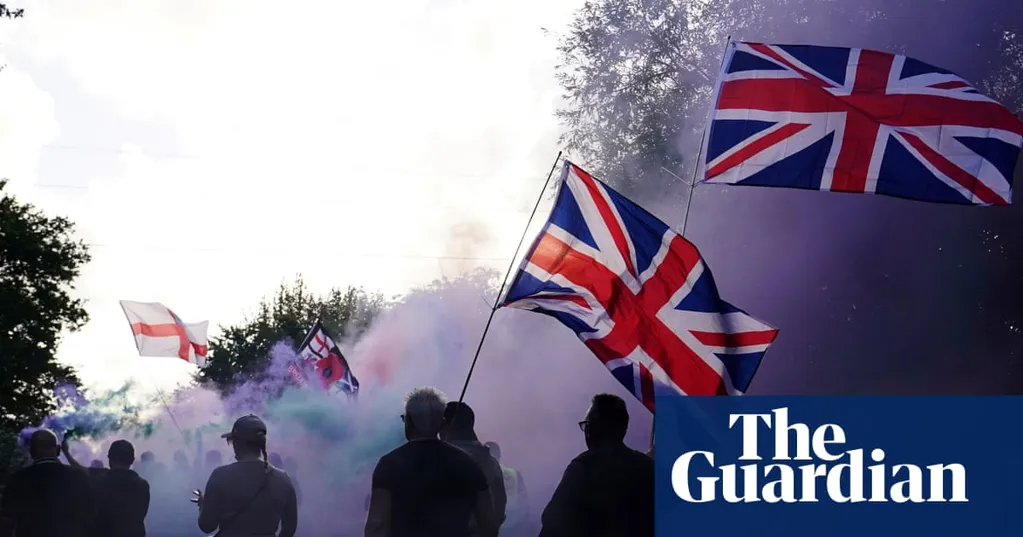
What does it mean to be British? That question is increasingly at the heart of our national political debate. And it has become a more urgent one this week as the Conservatives and Reform UK call for the British-Egyptian activist Alaa Abd el-Fattah to be stripped of his UK citizenship over racist and offensive tweets he published 10 to 15 years ago.
Abd el-Fattah's social media activity was thrust into the spotlight after he was finally allowed to arrive in the UK last week following a decade spent as a political prisoner in Egypt. The tweets unearthed were vile: they included calls to "kill all Zionists" and to burn down Downing Street during the 2011 riots. Abd el-Fattah has apologised for those remarks.
The row is awkward for Labour and the Conservatives given that successive British governments have campaigned for his release, which became a consular issue in 2021 when he was granted UK citizenship. It is difficult to imagine, however, politicians such as Nigel Farage or Chris Philp, the shadow home secretary, calling for Abd el-Fattah to lose his British passport were he not a dual national from a minority ethnic background.
Downing Street stood firm on Monday on the grounds that he had a right to consular support like any other British citizen. Indeed, many Brits who find themselves unfairly detained abroad have dual nationality or foreign heritage.
Arguably the two most high-profile cases are those of Nazanin Zaghari-Ratcliffe, the British-Iranian mother who was allowed to return to the UK in 2022 after six years of detention in Tehran, and Jimmy Lai, the 78-year-old Hong Kong media tycoon who faces life in prison after being convicted by Chinese authorities of colluding with foreign forces.
Their cases demonstrate the multitude of routes there are to becoming British. Zaghari-Ratcliffe was naturalised after living in the UK for years and marrying a British man, Richard Ratcliffe. Lai gained British citizenship in 1996, the last year that Hong Kong was under British rule before the handover to China. Abd el-Fattah was entitled to citizenship under the British Nationality Act 1981 because his mother is a British national, having been born in the UK while her mother was studying here.
For the majority of Brits there is nothing wrong or even remarkable about this, and becoming British is something that is rooted in shared values such as obeying the law, raising children to be kind, and working hard.
A new report by the Institute for Public Policy Research indicates that while that remains the case, a rising proportion of voters now believe Britishness is something you are born with—a product of your ethnicity and ancestry, not something you can obtain. According to the IPPR's findings, 36% of people now think you must be born British to be truly British, up from 19% in 2023.
The Reform UK and Tory approaches to Abd el-Fattah's case demonstrate how in mainstream politics the Overton window has shifted on questions of national identity and cohesion. Both rightwing parties have come under fire during the past year for apparently endorsing policies that would result in the mass deportation of people living legally in the UK.
Keir Starmer has shown a desire to put these questions at the heart of his government and his political campaigning. In his speech to the Labour party conference, he cast the next election as a battle for the soul of the country between his own progressive patriotism and Farage's brand of incendiary nationalist politics.
But his own ministers and MPs privately argue that Starmer has been too slow or too sheepish in making those arguments during moments of crises—such as Tommy Robinson's far-right march through Westminster—and that he must go further.
Or as IPPR puts it, "animating an alternative vision of nation cannot be outsourced to a few speeches or policies". It requires the prime minister to tell a story about what Britain is and what he wants it to be.