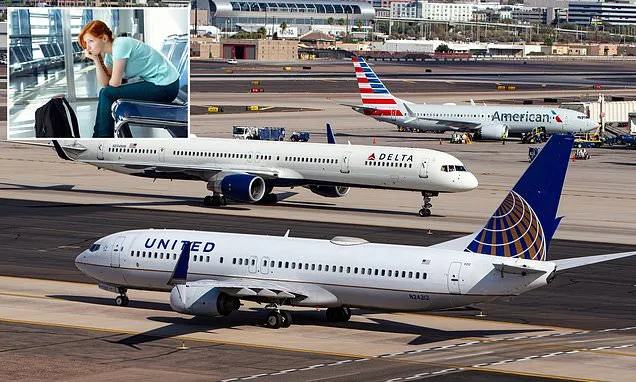
Airline bosses are privately cheering a surge in bookings as the Iran conflict pushes up ticket prices - even as they warn travelers will soon be paying even more.
'The company is focused on making our airline more profitable rather than keeping airline costs low,' said Frontier's executive CEO Jimmy Dempsey at the JP Morgan Industrials Conference in Washington, DC, on Tuesday morning.
He also said consumers can expect to pay more as oil prices continue to stay high, but that they're playing a wait-and-see game.
Frontier joined other major US airlines such as American Airlines, JetBlue, Delta, Alaska Air Group and United at the conference on Tuesday to update investors on fuel prices.
Despite rising airline prices, Alaska Air Group CEO Ben Minicucci said the company saw a spike in demand from customers trying to get ahead of prices.
'When prices did spike, we saw a spike in demand. I believe customers think, 'oh we're going on vacation anyway, spring break is coming.'
Frontier Group Holdings cut its first-quarter outlook, citing higher fuel costs and winter storm disruptions. The company now expects fuel prices around $3 per gallon, adding as much as $50million in incremental costs.
Frontier projected a narrower quarterly loss than previously expected and said capacity would decline slightly.
Airlines across the U.S. are gloating about booming bookings and revenues while cautioning that the Iran conflict will push prices even higher.
Frontier's executive CEO Jimmy Dempsey said consumers can expect to pay more as oil prices continue to stay high, but that they're playing a wait-and-see game.
Despite the challenges, the airline noted strong travel demand and improving fare trends heading into the spring booking season.
The company acknowledged that reduced flight frequency may have pushed some customers away, but said lower frequency is a core part of its low-cost business model.
Shares of Delta Air Lines jumped about 5 percent in premarket trading on Tuesday, while American Airlines climbed 4.3 percent.
Delta said it is prioritizing capacity flexibility to help manage the impact of elevated fuel prices. The airline also raised its first-quarter revenue outlook, citing stronger-than-expected consumer and corporate demand heading into March.
Revenue for the quarter is now projected between $15billion and $15.3billion - down from the prior quarter but up 6.8 percent to 9 percent year over year.
Delta added that both domestic and international unit revenue are growing in the mid-single digits, though winter storms have weighed on capacity.
The airline expects non-fuel unit costs to rise in the mid-single digits and maintains its adjusted earnings outlook of 50 cents to 90 cents per share for the quarter.
American Airlines struck a more cautious tone. While it forecast a more than 10 percent increase in first-quarter revenue driven by strong demand and commercial initiatives, it warned that surging fuel costs are pressuring earnings.
The carrier now expects to report a loss toward the lower end of its prior guidance range of 10 cents to 50 cents per share.
JetBlue Airways said travel demand has come in stronger than expected but flagged rising fuel prices and operational disruptions as key cost pressures.
The airline raised its unit revenue outlook but now expects higher overall expenses, with fuel prices projected to average just over $3 per gallon - well above earlier estimates.
Flights across the US and overseas are suddenly getting far more expensive as the war with Iran drives up oil prices and forces airlines to raise fares.
Travelers booking spring and summer trips are already seeing sharp increases in ticket prices, with some flights more than doubling in cost in just a week.
Airline executives say the spike is being driven by surging jet fuel prices after the US and Israel launched attacks on Iran late last month. Jet fuel is the second biggest expense for airlines after labor, and when costs jump quickly, carriers often respond by raising fares.
New analysis from Deutsche Bank found that among nine major US airlines, the steepest increase was at budget carrier Spirit Airlines.
The lowest listed one-way domestic fare booked about three weeks in advance more than doubled in a week, jumping to $193.
Prices have also surged across other airlines, including United Airlines and Delta Air Lines, where fares on comparable flights increased between 15 percent and 57 percent.
Airlines around the world have already started passing on the higher costs.
Cathay Pacific said it will roughly double fuel surcharges on some tickets starting March 18.
Australia's Qantas has begun raising fares to cover higher operating costs, while Scandinavian Airlines said the 'unusually rapid and substantial increase' in fuel prices has forced it to lift ticket prices.
Air New Zealand has already made 'initial fare adjustments' and warned further increases could follow if fuel prices remain elevated.
United, Delta and Southwest Airlines all declined to comment to the Daily Mail about whether they planned to follow in Cathay's footsteps.
But slips by company executives suggest customers are likely to see ticket prices go up even more, with United chief executive Scott Kirby saying at a Harvard event last week that higher fares were 'likely' on the way because of the surge in fuel prices.
Despite this, Kirby was steadfast in his belief that travel demand was still strong. And two airline executives told CNBC under anonymity that if demand stays high, it will give airlines more pricing power.