You're reading The Readout newsletter.
You're reading The Readout newsletter.
You're reading The Readout newsletter.
Subscribe below to wrap up every weekday with essential insight on the stories that matter to the UK.
Subscribe below to wrap up every weekday with essential insight on the stories that matter to the UK.
Subscribe below to wrap up every weekday with essential insight on the stories that matter to the UK.
Another day, another Trump deadline and another verbal escalation. "A whole civilization will die tonight," the US president posted on social media, leaving most reasonable people hoping that his ever more eschatological rhetoric is in inverse relation to his actual plans.
The threat of mass destruction raises further questions about the legality of US actions. As Bloomberg's Alex Wickham notes, it can be a war crime to target civilian infrastructure because doing so can punish noncombatants.
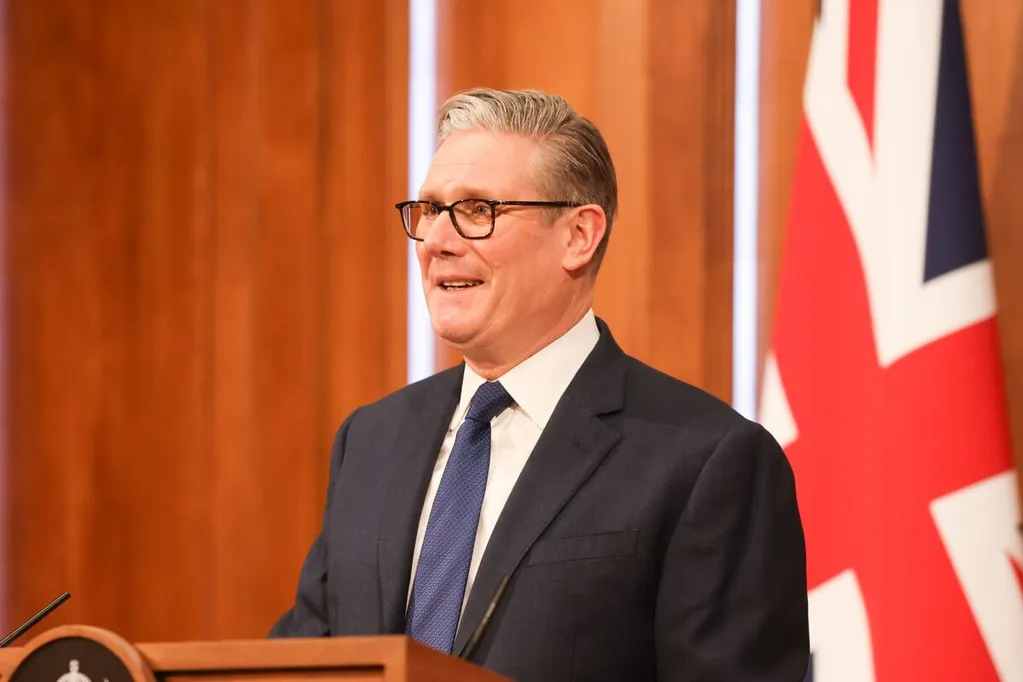
This afternoon the UK government wasted no time in making clear its bases would not be used for whatever force follows the passing of this evening's deadline. The US can only use RAF Fairford and Diego Garcia for "defensive missions."
Ahead of the deadline, the US today attacked military targets on Iran's Kharg Island - the departure point for 90% of the country's crude shipments.
Despite this grim menu, for Bloomberg Opinion's Marc Champion, "this conflict remains salvageable": He quotes the UK-based scholar of war Lawrence Freedman as writing: "This is not a territorial war, making it more susceptible to resolution. Iran now has leverage over international shipping that can not be ignored, but it is also isolated and in a precarious economic situation, meaning that the most likely path out of this war is an internationally led negotiation over what would amount to a bribe to reopen the strait."
Last Thursday, Starmer's government convened 40 nations to discuss ways to reopen the waterway. While the meeting considered what pressure can be jointly applied to Iran, including potential sanctions, it also sent a message to the US that it cannot walk away from the conflict without finding a solution for the strait. This week, military planners from the same coalition of countries will meet to discuss how their naval assets could be deployed to help police and de-mine the strait after the fighting has ended. There's little appetite to reopen the waterway by force because few in the coalition see a way to resolve the crisis without Iran's agreement.
In this context, this piece at the weekend by Ellen Milligan and Irina Anghel felt like a sensible development - the British military is eyeing the UK's high youth unemployment as an opportunity: "A link is emerging between youth joblessness - now at the highest rate in over a decade - and applications being made to the forces". New data shows applications to both the Royal Navy and Air Force at their highest in more than five years.
One of our themes in the Readout is the sheer number of crises Britain is having to deal with simultaneously. Finding ways to tackle problems together feels at least efficient... and maybe even smart.
What just happened
The stories you need to know about this evening
Markets Today
It has been a strange day in global markets. Jittery probably doesn't cover it adequately. Donald Trump's Iran deadline has overshadowed the whole day, keeping traders nervous and creating fluctuations whenever a scrap of news bubbles up.
There's frustration and exhaustion everywhere. Signs of true de-escalation are scant, and there's no certainty about the path forward. Traders are having to prepare for various possible outcomes at the same time. That's no easy task.
Against that messy backdrop, the UK's stock market has held firm. That's been largely thanks to the influence of Shell and BP, the oil majors which have benefited from crude prices jumping. BP, for the first time since 2018, is more valuable than Unilever.
A mix of defensive stocks and the oil majors has propped up the FTSE 100, but if there's a further escalation following today's deadline, then no corner of the market will be spared from a new round of repricing in oil, central bank bets, and inflation expectations.
The big number
£53,000
The average amount of debt for a student graduating in 2024. Today the UK government moved to cap the interest on repayments.
The Big Take
One key story, every weekday
Underwater Mortgages Force China's Banks to Get More Creative
Lenders are trying to prevent defaults and foreclosures that risk deepening the country's housing crisis.
More from Bloomberg
- Markets Daily for what's moving in stocks, bonds, FX and commodities
- Odd Lots for exploring the most interesting topics in finance, markets and economics
- Money Distilled for John Stepek's daily newsletter on what market moves mean for your money
- The London Rush for getting briefed ahead of your morning calls
You have exclusive access to other subscriber-only newsletters. Explore all newsletters here to get most out of your Bloomberg subscription.
Allegra Stratton worked for former Prime Minister Rishi Sunak when he was chancellor and runs an environmental consultancy, Zeroism.
Please send thoughts, tips and feedback to readout@bloomberg.net. You can follow Bloomberg UK on X.