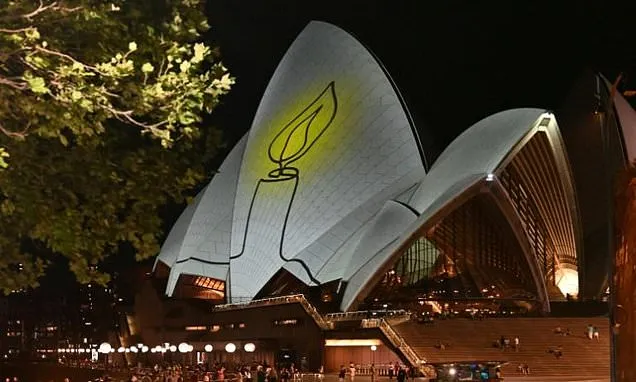
Australia will hold a national day of mourning on January 22 for the 15 people killed in a mass shooting at Bondi Beach, Prime Minister Anthony Albanese said on Tuesday.
"This will have a theme of: 'light will win'," Albanese told reporters, with flags to fly at half mast across Australia.
Sajid Akram and his son Naveed allegedly targeted a Jewish Hannukah celebration at the famous beach on December 14, the nation's worst mass shooting for 30 years.
The attack has sparked national soul-searching about antisemitism, anger over the failure to shield Jewish Australians from harm, and promises to stiffen gun laws.
Albanese said the "gathering of unity and remembrance" had been decided in consultation with Jewish community leaders.
"This gathering creates space to honour those who were lost, acknowledge those who were injured, and stand with their families and loved ones," said the Chabad of Bondi, which organised the December 14 festival.
"It is a moment to pause together, express care and solidarity, and reaffirm the values of compassion and faith that carry us forward."
Albanese last week bowed to public pressure to hold a high-powered commission inquiry into the attack.
The federal royal commission -- the highest level of government inquiry -- will probe everything from intelligence failures to the prevalence of antisemitism in Australia.
Victims' families penned an open letter in December urging Albanese to hold a royal commission.
"We demand answers and solutions," they wrote.
"We need to know why clear warning signs were ignored, how antisemitic hatred and Islamic extremism were allowed to dangerously grow unchecked, and what changes must be made to protect all Australians going forward."
Gunman Sajid Akram, 50, was shot and killed by police during the assault.
An Indian national, he entered Australia on a visa in 1998.
His 24-year-old son Naveed, an Australian-born citizen who remains in prison, has been charged with terrorism and 15 murders.
Police and intelligence agencies are facing difficult questions about whether they could have acted earlier.
Naveed Akram was flagged by Australia's intelligence agency in 2019 but he slipped off the radar after it decided that he posed no imminent threat.
Australia is cracking down on gun ownership and hate speech in the wake of the attack.
The government in December announced a sweeping buyback scheme to "get guns off our streets".
It is the largest gun buyback since 1996, when Australia tightened firearms laws in the wake of a mass shooting that killed 35 people at Port Arthur.