Conflict creates opportunities for looters to plunder archaeological sites for profit. Iran is a prime target, home to one of the world's richest archaeological landscapes, where portable and valuable artifacts are plentiful. Antiquities traffickers can quickly convert looted objects into cash, while sanctions evaders can move value outside regulated markets.
To safeguard U.S. national and economic security and protect Iran's ancient cultural heritage for the world, the White House should quickly shut down financial and trade channels that antiquities traffickers could exploit before looters move in.
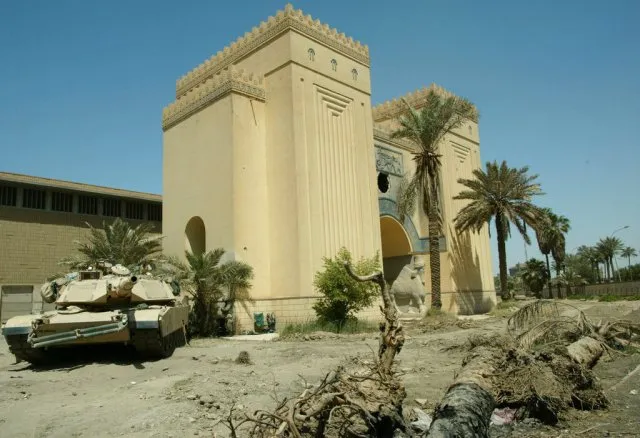
Recent history shows how quickly an archaeological crisis can escalate. After the fall of Baghdad in 2003, the world witnessed the pillaging of the Iraq National Museum and even greater devastation of Iraq's archaeological sites. Thousands of looters' pits peppered the terrain, and illegally excavated artifacts flowed through criminal supply chains before appearing for sale on international markets.
America already enforces one of the toughest sanctions regimes against Iran, targeting members of the Iranian government and the Islamic Revolutionary Guard Corps. These sanctions aim to block the regime's access to revenue and prevent actors from moving funds through international markets. Now is the time to sharpen the sanctions architecture by explicitly naming Iranian archaeological material.
In sanctions environments, portable assets such as antiquities can move through markets and be converted into cash outside regulated financial channels. That is why the president should amend the Iran sanctions program under the International Emergency Economic Powers Act (IEEPA) to declare that the illicit antiquities trade presents an "unusual and extraordinary threat ... to the national security, foreign policy, or economy of the United States."
U.S. rules implicitly cover these artifacts. Yet the sanctions regulations do not explicitly mention them. Under the IEEPA and the Iranian Transactions and Sanctions Regulations, nearly all commercial transactions involving Iranian goods are prohibited. Sanctions enforcement works best, however, when prohibited categories are identified plainly, leaving no doubt among criminals, law enforcement officials or market participants. Clear designation signals that trafficking Iranian antiquities carries serious legal consequences.
Treasury and Customs authorities will benefit from enforcement clarity, while criminals will face greater deterrence when this category of goods is specifically identified in sanctions rules. Dealers, auction houses and collectors, who are sensitive to reputational risk, will exercise greater vigilance in the antiquities marketplace.
Iran's archaeological heritage reaches back to ancient Persia, ruled by kings like Cyrus the Great. Iconic sites like Persepolis and Pasargadae stand as enduring monuments to one of humanity's great civilizations. Beneath Iran's soil lie countless artifacts that may illuminate the development of early societies and trade networks, but only if archaeologists reach them first. Under the cover of military conflict, archaeological sites face immediate danger from plunderers. Iran has experienced such losses before. Artifacts from the Kalmakareh Cave hoard and the Iron Age site of Qalaichi surfaced on international markets after large-scale looting during earlier periods of instability.
A recent case illustrates how trafficking networks operate. In February, U.S. Customs at the Port of Philadelphia intercepted an illegal shipment containing 36 copper-alloy swords and 50 arrowheads arriving from the UAE. An archaeologist determined they originated from Iran's Talish Mountains and date to the Bronze Age. The shipment might have evaded detection because of misleading import paperwork labeling them "metal decoration articles."
Despite the broad embargo on Iranian goods, antiquities might not receive appropriate sanctions scrutiny. Authorities often treat them as import enforcement cases, not sanctions violations. Explicitly naming Iranian archaeological material within the sanctions framework would bolster enforcement by aligning sanctions monitoring with the realities of the illegal antiquities trade.
America has confronted this challenge before. When looting surged in Iraq, the George W. Bush administration invoked the IEEPA to prohibit trade in Iraqi cultural property removed after August 1990. Congress reinforced this action with the Emergency Protection for Iraqi Cultural Antiquities Act of 2004.
This precedent offers a clear blueprint. Immediate presidential action to disrupt trafficking networks, followed by congressional reinforcement that pairs swift sanctions enforcement with durable legislative protection. Applied properly, this model recognizes that conflict antiquities threaten U.S. national and economic security and global heritage.
Sanctions are most effective when priorities are crystal clear. Expressly naming Iranian antiquities within the sanctions framework would sharpen enforcement, enhance deterrence, and help protect one of the world's great archaeological regions during a time of heightened risk. Washington has a strategic opportunity to act now by strengthening Iran sanctions on antiquities trafficking before looters move in.
Rick St. Hilaire is an attorney practicing cultural-heritage law, a former chief prosecutor, and a former presidential appointee to the U.S. Cultural Property Advisory Committee at the State Department.