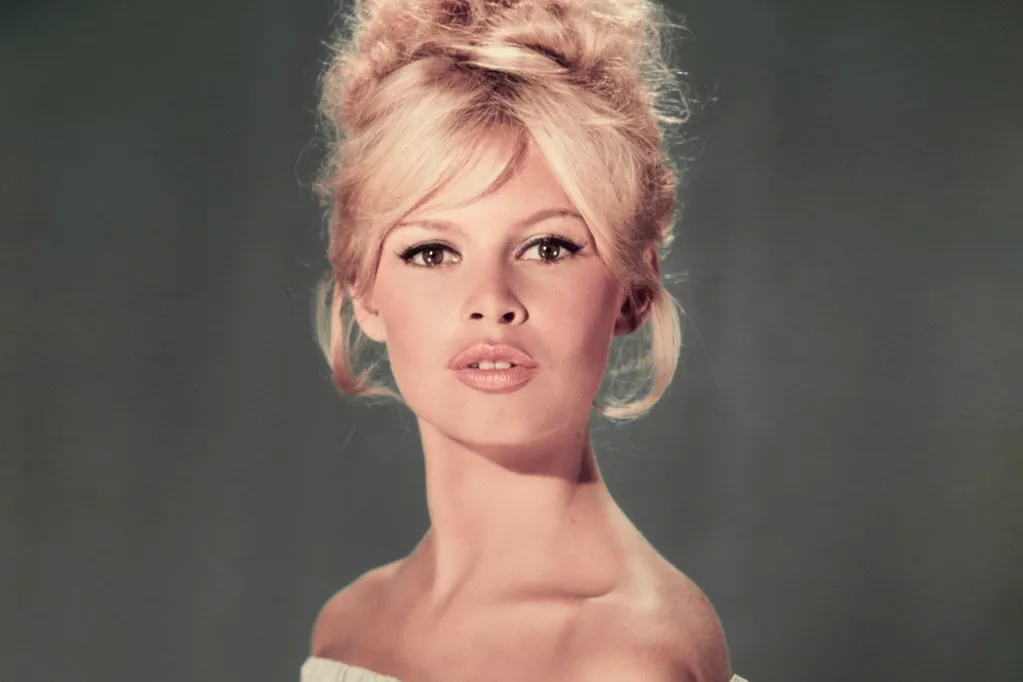
Later in life, Bardot garnered controversy for her comments about immigration and the #MeToo movement.
Brigitte Bardot, the French film legend who sparked controversy in recent years, has died. She was 91.
The Brigitte Bardot Foundation announced the actress had died in a statement shared with the French news agency AFP.
"The Brigitte Bardot Foundation announces with immense sadness the death of its founder and president, Madame Brigitte Bardot, a world-renowned actress and singer, who chose to abandon her prestigious career to dedicate her life and energy to animal welfare and her foundation," the statement read, per the BBC.
The news agency didn't specify the time or place of Bardot's death.
The news of her death comes after reports surfaced that the actress had undergone surgery amid "serious illness" in October 2025.
Bardot was born Brigitte Anne-Marie Bardot in Paris in September 1934. Often referred to by her initials, B.B., Bardot rose to international fame after her role in the controversial 1956 film And God Created Woman.
Her career began as a model, and she appeared on the cover of Elle in 1950 at the age of 15. The opportunity presented an offer to act in director Marc Allégret's film Les Lauriers sont coupés. While she did not get the part, it was at that audition that she met Roger Vadim, whom she would marry in 1952. He would later direct her in And God Created Woman.
That same year, Bardot began her acting career with roles in Crazy for Love, and in 1953's Manila, the Girl in the Bikini, as well as The Long Teeth and His Father's Portrait.
By 1956, Bardot's star was rising. She appeared in the musical Naughty Girl, which was co-written by Vadim and proved to be a box office hit. Bardot also starred that year in Plucking the Daisy, another movie written by her husband that was successful in France. She also starred in The Bride Is Much Too Beautiful.
Having written successful roles for his wife, Vadim made his directorial debut with And God Created Woman, which he also co-wrote, and he cast Bardot as a teenager in a small town who causes a rift between three brothers.
The movie was a hit, catapulting Bardot into international stardom and turning her into a "sex kitten" symbol at the time. That same year, Bardot and Vadim divorced but continued to work with each other professionally.
Bardot expanded her cinematic genre range into comedies, starring in La Parisienne and Babette Goes to War in the 1950s. She continued to work with Vadim in the films The Night Heaven Fell and the comedy Please, Not Now!.
Bardot struggled with her mental health throughout her life, and in 1960, while in production for the courtroom drama The Truth, she attempted suicide. Bardot spoke about grappling with fame in a 2010 interview with FRANCE magazine, saying, "I have really been on the verge of suicide several times -- it's a miracle that I am still alive."
She continued acting throughout the '60s and '70s, starring in her first Hollywood film, Dear Brigitte, in 1965 opposite James Stewart.
In 1968, she starred in the Western film Shalako opposite Sean Connery, although it did not perform well at the box office.
Despite continuing to work in films, Bardot's interest in the industry was waning. In 1973, she worked with Vadim again in the film Don Juan, or If Don Juan Were a Woman. That same year, she starred in The Edifying and Joyous Story of Colinot.
Bardot retired from acting in 1973 at the age of 39 and ventured into a new career path: animal rights activism. She launched the Brigitte Bardot Foundation for the Welfare and Protection of Animals in 1986.
Following her divorce from Vadim, Bardot began a relationship with actor Jacques Charrier in 1958, and they married in 1959. They welcomed a son, Nicolas-Jacques Charrier, in January 1960. The two divorced in 1962, and their son was primarily raised by Charrier's family.
"I didn't bring up Nicolas because I needed support, roots," Bardot would later tell an interviewer. "I couldn't be Nicolas' roots because I was completely uprooted, unbalanced, lost in that crazy world."
Her third marriage came in July 1966 to German millionaire Gunter Sachs. The two divorced in October 1969.
Bardot also had famous love affairs with her And God Created Woman's costar Trintignant and Warren Beatty. Of Beatty, Bardot wrote in her 1996 autobiography Initials B.B., the actor had a "ferocious charm that was impossible to resist," per the Associated Press; adding: "Why or for whom would I have resisted him?"
In September 1983, on her 49th birthday, Bardot overdosed on pills and red wine. She was rushed to the hospital where her stomach was pumped. That same year Bardot was treated for breast cancer.
In 1992, the activist married Bernard d'Ormale, a former adviser to French politician Jean-Marie Le Pen—a controversial figure in French politics who was convicted of racism and inciting racial hatred at least six times according to AP.
In the years that followed, Bardot garnered controversy herself and was fined multiple times by the French government for inciting racial hatred. She criticized immigration in France in her 1999 book Le Carre de Pluton , writing: "My land is again invaded by an overpopulation of foreigners especially Muslims."
For the comment, a French court fined her 30,000 francs in 2000.
In 2008, she was fined for a fifth time by a French court for inciting racial hatred against Muslims in France. Bardot, an ardent animal rights activist, had written a letter in December 2006 to the then-Interior Minister (and later, President) Nicolas Sarkozy in which she criticized the Muslim festival of Aid el-Kebir, which is reportedly celebrated by slaughtering sheep.
In the letter, she wrote that France is "tired of being led by the nose by this population that is destroying us, destroying our country by imposing its acts."
The prosecutor in Bardot's case stated at the time that she was tired of charging the actress with offenses related to xenophobia, according to BBC News.
In January 2018, Bardot made headlines when she called the #MeToo movement "hypocritical, ridiculous and uninteresting" in an interview with French magazine Paris Match.
"Many actresses flirt with producers to get a role. Then when they tell the story afterward, they say they have been harassed," she said at the time according to The Guardian . "In actual fact rather than benefit them it only harms them."
"The vast majority are being hypocritical and ridiculous," Bardot added.
Bardot said she's never been a victim of sexual harassment and that she liked the attention she was given by her male colleagues: "I thought it was nice to be told that I was beautiful or that I had a pretty little ass. This kind of compliment is nice."