Nancy Coleman, an editor on the print edition of The Times, is a former digital editor at T: The New York Times Style Magazine.
Times Insider explains who we are and what we do and delivers behind-the-scenes insights into how our journalism comes together.
The videos seem to capture average scenes from the office. In one, magazine designers pore over a wall of page proofs for an upcoming issue; in another, a fashion assistant sifts through photos from a runway show.
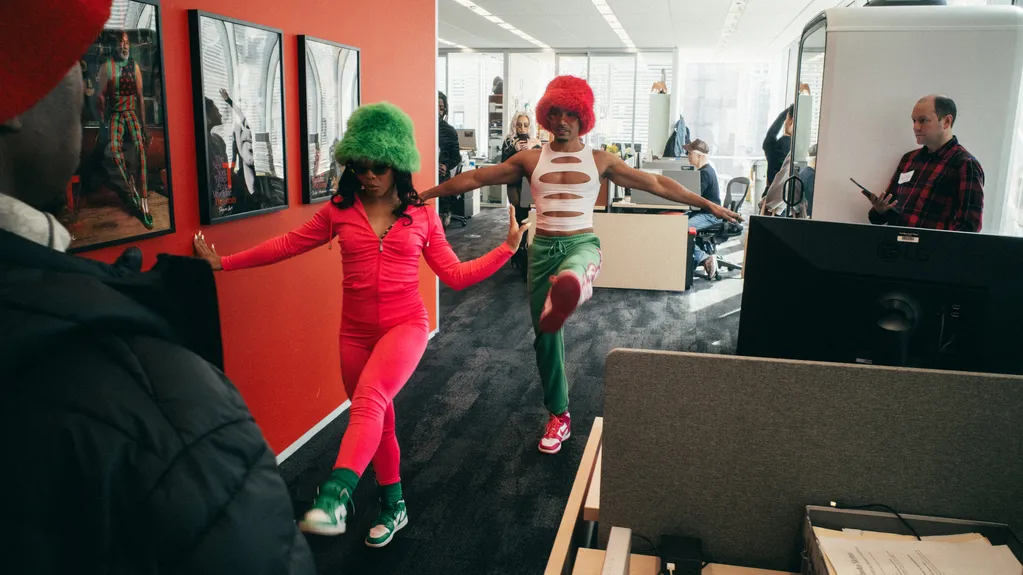
Even as, in the middle of it all, a barefoot dancer, held aloft by other members of a postmodern troupe, walks across the walls. Or as two actors trade verbal blows in an intense exchange from a Greek tragedy. Or as cast members from "Cats: The Jellicle Ball" swipe a scarf from the editor in chief's office, cartwheel between the desks and plunge into a synchronized death drop.
The workplace spectacle is part of a video series that began late last year, "Live From the 10th Floor," in which T: The New York Times Style Magazine invites artists to showcase their work at T's offices in The Times's Manhattan headquarters.
"We want it to feel like you as an audience member are there," said Jamie Bradley, T's senior digital photography and video editor. "It's almost like a private performance, this surreal private moment between viewer and performer, because everyone else is just going about their day and doing their thing."
In a recent interview, Ms. Bradley discussed how the T offices became a performance space and what's next for the video series. These are edited excerpts from the conversation.
Where did the idea for the series come from?
We had been wanting to stage performances in the office. We also kept having these categories of culture come up in conversation, like music or dance or theater, that you'd want to watch instead of read about. We were banking on the audience being excited to see a performance of any kind, and to get a look behind the scenes at the T Magazine office.
How did you decide to have everyone continue their work as usual while the performances unfold?
There's this picture our series director, Yoonha Park, showed me from a Japanese music magazine in 2001 -- it's a picture of the Radiohead frontman Thom Yorke sitting in the middle of an office, and everyone is sort of oblivious to him. It just felt really surprising and a little surreal to see him there. We liked the idea of bringing that kind of sensibility to this series.
How was that in practice? Did anyone get any work done?
I seriously doubt it. In defense of our productivity, I will say that shooting only takes about half an hour. But it’s hard to get people to just act naturally. We choreographed some interventions: I was behind the camera, and I would Slack people when it was time for them to go to the printer or push a clothing rack through the frame.
For "Cats," I asked the staff to engage with the performers a little more, as they normally would if there were singing and dancing cats prowling about the office. But most of them have gotten so used to the filming that they just went about their day as usual.
That "Cats" episode felt like the most out-of-the-box installment so far. What was it like filming that performance?
That was definitely our most complex production yet. The choreography needed to be tailored to the office space, so the aisles between desks were transformed into runways, and our director made an animated map of how the performers would move through the space. Audio was also a big consideration. We wanted to record the artists singing live, rather than having them lip sync. The biggest challenge was how to mic the performers: They wear very tight costumes, so there was a lot of discussion about where to hide the microphones. Ultimately we hid them in the artists' wigs.
Who is your dream guest?
Mariah Carey doing "All I Want for Christmas Is You." Or an opera performer. A tap dancer would be really fun -- I want to see someone tap dance on the big flat file next to the printer, a long surface where we keep spare office supplies and snacks. Something big and bombastic that's going to feel really out of place in the office.
I think at some point, we'll need to talk about expanding outside of the T work space. I'd love to do something in the cafeteria, but the trick would be getting everyone to play along.
You've kept these performances pretty much a secret from other Times colleagues outside of T. Now that the series is out, do you think other people around the office are going to try to crash?
We were prepared with signs and production assistants stationed at either end of the office, because we didn’t want people engaging with the camera or the artist. That was essential to the creative direction of the series, and we thought it would really heighten the drama of what was unfolding, to have people not engage. The people who did pass by seemed totally uninterested. I think it speaks a lot to the culture in New York, where we see celebrities all the time and just go about our business.
What kind of direction do you give the performers?
In the episode with Lesley Manville and Mark Strong, from "Oedipus" on Broadway, they're having this very hushed conversation. It's so great to see that in an office environment; it feels like it could be happening, but they still don't quite belong there. All that we had preplanned was where in the space they would perform, and where the camera would be. Right away as they were rehearsing, they pulled out the chairs and created this spatial tension. That was really cool, to witness their stagecraft.
It's so gripping. Which is crazy because -- and I'm biased being here every day -- my desk feels like the least interesting place. Their presence lights it up.
I did art direct some of the desks, sort of cluttered them up. There was an old banana I found on someone’s desk that I put in because it added a nice pop of color.