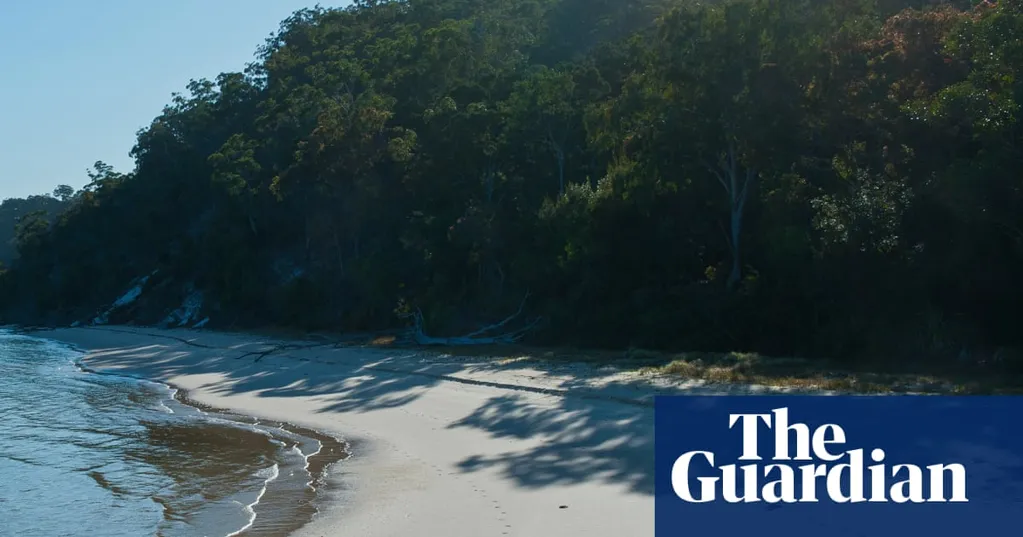
Two campsites have been closed and park rangers are increasing patrols after a 19-year-old Canadian woman was found dead on a beach surrounded by a pack of dingoes on a popular Queensland tourist island.
Two men made the grisly discovery while driving down the eastern beaches of K'gari (formerly known as Fraser Island) at about 6:15am on Monday. The discovery came up to 75 minutes after the woman left the backpacker hostel at which she had been working for six weeks, where she told colleagues and friends she was heading to the beach that morning.
Her body was found near the Maheno shipwreck, transported to the mainland and was expected to undergo a postmortem on Wednesday.
Until then, Queensland police said they would not speculate as to whether the woman drowned or was killed by the wild canids.
Dingo and human behavioural experts say both scenarios were possible.
Central Queensland University senior lecturer Bradley Smith, who is finalising a second book on dingoes for CSIRO publishing, said the animals scavenge the beaches of K'gari for washed-up whales, dolphins and turtles, and were particularly active at dawn and dusk.
Queensland's environment department does not recommend swimming in K'gari's eastern beaches, which are unpatrolled and have strong ocean currents, sharks and marine stingers.
Violent dingo and human interactions have been increasing in recent years, with incidents that include a pack of three dingoes rushing and biting a woman who was jogging along a beach, a dingo that was shot and killed with a spear gun and several others put down after attacking people.
Smith said an increasing number of tourists were flocking to the world heritage-listed sand island - the largest on Earth. About 400,000 people visit every year, and the 100 to 200 dingoes that live there had been emboldened to approach those people for food.
He said many visitors were engaging in risky behaviour around a predator which is often underestimated, given its small and lean body and physical similarity to the domestic dog.
"People do the wrong thing in many ways," he said. "The feeding, the selfishness and the Instagram culture, the selfies - and also people don't really respect dingoes as a predator.
"We are causing the problem - dingoes are just being dingoes."
Until more was known, Smith cautioned against "dingo bashing" and sensationalism.
Griffith University associate professor Georgette Leah Burns, an environmental anthropologist, was involved in the response to nine-year-old Clinton Gage's death by dingo attack on K'gari in 2001.
That first recorded fatality by the wild canids on the sand island came as a shock to many, Burns said, and was "the trigger for so much change" around dingo management.
Both she and Smith said improvements had been made to avoid conflict since. This included fencing off campsites, encouraging the use of dingo sticks, fines for people feeding dingoes, education campaigns and signage - much of which was nonexistent prior to 2001.
But both also deplored the cull of 31 dingoes shot by rangers as a response to Gage's death.
"There is always a fear that a cull will happen again," Burns said. "If there was a pack of 10 or 12 there, which ones were involved, and do we shoot them all?
"That is always a concern."
The state's acting environment and tourism minister, Deb Frecklington, said her department would work closely with police as they continued their investigation.
Frecklington said Queensland Parks and Wildlife Service patrols had increased, Maheno and Wahba campsites temporarily closed and five new signs installed "to create awareness about dingo activity".
"This is a heart-breaking tragedy that has understandably left many Queenslanders reeling," Frecklington said.