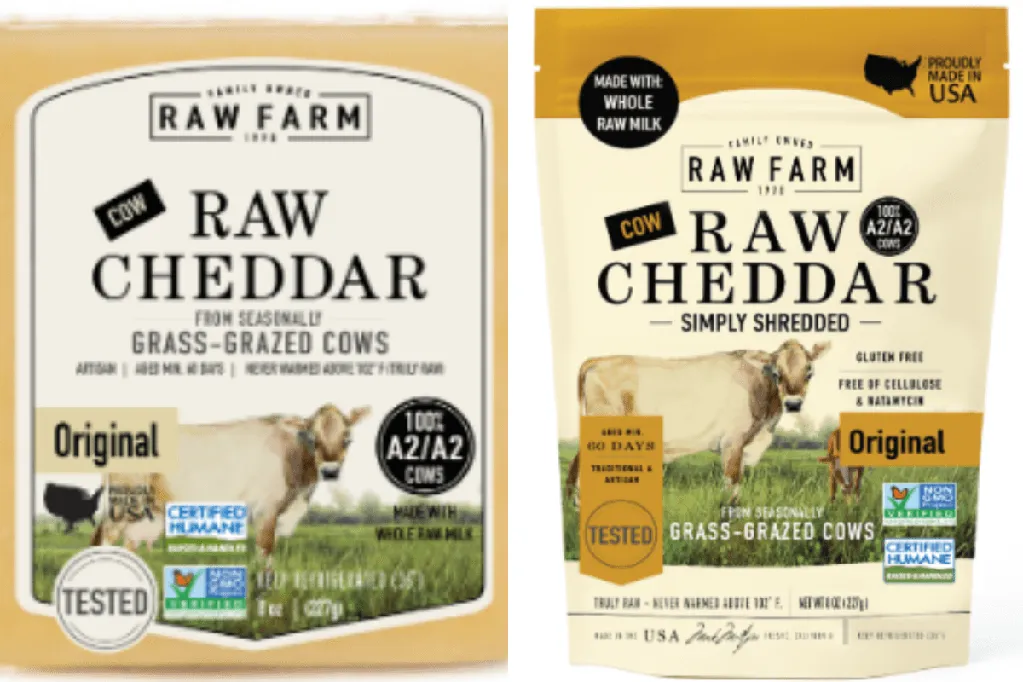
Federal health officials from the Centers for Disease Control and Prevention (CDC) are urging consumers not to eat certain raw cheddar cheese products after a multistate E. coli outbreak affected at least seven people, including young children, according to an announcement issued on March 15, 2026.
The CDC said it's working alongside the Food and Drug Administration (FDA) and state health departments to investigate the outbreak, which has been linked to raw cheddar cheese produced by California‑based company, Raw Farm LLC.
At the time of publishing, seven infections tied to the outbreak strain of E. coli have been reported in California, Florida, and Texas, with two people hospitalized, and more than half of the confirmed cases occurring in children under the age of five.
No deaths have been reported.
Health officials said illness onset dates range from September 2025 through February 2026, suggesting the outbreak may have been ongoing for several months before detection.
The affected products include Raw Farm-branded raw cheddar cheese, sold nationwide in both block and shredded forms.
While no mandatory recall has been issued, the CDC urged consumers to "consider not eating" the affected cheese while the investigation continues.
The agency also recommended that anyone who may have the product in their home thoroughly clean surfaces and containers that could have come into contact with it using hot, soapy water or a dishwasher.
Health officials said epidemiological data -- information public‑health officials collect and analyze to understand who is getting sick, where, when, and why during an illness or outbreak, including interviews with sick individuals -- identified the raw cheddar cheese as the likely source of the outbreak.
Of the three patients interviewed so far, all reported consuming Raw Farm raw cheddar cheese before becoming ill.
The CDC warned that the true number of illnesses may be higher than currently reported, as some people recover without seeking medical care and are never tested. Additionally, there is often a delay between when someone becomes sick and when their illness is confirmed as part of an outbreak.
The outbreak involves Shiga toxin-producing E. coli, which can cause severe illness.
Common symptoms include severe stomach cramps, diarrhea (often bloody), and vomiting, typically beginning three to four days after exposure.
Most people recover within a week, but some, particularly young children, may develop hemolytic uremic syndrome (HUS), which is a serious kidney complication that can require hospitalization. The CDC said to seek immediate medical attention if symptoms such as urinating less, feeling excessively tired, and a loss of color in the cheeks and inside the lower eyelids develop or worsen.