Nicole Sganga is CBS News' homeland security and justice correspondent. She is based in Washington, D.C., and reports for all shows and platforms.
The U.S. Coast Guard cannot pay its bills. The military branch - now 75 days into the longest shutdown in U.S. history - owes over $300 million in unpaid obligations. And with thousands of utility bills overdue, totaling $5.2 million, duty stations and military housing worldwide are facing service shutdowns.
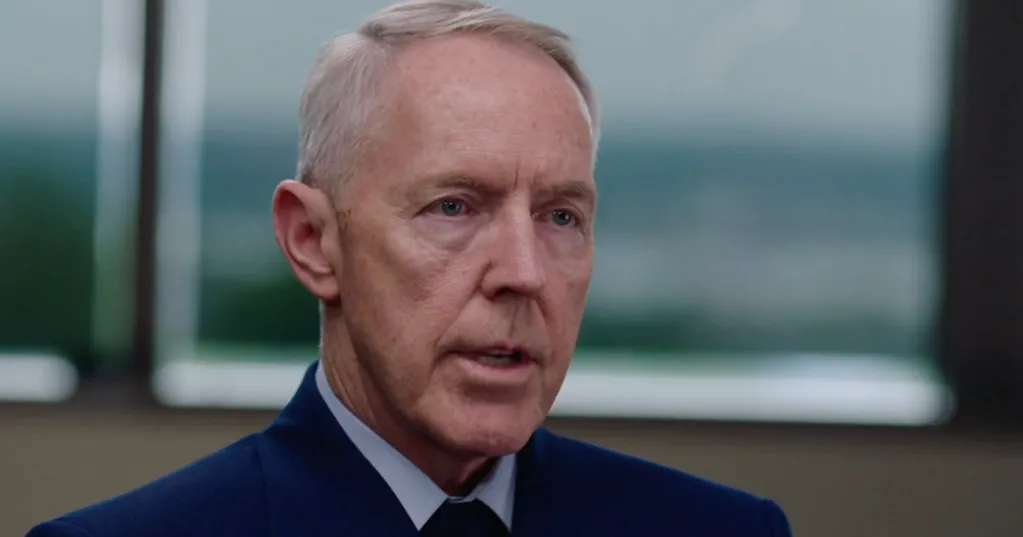
"It seems like a horror movie, but it's actually happening. It's almost unbelievable," Coast Guard Commandant Adm. Kevin Lunday told CBS News in an exclusive interview.
In the past week alone, water outages hit duty stations in Port Huron, Michigan, and Station Channel Islands, California.
Air Station Barbers Point, Hawaii, had natural gas lines temporarily locked. A power outage at a recruiting station in St. Louis, Missouri, forced officers to operate by flashlight until electricity could be restored.
Electricity was also cut off to the residence of a Coast Guard rear admiral in New Orleans, forcing his family to drive to a hotel until service was restored. That residence is one of nearly 1,000 Coast Guard housing units at risk of electricity shutoffs because of unpaid bills. Across the service, 43% of housing units have invoices more than 30 days past due.
"It's unacceptable," said Lunday. "I think the American people would be furious to know this is happening," Lunday said. "We have over 6,000 utility bills that have been unpaid because DHS is not funded. And so, now we're starting to see electricity, water, natural gas, other services shut off that are impacting not only our operational units and bases where our people work, but starting to impact where people live."
Jessica Manfre, a Coast Guard spouse for 18 years, said the utility shutoffs aren't isolated incidents, and Coast Guard families across the service have been vocal about their concerns.
"When I heard that water is getting shut off at my friends' stations and they're having to call city officials to beg to have it turned back on because bills aren't getting paid," she recounted, "I knew this shutdown was different."
"These are stations where our crews are standing by to respond at a moment's notice to any Mariner in distress or any threat to the nation," Lunday said. "And they launch 24/7, 365 -- and suddenly, the lights go out or they don't have water."
In many cases, utilities are only restored after Coast Guard personnel call providers and beg for leniency.
"In most cases, the people we're talking to ... those providers are turning it back on, even though they're not being paid," Lunday said. "I don't know how long that's going to last."
The shutdown has now stretched 75 days since funding lapsed at the Department of Homeland Security. Unlike military branches that are funded through the Defense Department, the Coast Guard falls under DHS, so it's vulnerable when DHS funding lapses.
"This is incredibly frustrating," Lunday said. "In fact, I would say our workforce, our men and women and their families, are furious."
"It's more than a breach of trust," the commandant continued. "Our Coast Guard men and women, whether they're active duty or reserve military civilians, they've stepped forward and taken an oath to support and defend the Constitution. What they expect in return is just to be paid and provide services." They don't expect "to have to worry about whether their families are going to be taken care of," Lunday added.
In early April, DHS Secretary Markwayne Mullin said DHS employees who had been working without pay and the Coast Guard would be paid for the first six weeks of the shutdown and the next pay period, and said the payments were made possible by executive action and existing funding flexibility. Now, that funding is exhausted.
The Coast Guard will run out of funding to pay personnel on May 1, with the first missed paychecks expected May 15.
Lunday pointed to the experience of a civilian Coast Guard worker in Ketchikan, Alaska -- a machinist and longtime employee -- who continued reporting to work during the last shutdown even after going without pay for weeks. At one point, he said, the worker had to sell his truck to pay his mortgage.
Manfre, who is based in Elizabethtown, North Carolina, explained that the shutdown has made already tenuous situations worse for many families, particularly those relying on a single income or those with both wage earners working for the service branch.
"So many of our spouses work on base. So they miss three and a half paychecks in a world where you need two paychecks," Manfre said. "That means sacrificing vacations, that means skimping, that means utilizing food pantries just to get by because those paychecks are suddenly all gone."
Even as funding runs out, Coast Guard personnel remain deployed worldwide -- including in conflict zones. Roughly 300 are now stationed in the Middle East amid the war in Iran, while others stationed in the Indo-Pacific are boarding "ghost fleet" oil tankers in high-stakes missions.
"We have people in harm's way at this hour, conducting military operations along with other military services," Lunday said. "And it is hard to imagine that part of our armed forces would not be funded. And what it shows is the dedication of our men and women, that they're still committed to stepping into the breach and getting that mission done, even in the face of danger, even while government is not working to fund the DHS and the Coast Guard and ensure they get paid."
The U.S. Coast Guard's nearly 45,000 active-duty members are uniquely vulnerable during government shutdowns because the branch is the only one of the six armed services that falls under DHS. The Army, Navy, Air Force, Space Force and Marines fall under the Defense Department.
"It is really disheartening because our members raise their hand just like every other service member. Only 1% of this country serves, and they willingly go wherever -- they are fighting right now against Iran," Manfre said. "It feels like it doesn't matter. Like we don't matter because we are not DOD or DOW. We're somehow lesser -- that's how it feels."
The commandant explained that uncertainty around pay has delayed major life decisions among his ranks and their families. "Even medical treatments, because they're worried about making the co-pay," Lunday exclaimed.
For families at home, that contradiction is stark.
Manfre said she was shocked to watch members of Congress go on recess while military families canceled vacations and summer camps for their own children because of the financial uncertainty.
The mother of two compared Congress' inaction to a temper tantrum: "The difference between children having a temper tantrum and Congress shutting us down is they're doing it on our backs."
"We're the ones that are suffering," Manfre said. "Congress continues to get paid. But we're sitting here waiting, wondering and suffering the consequences of their legislative game of chicken."
The Coast Guard has canceled 30 national security exercises and halted training ahead of major events, including the World Cup and America 250.
"It's hollowing out our operational readiness," Lunday said. "We are still performing our highest priority national security missions... but underneath our ability to continue to maintain the assets, our cutters, our aircraft, our boats, that's challenged because we don't have the funds necessary to pay people to do all of the maintenance work we need."
"My biggest concern about readiness is whether or not their heads are in the game," he said, referencingthe men and women in uniform."Whether they're ready to face those threats,rather than worried about whether they're going to get paid into Mayandwhether their familiesaregoingtoneedmoresupport."
About one-third of the Coast Guard relocates each year,but moving advancesare unavailable right nowbecauseoftheshutdown.
"Right now,they'renotgettingthoseadvances,"Lundaysaid."Sothey'reputtingthose thousandsofdollarsoncreditcards.They'redepleting theirsavings.They'retakingoutloansthattheycan'tafford."
When asked if they're going into personal debt to follow orders,Lunday nodded."Yes,that'sexactlyright."
Manfre said families are preparing for that reality ahead of travel season."I would imagine if there are no funds,buttheCoastGuard'smissionhastocontinue,wewillbeaskedtosaveuporuseourcreditcardsifwehaveto inorder tofrontthismove."
"Thatisthe reality,"sheadded."Manyofthemarealreadyindebtedue to moving expensesandtuition reimbursementthat'snotcomingthrough."
The effects extend beyond Coast Guard bases. There is now a backlog of nearly 19,000 merchant mariner credentials - representing roughly 10% of the entire workforce - along with roughly 5,000 medical certifications.
"These are the commercial mariners that are so vital to maritime commerce and the U.S. flag fleet," Lunday said."We can't grow this commercial merchant mariner workforce at a time where America is trying to rebuild our maritime might,and that's so vital to national security."
Bridge projects are also at risk,since the Coast Guard has suspended permitting during the shutdown."And in some cases,that's putting project funding to rebuild bridges or build new bridges at risk,"Lunday said.
Roughly $5.4 trillion of commerce moves through U.S. waterways,every year."AndtheCoastGuard’sresponsibleformaking surethat happens safelyandsecurely,"Lundaysaid."Sothat impacts every American."
Both Lunday and Manfre say the long-term effects of the shutdown are already being felt in recruitment and retention."It is hard to look a recruit in the eye and say,'This is the career for you.'"
Asked about her message to lawmakers,the military spouse paused."You can't tell me in one breath that you,youbelieveinourmilitary...andthenvoteagainstfundinganagencythatprotectsthiscountryeveryday.Youjustcan't."
On Wednesday,Day 75oftheshutdown,thecommandantsaidtheconsequencesarenolongeradministrativeorabstract."Today,theCoastGuardisoperatinginacrisis."
Pressed on how much longer his men and women in uniform can operate without funding,Lundaypaused."Well,we'vetakenanoath;allofusin themilitaryandinDHS;tosupportanddefendtheConstitution.Andwe'regoingtodoitaslongaswehaveability.Butwe'reinterritorywehaven'tbeeninbefore."