Shaun Boyd is Your Political Reporter at CBS News Colorado. Share you story ideas with her by sending an email to sboyd@cbs.com or yourreporter@cbs.com.
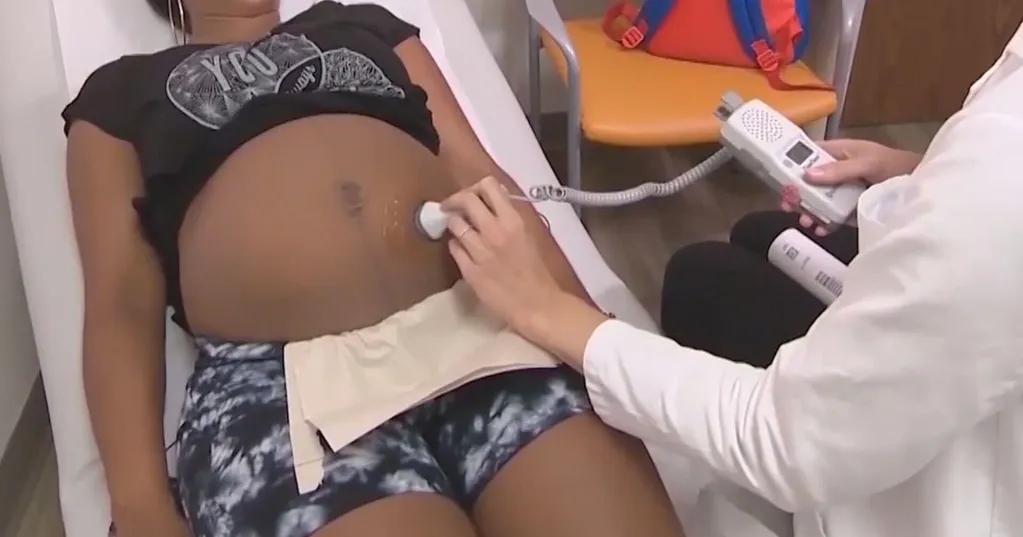
Two Colorado lawmakers have proposed a bill to address racial disparity when it comes to maternal mortality rates. According to the Centers for Disease Control, the number of women dying during pregnancy has dropped for every racial group except Black women. They are far more likely to die than their white counterparts, regardless of income or education.
In Colorado, the Maternal Mortality Review Committee said discrimination contributes to two-thirds of maternal deaths.
Colorado lawmakers Regina English and Junie Joseph are working to change that. They have introduced a bill that requires state medical boards to consider new training for doctors and nurses on cultural competence and equity in maternal health.
"Sadly, some doctors have been trained that Black women can handle another level of pain that no one else can,"
said English, a Democrat representing Colorado's 17th District.
"Historically, people of color, especially African American women, have been discounted and discredited when it comes to pain,"
said Nikki Swarn with the organization Sister-to-Sister.
Swarn was delivered at 26 weeks with her umbilical cord wrapped around her throat twice, and said she might have died if not for a female doctor who, against the advice of male doctors, encouraged Swarn’s mother to give birth vaginally.
"It was someone advocating for her wellness that made the difference,"
said Swarn.
It was that kind of advocate she wished she had had when she learned that she was unable to get pregnant, “I wasn’t given the option of, ‘Hey, would you like to freeze your eggs?’”
Those experiences led her to join Sister-to-Sister, an international group of professional African American women that is focused on the health of Black women.
"Saving one person's life by having a better educational experience and saying, 'I really didn't realize I had a bias' or 'I didn't realize this information would be helpful for me to share with my patient' is transformative,"
said Swarn.
The bill also requires labor and delivery facilities to provide pregnant women with a statement of their rights, including the right to care that is culturally sensitive and free from discrimination.
"We may want to have three or four different people in the room at the same time because it's a cultural effect for us, and being denied that opportunity is also unfair,"
said Swarn. “We find often that there are midwives who get turned away as part of the care team, doulas being denied access to rooms as a part of the care team.”
While the measure initially required the state to investigate and fine facilities when there are maternal deaths tied to discrimination. That section was eliminated due to cost, with analysts expecting 421 investigations per year.
"If there's no balance of accountability in this space, then what are we really doing? How are we changing community and how are we changing outcomes?"
said Swarn.
The legislation requires the state to survey more women who give birth, including questions about cultural sensitivity and equity.
"This is about reproductive justice,"
said Joseph. "Ultimately, we want everyone in this system to be accountable because we don't want Black women or other women of color to be dying just because of the color of their skin."
"We should not have to die giving life,"
said English. "Anything we can do to save the lives of Black babies, that's what we're going to do."