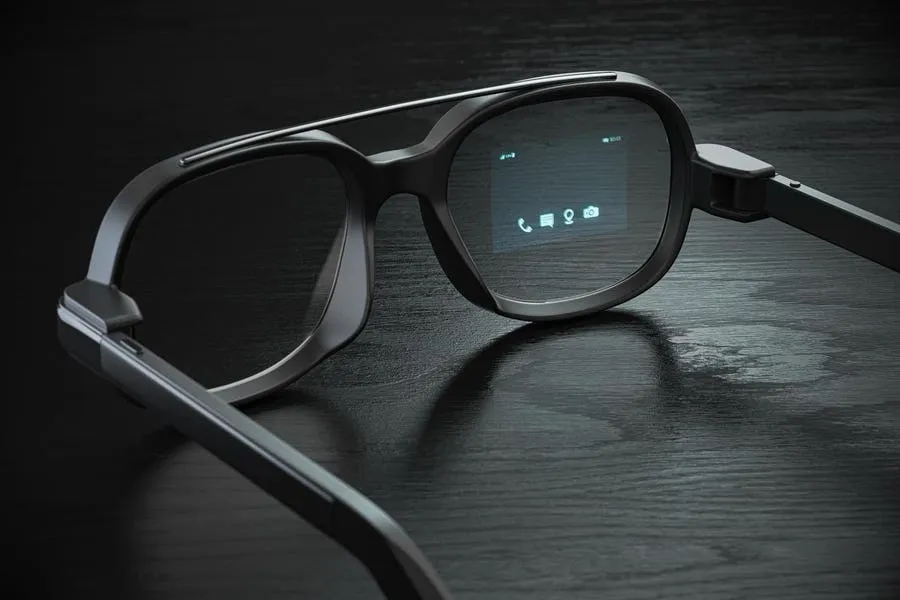
Cheap wearable technology has quietly changed how depositions have to be run. The head-and-shoulders webcam shot and the oath given at the start are no longer enough to trust that a witness is answering from their own head.
A judge in a recent London High Court proceeding threw out a witness's entire testimony after finding he had been coached in real time through smart glasses connected to his phone during cross-examination. The coaching was caught by luck. An interpreter overheard voices from the glasses, and after they came off, the witness’s phone audibly broadcast from his jacket pocket. American depositions rarely have that kind of backstop.
Depositions Are The Softest Target In The System
Most testimony that matters in American civil litigation happens outside a courtroom. It happens in depositions. An office conference room, a hotel meeting room, or increasingly a Zoom call. A court reporter. Maybe a videographer. The attorneys. The witness. No judge, no court staff, no interpreter catching audio leaks.
A witness wearing smart glasses, a bone-conduction headset, smart earbuds that look like hearing aids, or a smart ring that feeds haptic cues has never been easier to miss. A witness on a remote deposition, framed from the shoulders up on a webcam, is almost impossible to check. The same AI tools and wearables that made the coaching possible are consumer products now, sold with prescription frames and voice-activated AI assistants built in. So is the earpiece.
And the problem is not limited to witnesses.
The Witness Is Not The Only Person Who Can Be Coached
A junior associate taking a key deposition can be fed questions, follow-up probes, objections and citations in real time by an AI assistant, a senior partner listening in on a side channel, or both. The deponent sees a first-year asking the questions. The questions are being written or said, in real time, by someone who is not in the room.
Senior attorneys can run the same setup on themselves. AI tools are already capable of cross-referencing a live deposition transcript against the case pleadings, flagging inconsistencies, pulling deposition testimony from prior witnesses and feeding the next question based on the witness’s last answer. That capability does not wait for anyone’s permission to arrive. It is here.
Expert witnesses are the same exposure with a different pressure point. A qualified expert should be answering from their own knowledge. An unqualified expert with an earpiece can be answering from a real-time research assistant that knows more about the specific case and their discipline than the expert does.
Every one of these vectors shares a feature. The person across the table cannot tell.
Detection Relies On Luck. Procedure Has To Replace It
The recent coaching was caught because a live interpreter overheard voices and because the witness’s phone loudly broadcast from his jacket pocket. In a remote deposition there is no interpreter. There is rarely a second person in the room with the witness. An encrytped audio stream through a bone-conduction headset leaves no WiFi signal for anyone to notice. Pauses before answers can be explained as thinking, translation, or careful recollection.
That is the same structural gap that exists around real-time deepfakes in remote proceedings. A live synthetic face or voice on a Zoom call often cannot be caught in the moment. A live human with an AI assistant in their ear is the in-person version of the same attack.
What Has To Change Before, During And After The Deposition
Before Deposition
Before the deposition starts, a device inspection of the witness. No smart glasses, no smart watches, no earbuds, no smart rings, no phone on the witness’s person. Any hearing aid present gets disclosed and characterized. The witness attests, under oath and on the record, that no real-time assistance will be received during testimony from any person, device or AI system. If the deposition is remote, a two-camera setup where possible, with the second camera showing the witness’s environment. A head-and-shoulders crop on a single webcam hides too much.
During Deposition
During the deposition, camera discipline carries the session. Hands visible. Ears visible. Room visible. No objects within reach that could serve as hidden display. Pauses before answers get closer attention, not less. Breaks are monitored, and any resumed session resets attestation. Anyone else in room with witness, or on witness’s side of feed, gets declared and stays declared.
After Deposition
After the deposition, if coaching is suspected during the session, the witness’s phone and wearables need to be preserved for device-level forensic examination. A qualified digital forensic expert can pull Bluetooth pairing history, messaging applications, application history and AI services or remote communications used from the device in the relevant window. That examination is the technical backstop. It determines what actually happened.
None of this prevents every attempt. It changes the cost of trying. Right now the cost is near zero.
The Ruling Is A Preview
The recent ruling caught a clumsy attempt. An audible phone, an alert interpreter, a barrister paying attention. The more sophisticated attempt won't look like that. It will be a bone-conduction device under a collared shirt, a smart ring feeding haptic cues keyed to specific questions, a 5G stream that leaves no obvious local footprint for anyone in the room to notice. The witness will not pause. The interpreter, if there is one, will not hear anything. The transcript will read clean.
Firms that update their deposition technology protocols now will still be testing testimony that is actually the witness’s own. The ones that do not will spend the next several years wondering how many of their losses turned on answers that were coached in real time and never caught because nobody thought to look.