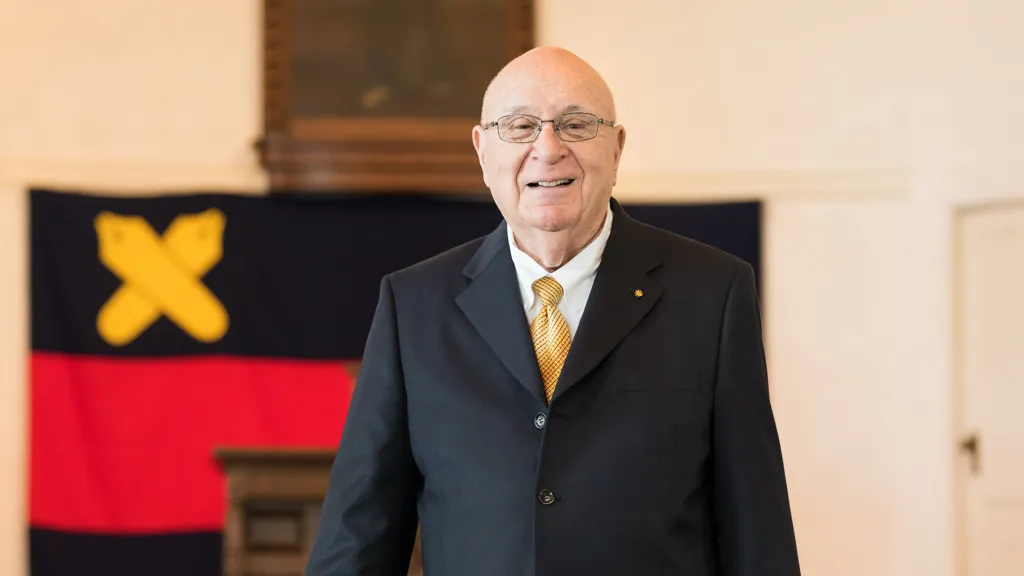
A researcher, professor and federal policy adviser, he guided students who went on to do groundbreaking work in connecting the world online.
David J. Farber, a gregarious professor of computer networks who was sometimes called the "grandfather of the internet" because of the ultimately groundbreaking students he trained, died on Feb. 7 in Tokyo. He was 91.
His son Emanuel said the apparent cause was heart failure. Professor Farber had been teaching at Keio University in Tokyo since 2018.
When Professor Farber started his career in the mid-1950s at Bell Laboratories, computers were practically islands unto themselves. If they communicated at all, they talked by means of a Teletype or punch card reader down the hall.
Since then, thanks in part to his work, the realms of communication and computation merged into that one powerful glue for society that is the internet; The New York Times once described him as "an early architect" of it.
Eventually entering academia, he earned his nickname by guiding students who came to be called the fathers of the Internet Protocol, or I.P., the rules of the virtual road for how computers swap packets of data and handle challenges like finding one another or detecting a garbled message.
Many of the basic rules for computer communication solidified over weekly meetings in the early 1970s between Professor Farber and one particularly bright Ph.D. student of his, Jonathan Postel, at a Southern California pancake house. "I ended up gaining 10 pounds," Professor Farber told an interviewer at Keio University.
Dr. Postel's 1974 dissertation, "A Graph-Model Analysis of Computer Communications Protocols," would define much of the evolution of the early internet. Another Farber student from that era, Paul Mockapetris, would help design the Domain Name System (DNS), the address directory of the internet.
Those algorithms, along with others developed with other students and colleagues throughout the research community, became part of the foundation for a variety of academic experimental networks that would eventually be called simply the internet. If Professor Farber was not supervising the work directly, he was often on committees that lobbied the federal government for support.
Perhaps his most influential paper was one he wrote with the engineer Paul Baran in 1977, "The Convergence of Computing and Telecommunications Systems." In it, they argued that digital computers were now fast enough to take over communication functions, later to take the form of email, text messaging and more. The computers were not just for rapidly adding up columns of numbers, they said, but also, as creative tools, for supporting a wide range of human interaction.
That insight helped attract investment money from the National Science Foundation to expand the Arpanet, a precursor to the internet funded by the Department of Defense's Advanced Research Projects Agency. Professor Farber helped organize a project that linked hundreds of universities and research labs with the evolving Internet Protocols.
"It was the day when all the universities in the U.S. suddenly had computer science departments," he said in the Keio University interview, "but the researchers were scattered, and you couldn't do research unless you could talk to each other. But if you were on the Arpanet, you could communicate with people. The idea was to supply every computer science department in the U.S. with the capability of talking to each other at least with emails, and hopefully more."
Through the 1980s, this network grew under names like CSNet, NSFNET and NREN. At the time, the term "internet" referred only to the effort to link together multiple smaller networks under a standard set of protocols. Soon, commercial networks wanted to join and, in 1991, Congress passed legislation opening the network to nonacademic use.
"I don't think anyone in the early days thought there was going to be a commercial application for what they were building." Professor Farber recalled to the website Hightechforum.org. "It's a research project."
David Jack Farber was born in Jersey City, N.J., on April 17, 1934, the only son of Harry and Genevieve (Miller) Farber. His father worked in the spice trade as a foreman, and his mother tended the home.
David developed an interest in electronics as a boy after World War II. In interviews and reminiscences, he recalled traveling into New York City at 12 to explore surplus stores filled with the radios, radar sets and other circuitry that had helped win the war. He experimented with building his own radios.
After high school, he enrolled at the Stevens Institute of Technology in Hoboken, N.J., from which he graduated in 1956 with a general engineering degree and a master's degree in mathematics in 1961.
In 1965, he married Gloria Gioumousis, who died in 2010. In addition to his son Emanuel, he is survived by two grandchildren. Another son, Joseph, died in 2006.
After graduating from Stevens, Professor Farber worked at Bell Laboratories in New Jersey for 11 years and participated in projects including replacing mechanical relays in phone switches with transistors and creating a language for text processing called SNOBOL.
In the late 1960s, he joined the nonprofit RAND Corporation in Southern California and said he found the environment was highly experimental and creative. He remembered working on at least eight computer languages that built on his work with SNOBOL.
Soon afterward, he started a career in academia, teaching first at the University of California, Irvine and later at the University of Delaware, the University of Pennsylvania and Carnegie Mellon University in Pittsburgh before joining Keio University.
Along the way, Professor Farber worked on shaping public policy toward the online world once it was no longer confined to research labs. Between teaching assignments he took jobs in Washington, including chief technologist for the Federal Communications Commission from 2000 to 2001.
Known for a warm personality, he was frequently invited to give talks and to sit on boards of organizations like the Electronic Frontier Foundation, the Electronic Privacy Information Center and the Internet Society.
Linking computers was a technical chore, Professor Farber would say; the greater challenge, he said, was to find the best ways for humans to interact. At one point, he created a sprawling network of some 25,000 internet users through a mailing list he called I.P., for "interesting people."
The list has "a devoted following among the digerati, as well as less technological types," The Times wrote in 1998. "And it gives him unrivaled, if unofficial, influence as a voice of the internet."
Many on the list, which was still continuing at his death, found his mailings to be one of the best sources of information about unfolding regulations and public policy positions concerning the internet.
Those who knew him say that in any technological endeavor, Professor Farber never lost sight of the human element.
"There's a lot of working with people that goes into a technical project," his son Emanuel said in an interview. "A lot of this wasn't tinkering in the lab. It's writing proposals. Without someone doing that and without someone knowing the people selecting the project, it doesn't happen. Through all of this talking with people, these projects happen, and it becomes an internet."