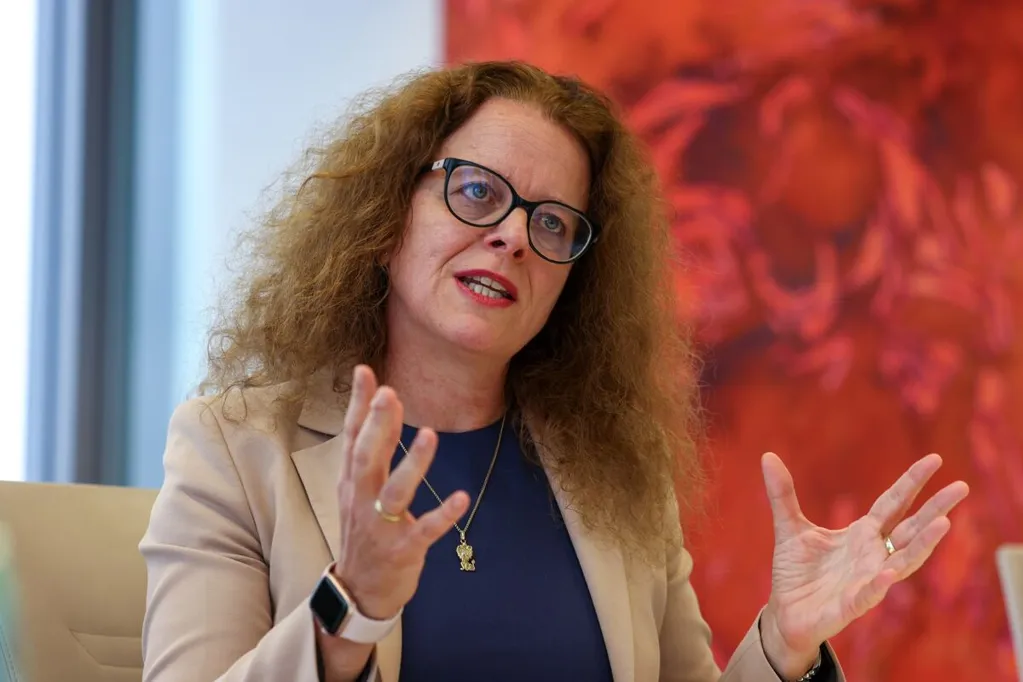
Europe has what it takes to build a thriving economy, but it must step efforts to implement reforms and embrace change, according to one of its top policymakers.
The continent is neither lacking ideas nor talent, and is one of few regions in the world where democracy and the rule of law remain firmly entrenched, European Central Bank Executive Board Isabel Schnabel said in a speech in Vienna. What's needed is scale -- and courage -- to strengthen its economy.
"Europe is a continent with huge potential," Schnabel said. "The picture in Europe should be one of optimism -- not because the challenges are small, but because Europe has the capacity and the tools to meet them."
She added that "the key is to unlock the full potential of the single market -- one of Europe's most powerful assets."
Schnabel's remarks build on an opinion piece Bloomberg Terminal published in the Financial Times earlier on Wednesday, in which she argued that the often-used description of Europe as a "continent in decline" is misleading. In fact, "by many measures, Europe is among the regions with the highest quality of life," she wrote.
Still, its economy has been struggling to cope with shifting geopolitical tides that brought trade levies, supply snarls and energy woes. Weak manufacturing is still holding back growth, with hope resting on defense and infrastructure spending to fuel demand.
European Union leaders are meeting on Thursday to discuss strategies to gain economic weight and become more independent from the US and China. In the run-up, ECB officials including President Christine Lagarde have leaned on them to be bold in raising competitiveness.
Last week, the ECB demanded "urgent collective action" and outlined five key measures in a checklist sent to heads of state. They included a savings and investment union, a digital euro, a deepening of the single market, policies to foster innovation, and simpler legislation.
Schnabel argued that Europe must reduce regulatory hurdles and highlighted proposals for a so-called 28th regime, where the EU's legal framework sits alongside national law, enabling firms to operate under new business rules codified at the European level.
"By giving firms seamless access to the entire European market, it would provide the scale needed to convert innovation into economic growth," Schnabel said. "It would allow Europe to compete as one economy rather than 27, and help create something Europe has long been missing: a true 'Made in Europe' brand."