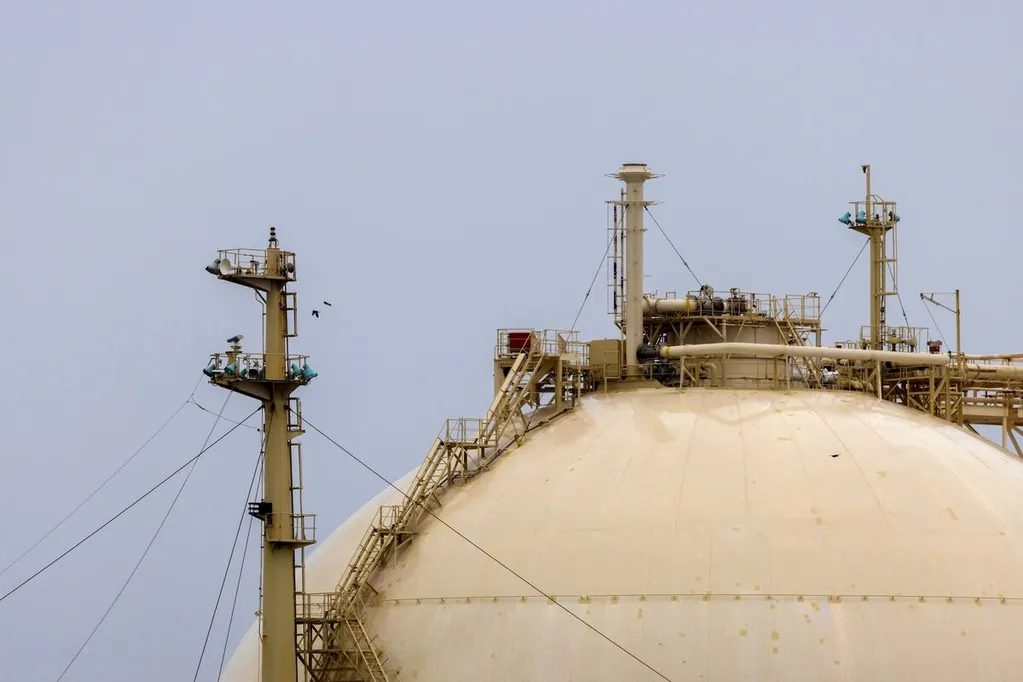
The latest damage to liquefied natural gas production trains in Qatar threatens to keep gas prices in Europe and Asia higher for longer, with a potential 4% supply shortfall this year.
European natural gas fell after Israel and the US sought to ease concerns about further attacks on Persian Gulf energy facilities.
Benchmark futures slid as much as 3% on Friday. That still puts them on track for a weekly gain of about 20% after the contracts jumped a day earlier. Prices have doubled since the start of the war.
Israel said it will no longer target energy infrastructure after an attack on an Iranian gas field sparked retaliatory strikes against oil and gas assets across the Middle East, driving up prices and prompting a rebuke from US President Donald Trump.
The effort to calm markets followed missile strikes on Qatar's Ras Laffan Industrial City that damaged two liquefied natural gas production trains. The units represent a combined 12.8 million tons of annual output capacity, or about 17% of Qatar's LNG exports, and repairs may take as long as five years to complete.
While shipments from the LNG plant had already been halted earlier this month due to the war, the latest damage threatens to keep gas prices in Europe and Asia higher for longer. Morgan Stanley analysts see a 4% supply shortfall this year and said a prolonged loss of the two damaged trains would affect forecasts for an oversupply in 2027-2028.
In Europe, the attacks have raised concerns among politicians as countries brace for a protracted energy price shock.
Traders across the continent expect a volatile summer as they work to refill vast storage tanks ahead of next winter. While most of the gas that normally traverses the Strait of Hormuz goes to Asia, the effective closure of the waterway could impact Europe as both regions vie for a more limited pool of global LNG supply.
At the same time, temperatures are now forecast to dip across most of northwestern Europe later this month. That could potentially drive up demand for the fuel.
Worries about long-term supply disruptions are also playing out in the options space. Implied volatility -- a measure derived from the cost of underlying options contracts -- has more than doubled since the start of the war, highlighting the risks lingering in the market for the coming months.
Dutch front-month futures, Europe's gas benchmark, traded down 2.2% at €60.50 a megawatt-hour as of 8:19 a.m. in Amsterdam.