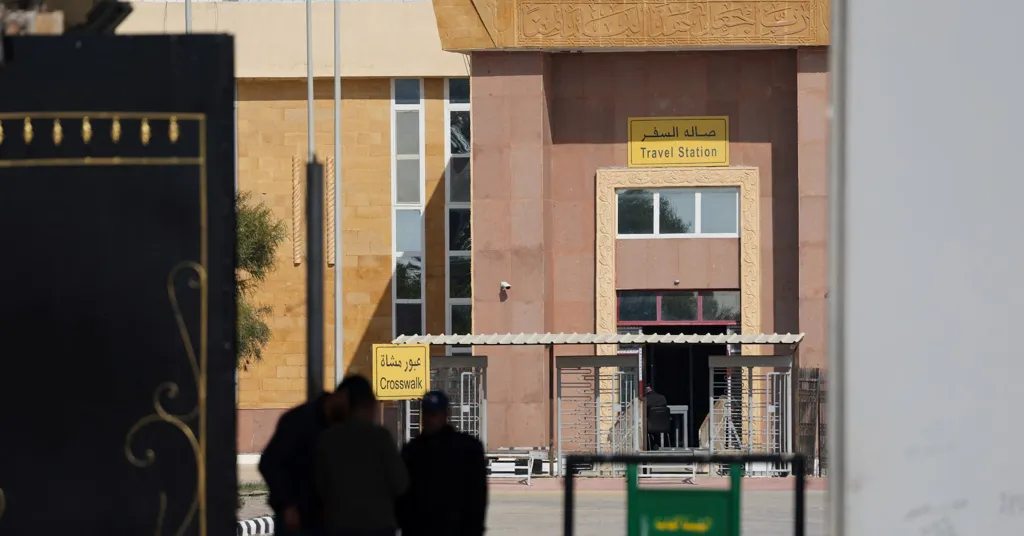
TEL AVIV, Jan 23 (Reuters) - Israel wants to restrict the number of Palestinians entering Gaza through the border crossing with Egypt to ensure that more are allowed out than in, three sources briefed on the matter said ahead of the border's expected opening next week.
The head of a transitional Palestinian committee backed by the U.S. to temporarily administer Gaza, Ali Shaath, announced on Thursday that the Rafah Border Crossing - effectively the sole route in or out of Gaza for nearly all of the more than 2 million people who live there - would open next week.
The border was supposed to have opened during the initial phase of President Donald Trump's plan to end the war, under a ceasefire reached in October between Israel and Hamas.
Earlier this month, Washington announced that the plan had now moved into the second phase, under which Israel is expected to withdraw troops further from Gaza and Hamas is due to yield control of the territory's administration. The Gaza side of the crossing has been under Israeli military control since 2024.
The three sources, who spoke on condition of anonymity due to the sensitivity of the issue, said it was still not clear how Israel planned to enforce limits on the number of Palestinians entering Gaza from Egypt, or what ratio of exits to entries it aimed to achieve.
Israeli officials have spoken in the past about encouraging Palestinians to emigrate from Gaza, although they deny intending to transfer the population out by force. Palestinians are highly sensitive to any suggestion that Gazans could be expelled, or that those who leave temporarily could be barred from returning.
The Rafah Crossing is expected to be staffed by Palestinians affiliated with the Ramallah-based Palestinian Authority and monitored by EU personnel, as took place during an earlier, weeks-long ceasefire between Israel and Hamas early last year.
The Israeli prime minister's office did not immediately respond to a request for comment for this story. The military referred questions to the government, declining to comment.
The three sources said that Israel also wants to establish a military checkpoint inside Gaza near the border, through which all Palestinians entering or leaving would be required to pass and be subjected to Israeli security checks.
Two other sources also said that Israeli officials had insisted on setting up a military checkpoint in Gaza to screen Palestinians moving in and out.
The U.S. Embassy in Israel did not immediately respond to a request for comment on whether Washington supported Israel in limiting the number of Palestinians entering Gaza or setting up a checkpoint to screen those entering and leaving.
Under the initial phase of Trump's plan, the Israeli military partially pulled back its forces within Gaza but retained control of 53% of the territory including the entire land border with Egypt. Nearly all of the territory's population lives in the rest of Gaza, under Hamas control and mostly in makeshift tents or damaged buildings.
The sources said that it was not clear how individuals would be dealt with if they were blocked by Israel's military from passing through its checkpoint, particularly those entering from Egypt.
The Israeli government has repeatedly objected to the opening of the border, with some officials saying Hamas must first return the body of an Israeli police officer held in Gaza, the final human remains of a hostage due to be transferred under the ceasefire's first phase.
U.S. officials in private say that Washington, not Israel, is driving the rollout of the president's plan to end the war.