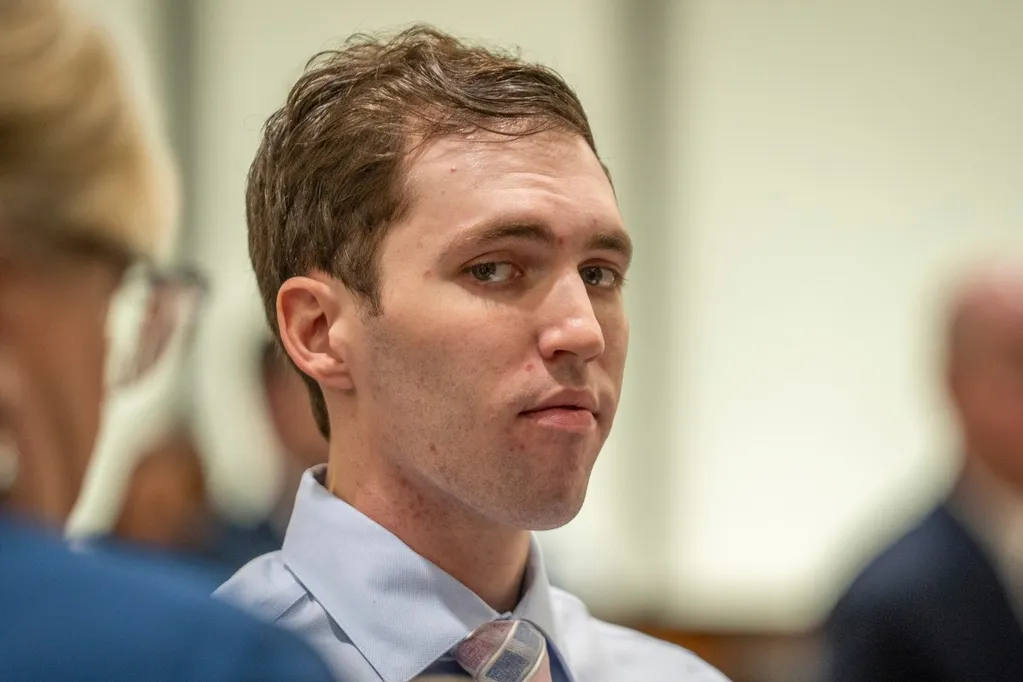
FBI officials have not turned over DNA analysis data despite repeated attempts ahead of the upcoming aggravated murder trial of Tyler Robinson, his attorneys said Friday.
Richard Novak, an attorney for Robinson, told Judge Tony Graf that his 23-year-old client, accused of assassinating conservative activist Charlie Kirk, would be prejudiced by a scheduled preliminary hearing set for May. He sought a delay of up to four months and also asked the judge why the FBI had not turned over relevant data in the case, KTVX reported.
The Bureau of Alcohol, Tobacco, Firearms and Explosives had recently submitted relevant data, according to Novak, who stressed the importance of the "appropriate discovery" as part of Robinson's right to reliably argue against the opinions of state experts, the station reported.
A message seeking comment from FBI officials was not immediately returned Friday afternoon. An ATF spokesperson referred Newsweek to the Utah County Attorney's Office for any evidence-related inquiries.
While in court Friday, Novak did not fault the Utah County Attorney's Office since federal authorities had not yet provided the relevant data to local prosecutors either. Robinson's legal team wants the preliminary hearing postponed until defense attorneys receive the raw data files from FBI and ATF investigators, KTVX reported.
"We're just going to have to wait," Novak argued.
Deputy Utah County Attorney Ryan McBride countered that Novak's request is unnecessary for a preliminary hearing, which does not require expert testimony. He said the state plans to introduce four types of evidence during the scheduled May 18 preliminary hearing: surveillance footage from Utah Valley University; circumstantial evidence linking Robinson to the rifle; Robinson's confession in the note he left his roommate; and DNA evidence.
McBride argued that prosecutors could still establish probable cause in the case without DNA evidence, insisting that next month's hearing not be postponed, KTVX reported.
Robinson's attorneys are also seeking to ban cameras from the courtroom, arguing that live broadcasts will violate his right to a fair trial. One example cited included a New York Post story suggesting Robinson confessed to killing Kirk during his first court appearance after being charged in December. The newspaper cited "lip reading analysis" to support the claim, his attorneys said.
"The predominant purpose being served by the live stream coverage has not been the educational reporting of the court proceedings, but rather advertising profit, sensationalism, political agendas, and, most prominently, the vilification of Mr. Robinson," his attorneys wrote in court filings.
Prosecutors and Kirk's 37-year-old widow, Erika Kirk, want cameras inside the courtroom, claiming transparency is the best counter to misinformation and conspiracy theories linked to Robinson, who faces the death penalty if convicted of fatally shooting the Turning Point USA co-founder as he spoke at Utah Valley University on September 10. He has not entered a plea.
Robinson's lawyers claimed in March that federal authorities were unable to conclusively link a recovered bullet fragment to the rifle found near the scene of Kirk's shooting, citing analysis from a private ATF report.
Authorities have said DNA consistent with Robinson was found on the trigger of the rifle, a fired cartridge casing, two unfired cartridges and a towel used to clean the weapon.
But Robinson's attorneys argue that the preliminary hearing cannot move forward until law enforcement agencies turn over more details about their DNA analysis of evidence.
Any postponement of Robinson's preliminary hearing could delay the case by six months, McBride said.
"Justice delayed is justice denied," he said Friday.