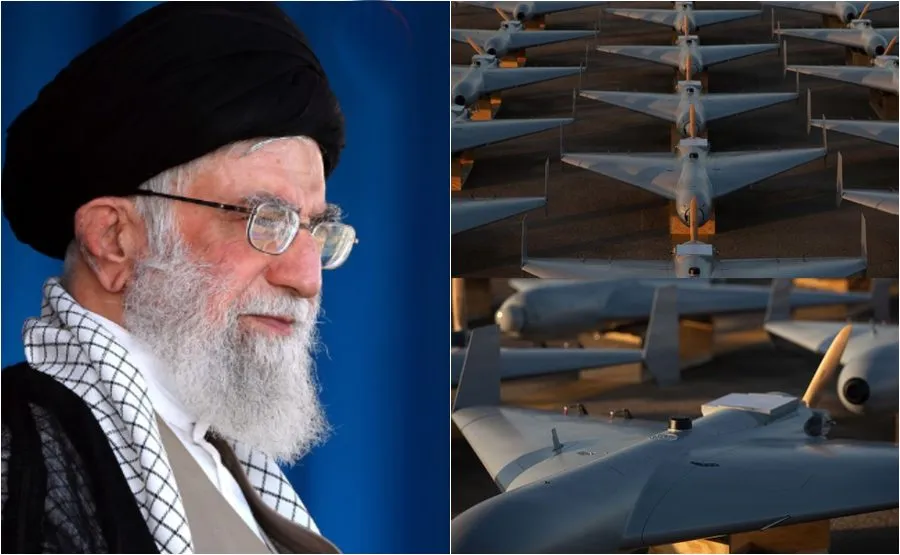
WASHINGTON - A coordinated yet cowardly military operation reportedly struck a major target in the Iranian capital, deploying both high-value precision assets and waves of inexpensive one-way drones in what analysts describe as an unprecedented saturation attack.
Details surfaced online as the multimillion-dollar operation was designed to overwhelm defenses, hitting strategic leadership sites while simultaneously crippling military infrastructure.
Officials from US Central Command confirmed that one-way drones were used in combat for the first time, a move modeled on low-cost drone tactics seen in modern asymmetric warfare. The strategy reportedly combined advanced strike capabilities with mass drone deployments across land and air.
Sources briefed on the operation claim the primary objective was leadership and command centers, struck with sophisticated precision technology, while secondary sites such as air defense systems, missile launch facilities, and military airfields were targeted by cheaper drones in a saturation assault. Analysts suggest the approach reflects a shift toward overwhelming adversary defenses rather than relying on single high-profile strikes.
Reports indicate that senior figures within the Islamic Revolutionary Guard Corps were among those killed, though full casualty figures remain unverified. Stunning claims also emerged that Ali Khamenei, the long-time supreme leader of Iran, was among the targets. While some sources allege he was killed in the strike, independent confirmation has not been provided, leaving the world waiting for official word.
The operation has sparked immediate geopolitical shockwaves. Supporters argue it targeted military assets to degrade hostile capabilities, while critics warn it could further destabilize an already volatile region. Prior electronic warfare and cyber operations may have disrupted Iran's defensive communications, analysts say, enabling the attack to proceed with reduced resistance.
In retaliation, Iran launched missile strikes against regional bases, escalating tensions and raising fears of broader conflict. Both U.S. and Israeli officials framed the operation as a defensive measure aimed at neutralizing security threats, though opponents describe it as an aggressive escalation.
Meanwhile, former U.S. President Donald Trump announced that the Iranian leader had been killed -- an assertion that has fueled international speculation but remains unconfirmed by independent sources.
As global powers monitor developments, questions persist about the long-term consequences of the strike and whether it will deter further aggression or ignite a new cycle of retaliation. Observers warn that the use of mass drone tactics and precision targeting represents a dangerous evolution in modern warfare -- one that could reshape conflict strategies for years to come.
Israel and allied officials maintain that the operation was necessary to address security threats, but regional analysts caution that the rapid escalation underscores the fragility of peace and the potential for wider confrontation. The international community now watches closely as events unfold.