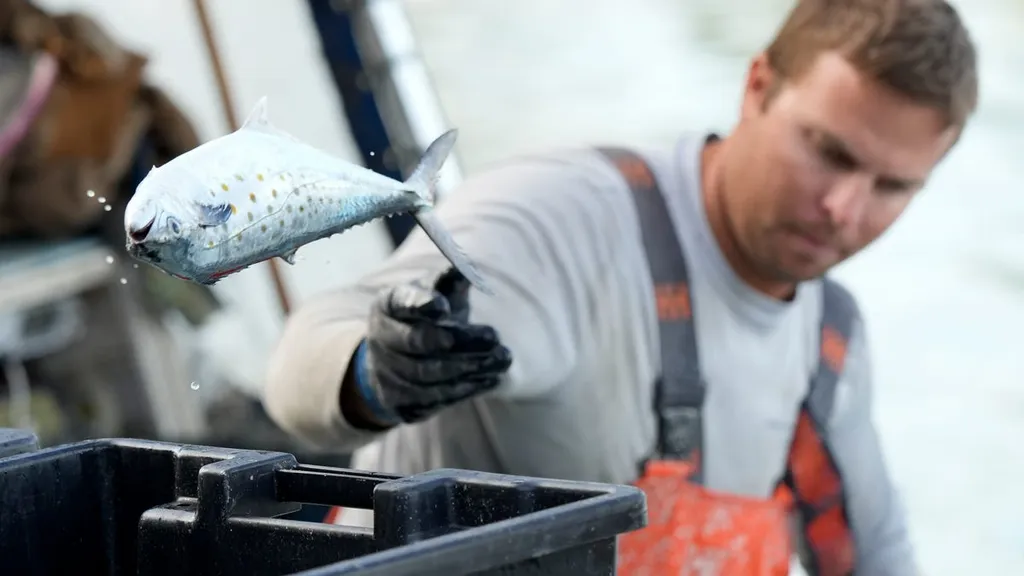
Florida gas prices are going up in Martin, St. Lucie and Indian River counties. Will fish prices increase too?
The trickle-down effect of rising gas prices has hit Florida commercial fishers, fish markets and seafood restaurants. The question is: When will diners and fish market customers start to feel the pinch?
Treasure Coast fishers told TCPalm they have increased the price they charge to sell fish to markets and restaurants, and to ship fish to other parts of the country.
Boat fuel prices have quickly increased by over $1 in the past two months, cutting into commercial fishers' profits. Offshore fishing vessels can burn over $200 in fuel in a single day, for example, fishers said.
Florida Fresh Fish owner Brian Lubowicki said he increased prices for restaurants and shipping, but not at his retail fish market under the new North Bridge in Fort Pierce.
"We are trying to hold down the costs for our retails customers," he said.
For example, he charges $5 a pound for mahi-mahi (dolphinfish), but recently raised the price from $10-$11 a pound last month to $19 a pound by mid-April. He also increased shipping prices from 10-11 cents per pound last month to 25 cents per pound to make up for trucking companies charging more because of increased gas prices.
"It's affecting everybody. Price goes up too much, and people stop buying fish. Then the market is weak and the price lowers and commercial fishermen and fish markets are affected," he said. "Fishermen want more money. Buyers don't buy as much. It's a multi-faceted problem."
Florida fuel price increases raise fish prices
Pelican Seafood Co. owner Eric Paul said he's holding the line on retail prices, but he's also trying to appease local commercial fishers who want more money. For example, he's paying commercial fishers more for kingfish now, raising the price from $4.50 a pound to $6.50 a pound.
Rising fish prices come on the heels of months of windy weather, including gale force winds and deluges of rain in the first week of April.
"Weather has been bad and fuel prices have increased," Paul said. "It (commercial fishing) looks beautiful and picturesque to some, but it's tough work."
Commercial fishers don't have the luxury of setting the price of their catch.
"We get paid what the market dictates," said Sebastian commercial fisher Richard McKnight. "It's not bad if fish prices are good (but) it's getting real tough.
"Overall, it has been a bad winter. It has been real hit or miss. One day you catch fish and another day you don't. Some days you have to think, should I go or not. It's a gamble," he said. "It makes you not want to go to work somedays."
Port Salerno Commercial Fishing Dock Authority President Butch Olson, a multigenerational fisher, called it "a really bad time" for fishing -- between gas prices and weather.
“They (fishers) still have to go. They still have bills to pay,” Olsen said. “Sometimes they have to run far. ... The cost of fuel went up quickly. It’s quite a hit. It’s a significant hit. It comes out of the bottom line.”
Compounding problems, the cost of bait, hooks, weights and other tackle has increased over 35% in the past two years, fishers said.
Boat fuel prices per gallon after tax on April 14:
- Vero Beach Municipal Marina: $5.40 for regular and $5.92 for diesel
- Sebastian Saltwater Marina: $5.99 for regular and diesel
- Fort Pierce City Marina: $5.58 for regular and $5.80 for diesel
- Safe Harbor Harbortown in Fort Pierce: $5.59 for regular and $5.82 for diesel
- Sunset Bay Marina and Anchorage in Stuart: $5.59 for regular and $6.17 for diesel
- Sailfish Marina of Stuart: $5.42 for regular and $6.13 for diesel
Fishing and boating are important to Florida's economy, generating $13.8 billion a year and supporting 120,000 jobs, according to the Fish and Wildlife Conservation Commission.
Florida also has led the nation in boat ownership, with 1.2 million boat registrations.
Tim O'Hara is TCPalm's environment reporter.