A couple of years ago, a reporter asked Blackpool FC's manager at the time, Mick McCarthy, about his team's terrible form, saying, "One win in 17. It can't go on like this, can it?" The Irishman took a beat, smiled grimly and said, "It can."
US air travelers know the feeling. No matter how punishing they might have thought flying was in recent history, it just seems to keep getting worse. It's certainly not the most important thing going on in the world right now, but it adds to a malaise among American consumers that could have real economic and political repercussions.
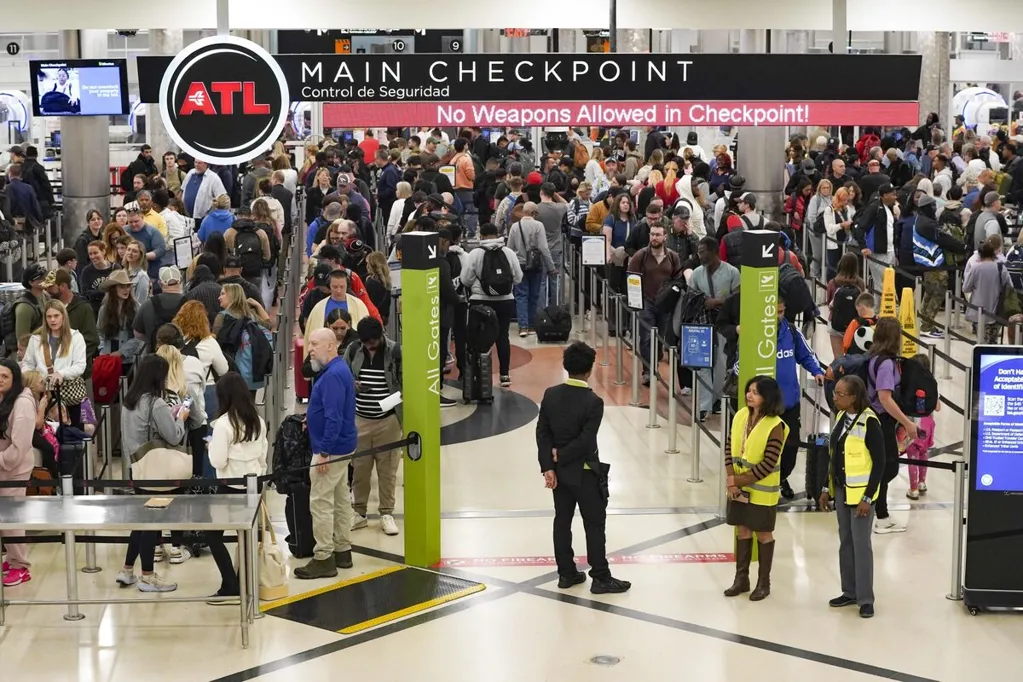
The latest affront to flyers comes in the form of agonizingly long lines at security checkpoints. Transportation Security Administration workers have been toiling without pay for more than a month, collateral damage in a congressional battle over funding for their umbrella agency, the Department of Homeland Security. Hundreds of agents have quit, and those that remain are less cheerful than usual. Many are calling in sick so they can work second jobs that actually pay them for their labor. The result is fewer open checkpoints and lines that can stretch toward the taxi stands.
Domestic air travelers usually need to get to the airport two hours ahead of time to make it through security. Now airports are warning that they'll probably need another hour if they want to make their flights.
Meanwhile, the energy crisis sparked by the war in Iran is boosting jet-fuel prices, which will make the privilege of waiting for hours to be crammed into airborne cattle cars far more expensive. Jet fuel prices have surged 60% since the war began to $3.99 a gallon, according to the Argus US Jet Fuel Index. That has already started to impact some ticket prices, NBC News reported. The longer the war lasts, the likelier prices are to rise and stay high, the president of the industry group Airlines for America told Bloomberg News.
Though US airlines don't hedge their fuel costs, they might be tempted to eat a temporary bump to avoid hurting demand. They're putting on brave faces for now, with executives for Delta Air Lines Inc. and American Airlines Group Inc. making bullish forecasts for spring and summer travel demand. But Bloomberg News suggested much of a recent surge in ticket sales consisted of travelers trying to lock in prices before they rose too high.
Shares of Delta and American rose on the news, but both companies warned that higher costs would threaten margins. That's a reminder that any air travelers who are still dreaming of a return to the good old days of leg room, refreshments, free luggage and other such extravagances will have to keep dreaming. American Airlines travelers can't even expect seatback screens, a luxury the company considered too expensive long before the Iran war, as my Bloomberg Opinion colleague Thomas Black noted in October. It only recently started offering free WiFi service, and only to members of its loyalty program.
So it goes, regardless of airline: Seats get smaller, lines get longer, amenities become rarer and more expensive, customer service gets worse, and more flights are delayed and canceled. At least we can't expect standing seats anytime soon. (Right?)
It's little wonder that consumers' complaints about flying have broken records in four of the past five years, according to Department of Transportation data. They hit nearly 67,000 in 2024 (the latest data available), more than quadruple the number in 2015.
Adding insult to injury, the Trump administration last year scrapped a rule proposed by the Biden administration that would have made airlines pay travelers when flights are delayed or canceled. In fact, along with the Iran war, several recent travel disruptions have been a direct result of federal government actions. Most notable and harrowing were last year's mass layoffs of air traffic controllers, thinning a harried workforce already faced with hundreds of near-collisions each year, according to a New York Times investigation.
Once a rare luxury, air travel is now something most Americans must endure every now and then. As of 2023, about half of all American adults had flown at least once in the prior year, according to the DOT. That's more than 100 million potential voters made poorer and more miserable by travel.
One of the only things uniting both President Donald Trump and Joe Biden is their apparent shared befuddlement over American consumers' sentiment that the economy is bad when the headline numbers suggest otherwise. Trump might want to remember how well this worked out for Biden. Because what those headline numbers don't capture is how often the riches flowing to those at the top of the economy come at the expense of the rest of us. Air travel is just one reminder of this, and also of how things can always get worse.