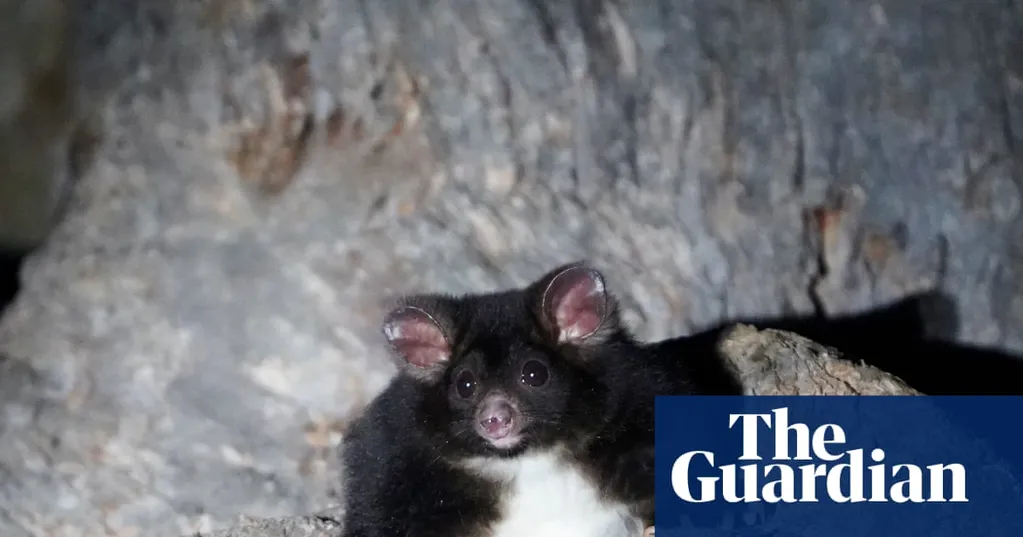
A former New South Wales Labor environment minister has called on the government to halt imminent logging in a forest on the state's south coast, after citizen scientists recorded 102 trees that they say are home to endangered greater gliders.
Bob Debus, who served as environment minister in the Carr and Iemma governments, also accused the NSW Forestry Corporation (NSWFC) of being found in breach of its own regulations so frequently that the "practice is essentially part of its business model".
A string of convictions recorded by the government-owned agency last year prompted a former magistrate to compare the forestry corporation to a "criminal organisation", an accusation the NSWFC said at the time was "ridiculous".
Wilderness Australia said it detected 102 so-called "den trees" during surveys over the past two months at Glenbog state forest - which is scheduled for logging in the next few weeks.
Under state rules, logging is not permitted within 50 metres of known den trees. The Forestry Corporation's own surveys detected just four den trees in the area.
If the citizen scientists' results are correct, it raises questions about whether logging can go ahead.
Andrew Wong, the operations manager of Wilderness Australia who led the team of volunteers, warned Forestry Corp could be "committing ecological fraud" if they continued conducting forestry operations. He accused them of surveying the bare minimum and claiming there are fewer gliders there than there actually are.
Debus said the operations at Glenbog showed that native forest logging in NSW was untenable.
"Forestry Corp is in breach of its own regulations so frequently that the practice is effectively part of its business model," he said.
"Native forestry operations run at a permanent loss so in reality, taxpayers are paying the fines when they are prosecuted."
Glenbog, near the Deua national park, is a hotspot for greater gliders and other threatened species because it is a cloud forest with its own microclimate, making it less prone to extreme temperatures.
Andrew Wong, the operations manager of Wilderness Australia, said his group of volunteers identified large hollows in old trees during daytime and then waited until dusk to detect gliders as they emerged from their dens.
"There is just a small window when they emerge, just as it gets dark," Wong said.
Using thermal cameras and spotlights, the volunteers recorded each greater glider sighting and uploaded them to a phone app which then geolocated it on a map. The data was also sent to the government site BioNet, he said.
Until recently, the Forestry Corporation was surveying during the day. After a court ruled this was inadequate, they moved to surveying at dusk and night.
Wong claimed the corporation was still conducting many of its surveys outside the crucial window when gliders emerged, and the survey methods failed to consider hollows on the other side of trees or deeper in the forest.
"Glenbog is a biodiversity stronghold that should never be logged," Wong said.
The agriculture minister, Tara Moriarty, who is responsible for forestry, said she expected the corporation "to undertake native forest operations in line with the requirements of the Coastal Integrated Forestry Operations Approvals".
"This provides very specific instructions on searching for greater glider dens and I am advised that Forestry Corporation has comprehensive procedures in place to adhere to these requirements."
A Forestry Corporation spokesperson said the conditions of approval had specific parameters for nocturnal searches to be conducted for greater gliders.
"The [conditions specify] the time of day, location of surveys relative to roads and trails and the speed at which the surveys must take place. Forestry Corporation conducts nocturnal surveys in line with these requirements.
"Information provided to Forestry Corporation by third parties is also considered in the planning process and exclusion zones established around den sightings," it said.
"The records provided by the citizen scientists are currently being incorporated into the plan."
However, the rules are minimum requirements for inspections and it is open to Forestry to do more.
The area is also home to many wombats, including those that have been rescued and rehabilitated at the neighbouring wildlife sanctuary.
The sanctuary made an informal agreement with the NSWFC not to damage wombat burrows during logging, after an incident in 2014 when burrows were destroyed during forestry operations, leading to entrances being squashed by machinery and blocked by felled timber.
Marie Wynan, the founder of the sanctuary, said a lot of the wombats were ones it had released. "They don’t deserve to be buried alive."
She said 666 burrows have been identified.
The NSWFC said it was working with the wildlife sanctuary to avoid damaging burrows.