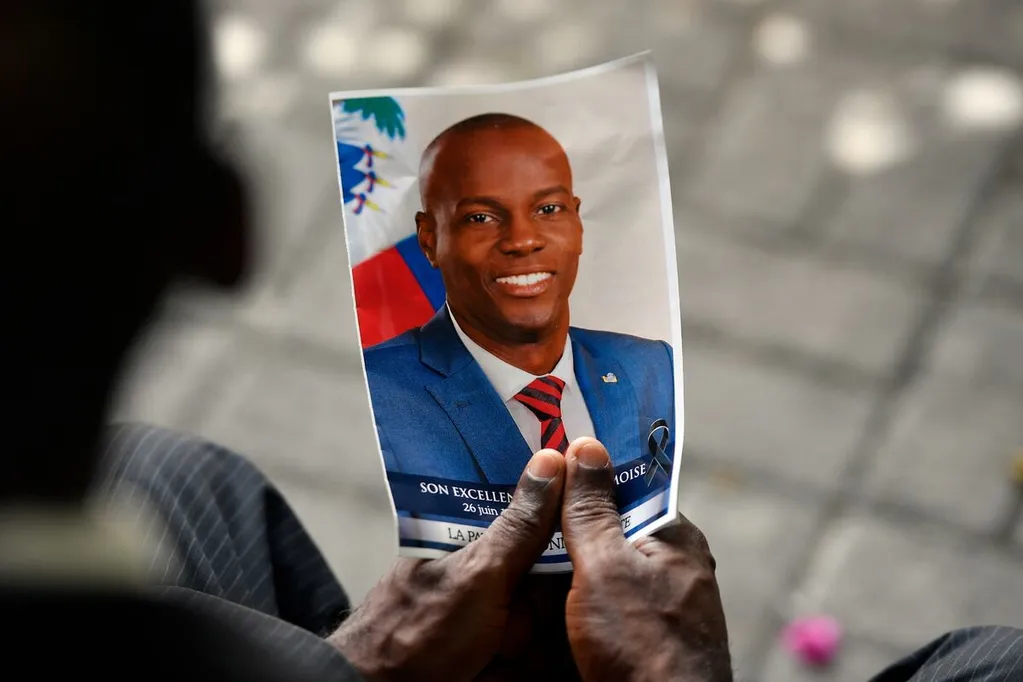
The men face possible life sentences, and eight co-conspirators pleaded guilty to their roles in the plot, with six testifying at trial.
Four men were convicted in Miami for their roles in the 2021 assassination of Haitian President Jovenel Moïse that further destabilized the government and led to years of violence in the country.
Jurors returned guilty verdicts Friday against the men, who prosecutors said had organized the plot using Colombian mercenaries and Haitian gang members to violently oust Moïse and replace him with a friendly successor to allow them to obtain lucrative contracts with the government. The group helped supply equipment from Florida to aid in the killing, prosecutors said.
Arcangel Pretel Ortiz, Antonio Intriago, Walter Veintemilla and James Solages, who were convicted after a nearly two-month trial, face possible life sentences. Eight co-conspirators, including two Colombian mercenaries and allies recruited in the US and Haiti, pleaded guilty to their roles in the plot. Six testified at trial.
"These defendants pursued power, influence, and profit through violence," Jason A. Reding Quiñones, the US attorney in Miami, said in a statement. "They supported a conspiracy that crossed borders, destabilized a friendly nation, and ended with the murder of a sitting president."
Prosecutors alleged Veintemilla played a central role in financing the conspiracy using money from US Covid relief funds funneled to an account of a co-conspirator. Pretel Ortiz organized the mercenaries while his business partner, Intriago, helped smuggle equipment to Haiti, prosecutors said. Solages arranged for weapons and accompanied the mercenaries during the attack, the government said.
The brazen July 2021 murder of Moïse, 53, in his Port-au-Prince home plunged Haiti into even deeper chaos and sparked a surge in violence that has continued largely unabated, with armed gangs now in control of more than 80% of the capital. Gangs have also tightened their hold on large swaths of the countryside, darkening the outlook for the poorest nation in the Western Hemisphere.
While the United Nations says some progress has been made in reducing violence in Haiti, more than 1.45 million people have been forced to flee their homes and some 6.4 million people -- more than half the nation -- will require humanitarian assistance this year.
The international community is hoping that at a UN-backed Gang Suppression Force, which began trickling into the country last month, will eventually create the conditions for long-overdue general elections.
Alix Didier Fils-Aimé, who has been acting prime minister since 2024, has said that securing the nation, rescuing the economy and holding elections for the first time in more than a decade are his top priorities.
The case is US v. Pretel Ortiz, 22-cr-20104, US District Court, Southern District of Florida (Miami).