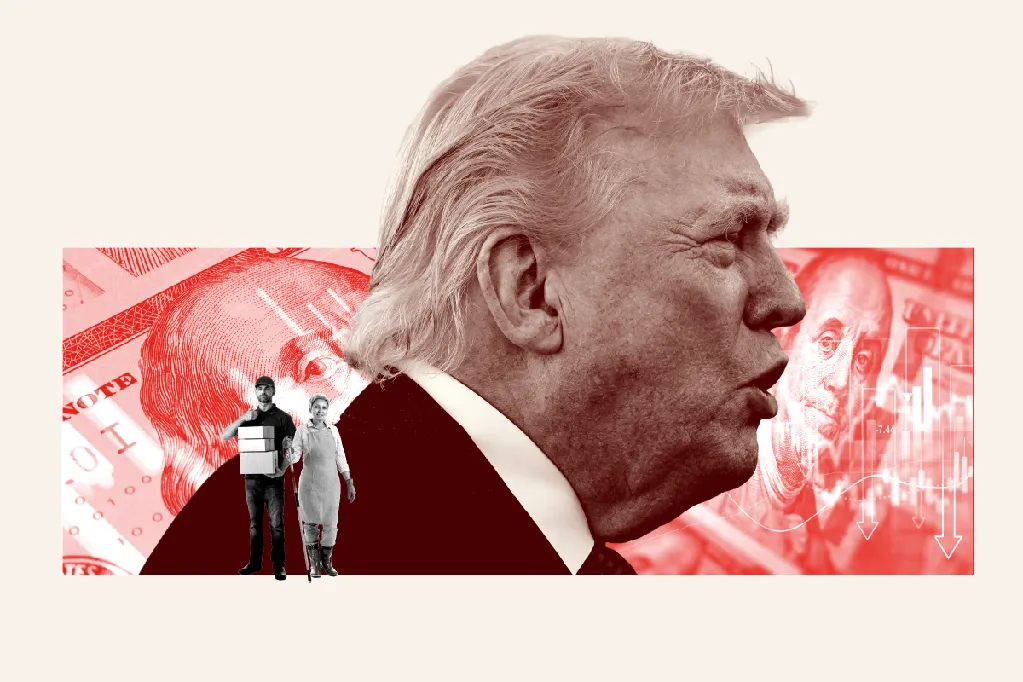
As his support among working-class voters -- a coalition that helped him return to power in 2024 -- shows signs of erosion, President Donald Trump continues to champion a series of progressive-style policies that experts read as clear attempts to stem the bleeding in this crucial bloc.
According to a CNN/SSRS poll from late March, Trump's approval among white non-college graduates has dipped into negative territory -- with 49 percent supporting and 51 percent disapproving of his presidency. A separate survey of nearly 2,000 Trump voters found that one in five do not plan to support a Republican candidate in 2028, a departure that the pollsters said was "concentrated among his working-class voters."
The results have emerged as voters in general sour on his handling of the economy and cost-of-living issues -- made more pressing with the war in Iran driving up energy prices -- and mark a significant shift from the support Trump enjoyed in 2024.
Despite robust macroeconomic indicators, Trump leaned on Americans squeezed by the costs of housing, groceries, gas and debt -- broadening the party's non-college coalition beyond the white vote and securing 56 percent of working-class support in 2024, according to analysis by the Center for American Progress.
Like in 2016, Trump's appeal to Democratic, working-class strongholds was viewed as paving the path to victory. And once again, the president is fashioning an agenda focused on affordability -- a term he derides -- in the runup to this year's midterm elections.
Last week, Trump signed an executive order aimed at expanding access to retirement savings accounts for those without employer-supported plans, establishing the TrumpIRA.gov website that will direct them to low-cost IRAs. Thanks to a $1,000 matching contribution from the government -- an incentive created under his predecessor, President Joe Biden -- Trump said regular savers would be able to build a nest egg of around $465,000 by the time they turn 65.
"In other words, they'll be rich," Trump said during a signing ceremony in the Oval Office. "And there's something awfully nice about that."
It's the latest in a string of perceived pro-consumer measures floated or enacted by the administration -- from "no tax on tips" folded into his signature spending bill -- the One Big Beautiful Bill Act -- to the upcoming launch of Trump's government-boosted namesake savings vehicles.
"It is fair to say that these policy moves are being offered up to minimize what are seemingly large losses of support from Americans from a variety of economic classes, perhaps especially from the working class," said Michael Shepherd, a professor at the University of Michigan and a scholar of U.S. economic inequalities.
Others, such as his plan to ban mega investors from buying up single-family homes and free up supply, or the proposal -- seemingly abandoned -- to cap credit card rates have drawn support from more progressive circles in Capitol Hill.
"The president's deadline is long past; the big banks have predictably refused to act; and Americans still face average credit card interest rates of roughly 25 percent," Democratic Senator Elizabeth Warren of Massachusetts wrote in a recent letter to bank regulators, urging them to follow through on Trump's January announcement of a one-year, 10-percent ceiling on credit card rates.
This degree of state intervention in private-sector financial matters -- an oddity for a Republican president -- has been criticized by some conservative observers as a foray into socialism, but others view such policies as essential to halt the further erosion of lower-income support heading into the November elections.
The Republican former mayor of Miami, Francis Suarez, told Fox News that Trump's "no tax on tips" break was cultivating a "connection with everyday, working-class people," who are clamoring for relief from sky-high gas prices and other affordability strains while acknowledging that the policy itself seemed lifted from a Democratic manifesto.
"Trump understands that he was elected president twice -- he would say three times -- because he stole working-class voters from the Democrats without completely losing the traditional low tax/social conservative base," said political scientist Paul Sracic, a senior fellow at the Hudson Institute.
Sracic told Newsweek that beyond their manifest economic effects, the above policies may be more of a tool to ensure Trump's working-class base is encouraged to show up for the midterms -- a typically lower-turnout election. And others doubt whether the policies can create the economic lift needed to boost turnout or votes come November.
"These voters are not reading policy briefs or even paying much attention to policy talking points," political scientist and Vanderbilt University professor Larry Bartels said. "They will respond to how their lives feel at the time of the election."
And as Trump rolls out policies designed to ease affordability strains, the crisis driving them has become more acute.
Housing, healthcare and grocery costs continue to climb, with gas prices -- a particularly sensitive matter for the U.S. electorate -- soaring on the back of the Iran war energy crisis. A prolonged slowdown in the labor market has combined with a surge in layoff announcements that has left more Americans concerned about their future employment prospects.
For what experts see as Trump's policy-driven strategy to recoup working-class support to succeed in time for the midterms, the policies would have to meaningfully offset nearly two years of accumulating pressure on this base.
"I don't think any of these policies will put a sufficiently big and visible dent in income stagnation or inflation or unemployment to move the needle much," Bartels said.
"President Biden's economic policies were much bigger and arguably much more consequential for working-class people, but even they could not overcome the price of eggs."