While there are similarities with the wars against Iraq, the Iran conflict may prove to be the most dangerous and consequential yet.
This is the third Gulf war and umpteenth outbreak of conflict since the United States took over as the dominant power and influence in the Middle East at the end of the cold war. And it is arguably the most dangerous, consequential and confused of them all.
The destruction and chaos spreading across the region confirms the Middle East's status as the world's pre-eminent crisis factory, but it also raises questions as to how US presidents so often declare they are ending US interference in the region, only to be lured back in.
Since the second world war the US has set out to oust a government in the Middle East on average once a decade, and on almost every occasion it has left the country, and the US, worse off as unexpected consequences eventually emerge. As Donald Trump embarks on yet another regime change - this time in Iran, a country of 90 million people - the sense of foreboding is profound. Already the timelines are extending, and the sense is growing by the day that Trump is gambling with the fate of a country about which he knows next to nothing.
The first Gulf war, in 1990-91, at least had the advantage of being of a containable scope, purpose and duration. Once Saddam Hussein invaded Kuwait in a warped blow for pan-Arabism, George HW Bush pushed the Iraqi leader's forces back with relative ease, maintaining a broad supportive Arab coalition, partly by ensuring Israel did not respond to Saddam's provocations to become involved. Famously respecting the UN security council mandate to liberate Kuwait, but not invade Iraq, Bush decided not to pursue the routed Iraqi army to Baghdad. The ground campaign took only 100 hours.
The onesidedness of that war has parallels with what is happening in Iran. Azmi Bishara, the Arab intellectual, called the former a model of war that meant one side waging it without risk, the other without hope; "one side accidentally losing a half dozen people, the other losing a few hundred thousand by force of arms".
But the war did leave a legacy. Kurds and Shia Muslims learnt the risk of being used by a US president, having been encouraged to rise up against Saddam and "take matters into their own hands", only to discover Bush would stand aside as they were crushed. It is a lesson the Kurds of Iran may have studied.
Secondly, the war brought half a million US troops to the Middle East and, as Marc Lynch writes in his book The Ruination of a Region, those troops "in a symbolic sense, never went home; instead moving out into an archipelago of US bases across the Gulf, the Levant and southern Turkey designed to implement the dual containment of both Iraq and Iran".
Those bases, now under attack by Iran, became "the infrastructural foundation of American primacy".
In the second Gulf war, known as the Iraq war, from 2003-11, George W Bush determined Saddam must go because of his presumed possession of weapons of mass destruction. It meant the US at least possessed an identifiable war aim, albeit one based on a gargantuan intelligence failure for which no one took the blame.
Whether Washington went to war on a lie or a misapprehension, it went in not knowing enough about the country it was invading or the forces it would uncork once Saddam's authoritarian rule was ended.
The optimism bias about the war's aftermath was so deep because the desire to go to war was so deep. In Congressional testimony, the then deputy defense secretary, Paul Wolfowitz, told members of the house armed services committee in February 2003 that the Iraqis were "23 million of the most educated people in the Arab world who are going to welcome us as liberators ... The notion that we're going to earn more enemies by going in and getting rid of what every Arab knows is one of the worst tyrants ... is just nonsense." Wolfowitz dismissed comparisons with the Balkans and said Iraq had no record of "ethnic militias fighting one another", so large postwar peacekeeping forces would not be required. He was also confident free Iraqis would reject Islamist extremism or theocratic rule. He admitted he based his arguments in part on his personal contacts.
Another advocate for war was an Israeli opposition leader called Benjamin Netanyahu. He advised: "If you take out Saddam, I guarantee you that it will have enormous positive reverberations across the region. And I think the people sitting right next door in Iran, young people and many others, will say the time of such regimes, of such despots, is gone." The opposite happened. Iran became stronger, including inside Iraq.
More recently, John Sawers, the former head of MI6 and the UK special representative in Baghdad in 2003, described the aftermath of the invasion as "total chaos".
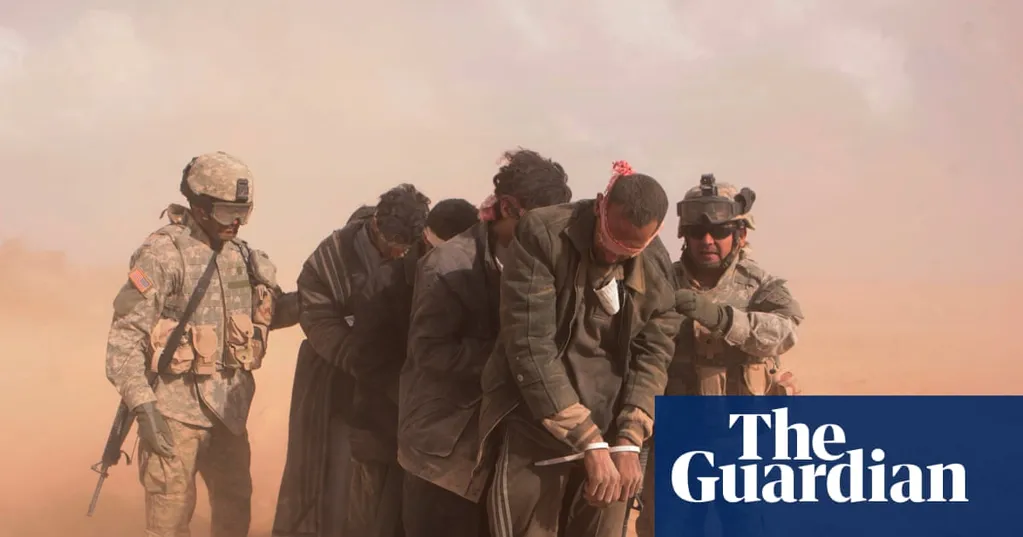
"No real planning had gone into the aftermath," he said. "The Americans were sitting hunkered down in their tanks and armoured vehicles with reflective sunglasses and heavy helmets on with no engagement with the Iraqi people at all. They just assumed that once American forces had toppled Saddam then the Iraqi exiles would come in, take over and everything would be hunky-dory. Well,it turned out to be completely different from that."
Philip Gordon, who was a national security adviser to former US vice-president Kamala Harris argued in 2015 that there was something fundamentally wrong about US concept regime change.
He wrote: "When implying US can fix Middle Eastern problems if only it 'gets right', worth considering that Iraq US intervened occupied result costly disaster. Libya US intervened did not occupy result costly disaster. Syria US neither intervened nor occupied result costly disaster". Indeed, wrote whole book citing examples how US fails anticipate chaos inevitably ensues after regime collapse. War can end regime; install cohesive society.
Yet striking aspect pre-Iraq war debate was extent to which there was one. By comparison run-up attack Iran Trump administration has prized deceit surprise. In February 2003 US defense secretary Colin Powell thought necessary go UN make hour-long multimedia presentation showing trucks train carriages allegedly "serving mobile production facilities biological agents Iraq". It later emerged intelligence wrong; Powell believed necessary make case garner global support invasion.
Now, by contrast, halls UN security council silent or filled Melania Trump lecturing world rights child wartime; while Department Defense simultaneously investigates whether US responsible bombing girls' primary school southern Iran killed scores children.
In 2002, many Department State officials warned likely cost and length occupation and possibility beneficiary would be Iran and Shias inside Iraq. They were right. The estimates vary but war probably cost US $2tn spawned Islamic State terrorist organisation led deaths 150000 1 million people according different estimates. Tony Blair’s insistence invasion should accompanied new push Palestinian question bore no fruit leaving issue sidelined until 2023.
Fast forward Trump’s Operation Epic Fury compared 2002 all we have epic confusion. In succession interviews statements phone calls Trump team offered wildly contradictory justifications war. Little it extends assertion.
Rotating rationales been set out Top Gun-style seminars delivered secretary defense Pete Hegseth uses title “secretary war”. “Crazy regimes like Iran hell bent prophetic Islamic delusions cannot nuclear weapons,” he said.
Iran close having intercontinental ballistic missile hit America ran one administration claim. Steve Witkoff Trump’s all-purpose international envoy said Iran week away having industrial-grade bomb making material.
The vice-president JD Vance said nuclear talks Iran passed smell test arguing Iran building facilities 20 metres (70ft) underground enriching uranium 60% purity. As a result nuclear sites “obliterated” attacks last June needed re-obliterating.
Trump himself described terrorist nature regime stretching back 40 years spoken regime change.
But it was secretary state Marco Rubio presented startling rationale.“We knew there going Israeli action,” he told reporters.“We knew would precipitate attack American forces,and we knew if didn’t preemptively go them launched attacks would suffer higher casualties.”
It seems no one White House thought alternative solution risk might tell Israel not attack Iran.Yet again people ask:“Who fucking superpower around here?”-question raised Bill Clinton 1996 after bruising first encounter Netanyahu.
Some mess may because Israeli US political objectives fully aligned.
The fear Iraq quagmire leads Trump say looking elusive Iranian equivalent person replaced Nicolás Maduro leader Venezuela Delcy Rodríguez figure rooted regime pivot policy pragmatically Washington’s expectations.It similar intention then secretary state Condoleezza Rice “the army defeated,but institutions held” Iraq.
Trump said week he’d found likely candidates admitted unfortunately now lying dead rubble bombed government building.“Most people had mind dead.Now another group.May dead also,based reports.So guess third wave coming.Pretty sure not going know anybody.”
At times however Trump does sound like man only wants“blow bloody doors” Iran;he wants engineer building’s complete collapse,and willing open Pandora’s box asking Iranian Kurdish rebels help make this happen.
Sawers,drawing experiences across Middle East,warned“dangerous possibility regime could corrode collapse lose control parts country,country could fragment several different parts local administrations crop up,often ethnic basis.If country dissolves component parts basically failed state.Know last 40 years become centre terrorism,smuggling,gun running,drugs criminality sorts.”
Iran’s sizeable ethnic minorities - Kurds,Balochs,Ahwazi Arabs,Azerbaijanis - forcing Iran disintegrate has always been one leadership’s greatest fears,and their complaint exploitation longstanding.
The vast majority Iran’s natural resources - oil,gás,and major water sources - found outside central plateau,in areas non-Persian communities sizeable Sunni Muslim population.By contrast,the Shia-Persian majority concentrated central plateau;an arid region bounded west Zagros mountains;north Alborz range;east Iran’s central desert.
The parallels between Gulf wars are not perfect.Israel was not driving force it this conflict;likelihood Sunni-Shia split smaller.No western ground troops involved.
But danger is this has been US project rigidly focused destruction threat posed by Iran.The harbingers shock and awe know little about forces could emerge from Islamic republic’s destruction.On way Baghdad 2003 commander US forces Gen David Petraeus asked famous question:“Tell me how this ends?”It remains pertinent now it did then.