By MICHAEL BLACKLEY, SCOTTISH POLITICAL EDITOR FOR THE DAILY MAIL
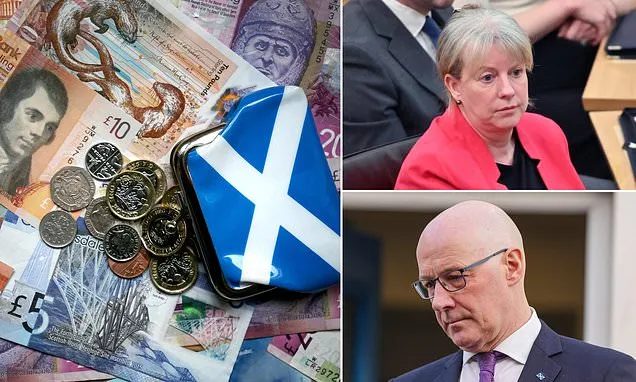
Pressure is growing on SNP ministers to give Scots a much-needed break from the strain on their finances by reducing the tax burden in today's Budget.
Finance Secretary Shona Robison was yesterday urged to cut income tax and increase the thresholds for paying the higher rate to protect people on modest earnings.
Business leaders are also demanding action to tackle the costs crisis facing firms, including relief for hard-pressed retail, hospitality and leisure sectors and action on business rates bills which are set to skyrocket from April when a revaluation comes into force.
Ms Robison yesterday said efforts to address the cost of living crisis and help struggling families will be at the heart of her Budget - but still continued to defend the highest taxes in the UK introduced by the SNP Government.
Scottish Conservative leader Russell Findlay said: 'Scottish households and businesses are struggling after years of rising bills under the SNP government. It is absolutely critical that John Swinney starts listening and gives people a much-needed break.
'SNP stealth taxes have dragged hundreds of thousands of middle-earning Scots into higher tax bands, at the same time as their household bills have soared. And many businesses across the country are on the brink.
The Scottish Tories have demanded an increase in the thresholds for income tax, including at the 42p higher rate which is currently charged on earnings between £43,663 and £75,000.
Currently, Scots pay a 50p marginal rate of tax on all earnings between £43,663 and £50,270 due to the combined impact of income tax and national insurance.
Ms Robison yesterday said she understood issues about people losing half of their income to tax but still rejected criticism of her own policies, which have left everyone earning more than £30,300 paying more than they would south of the Border.
The Federation of Small Businesses (FSB) also yesterday published new research showing that the growing tax burden is the single biggest factor driving the costs crisis facing firms and called for urgent action in the Budget.
The study shows 59 per cent of small businesses identify tax as a key cause of their rising costs, while 45 per cent cite increasing staffing expenditure.
More than one in three firms - 35.1 per cent - now expect their operations to shrink in the next year, while only 20.2 per cent expect them to grow.
Ministers are under growing pressure to halt a business rates revaluation which will see some firms bills nearly tripling from this April, and also to deliver a permanent reduction for retail, hospitality and leisure firms similar to action taken in England.
Guy Hinks, FSB Scotland chairman, said: 'The last thing Scotland's small businesses need is to be hit with eye-wateringly increased rates bills in April. The costs crisis they are facing is already dragging down firms across the country, putting livelihoods and investment plans at risk.
'Fortunately, there are some straightforward steps which the Scottish Government can take in today's Budget to protect small firms from this potential catastrophe. That means reducing the multiplier used to calculate final rates bills, restoring reliefs through raising small business bonus scheme thresholds to previous levels, and introducing specific lower poundage rates for the hard-hit retail, hospitality and leisure sectors.'
Ms Robison said key priorities in the Budget would be investing in the NHS, addressing cost of living pressures, growing the economy and tackling the climate emergency.
But she accused the Tories of demanding 'unfunded tax cuts' - saying it was 'not a serious contribution' and would have to be stripped out of spending on NHS, local government, colleges and universities.
She repeatedly acknowledged that 'family budgets are under pressure' and that 'people are struggling'.
Asked by the Mail if she accepted taxation is a key pressure on family finances, she said: 'Taxation is important because it helps to pay for all of the investments, whether public services, whether it is the cost of living supports we provide, the Scottish child payment, the infrastructure that we invest in - all of that is an important contribution to our society.
'We have set out a progressive system of taxation and of course I will set out tomorrow what our taxation plans are going forward.'
She committed to no changes to income tax rates and bands in the Budget, as previously set out in the Scottish Government tax strategy.
On whether it is a concern that people pay a 50p marginal tax rate on earnings from £43,663 to £50,270, she said: 'I understand these issues but what I would say is that the contribution which taxpayers make to reducing child poverty, where we are the only part of the UK where child poverty rates are falling, is an important contribution to society that I would want to thank taxpayers for.
'I think it is also important to recognise though that many of the costs in Scotland are lower than their counterparts south of the border would have, so for example lower council tax rates, housing in the main is cheaper and of course if their children go to university they won't have ten grand of tuition fees to pay, if they go to the doctor they won't have to pay prescription charges which I think are now over £11.
'There are many other supports we have in place which are not available anywhere else, so that's part of the social contract that we do recognise the contribution of taxpayers but taxpayers do get more support here.'
On the pressure facing businesses, she said: 'We very much recognise the importance of businesses, first of all local businesses, and the importance of the high street.
'The Budget will continue to look at how we support businesses, and I will set that out tomorrow.'
But she refused to say whether postponing the revaluation is an option on the table.
Asked if she thought the welfare bill - which is on course to soar from £6.22billion this year to £9billion by the end of the decade - is sustainable, she said: 'Yes, it is... we balance our Budget every year by making sure that we can fund our priorities.
'I think a society is really known by how it treats its most vulnerable citizens and we are helping some of our most vulnerable citizens, particularly children who need to have a start in life and support through their life to be able to be productive citizens when they grow up. That is an investment for the whole of society and that is one we are proud to have invested in.'