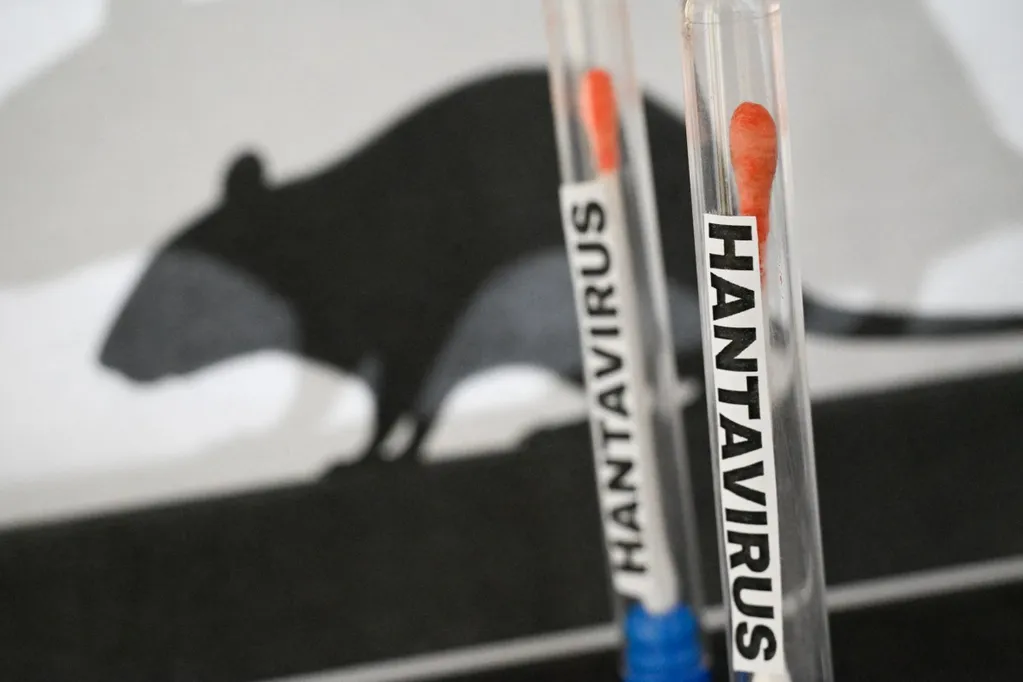
At least eight people connected to a Dutch cruise ship have been infected with the Andes strain of hantavirus, including three deaths. The Centers for Disease Control and Prevention (CDC) did not formally establish a response team until nearly a month after the first death -- but its acting director said the agency began its response instantly.
Six Americans who left the ship in late April learned of their potential exposure from state health officials and news outlets, not from the federal government. The CDC issued its first public statement on the outbreak more than four hours after the news broke Wednesday, making no mention of the Americans who had already returned to U.S. soil.
The World Health Organization (WHO) notified the CDC of the hantavirus cluster on May 2. The CDC did not formally establish a response team until May 6.
Stephanie Psaki, who served as coordinator for global health security during the Biden administration, told Newsweek the response has been difficult to assess. "I am hopeful that some work is happening quietly inside the government but not being reported publicly," she said. "For example, it's possible that state health officials learned of the threat from CDC, and CDC sent them screening guidance to help prepare."
Jay Bhattacharya, acting director of the CDC, said in a statement that the agency began coordinating with partners immediately. "Our CDC team began coordinating with domestic and international partners as soon as we were notified of a hantavirus situation. CDC has the world's leading experts on hantavirus and is lending its technical expertise when coordinating with interagency partners, state health offices, and international authorities on response and repatriation planning."
Newsweek also reached out to the CDC via email for comment late Friday afternoon.
His statement attributed organizational efforts to the State Department, saying it is "leading a coordinated, whole-of-government response including direct contact with passengers, diplomatic coordination, and engagement with domestic and international health authorities."
Public trust in the CDC's ability to respond effectively to health threats, however, has deteriorated. A poll by KFF released in February found that just 47 percent of Americans say they trust the CDC for reliable information about vaccines, the lowest level since the COVID-19 pandemic began. Trust among Democrats fell to 55 percent, down from 64 percent in September.
An Annenberg Public Policy Center poll released in March found that 67 percent of respondents trust career scientists at federal health agencies, but only 43 percent trust the leaders of those agencies. Just 38 percent of Americans expressed confidence in Health and Human Services Secretary Robert F. Kennedy Jr. to provide trustworthy information about public health.
Amesh Adalja, senior scholar at the Johns Hopkins Center for Health Security, told Newsweek that the current outbreak is containable. "Even the Andes version of hantavirus is very inefficient in its spread, requiring close and prolonged contact," Adalja said. "Hantavirus would need to make a major evolutionary leap to become a pandemic threat. It would have to evolve to spread more efficiently from person to person, most likely through respiratory transmission. This is not something experts think is close to happening."
Yet, a group of health officials have warned that the institutional capacity to respond to even a contained outbreak has been severely compromised. The CDC has lost roughly a quarter of its workforce over the past year, according to an analysis by KFF, with more than 3,000 employees cut or departed. The agency has cycled through four different directors or acting directors in barely a year.
Jeanne Marrazzo, CEO of the Infectious Diseases Society of America, said in a call with reporters on Thursday that it was unusual the CDC had still not posted a Health Alert Network notice on the outbreak. The notices are typically used to warn healthcare providers and the public about emerging health threats.
She warned that cuts imposed by the Trump administration could hamper the agency's ability to respond to the outbreak.
"Funding is insufficient, preparedness is insufficient, and workforce capacity is insufficient. That affects everyone -- from infectious disease physicians, to people who screen passengers on cruise ships, to CDC staff responsible for ensuring health standards on cruise ships are maintained and that outbreaks can be tracked when they occur," Marrazzo said.
"These systems are simply not robust right now given what has been happening. There are many examples of that."
The Trump administration has already scaled back other parts of the country's pandemic prevention infrastructure. In its 2026 budget request, the White House said it planned to refocus the CDC on outbreak investigations and preparedness. At the same time, it proposed eliminating $750 million in state preparedness grants and zeroing out funding for the Hospital Preparedness Program.
The administration also shuttered a network of research centers focused on preventing pandemics by studying pathogens like hantavirus that jump from animals to people. It also withdrew the country from the WHO, severing routine intelligence-sharing about emerging health threats from member states.
Psaki said the broader pattern concerns her more. "The staffing cuts and general undermining of CDC's value and expertise has done lasting damage," she said. "The same is true for the elimination of USAID [U.S. Agency for International Development] and cuts across other HHS agencies."
"I worry that as we disinvest in global health, we're losing our global capacity to deal with diseases," said Dr. Carlos del Rio, an infectious-disease expert at Emory University, in an interview with The New York Times.
The WHO's advisory group on viruses with pandemic potential, which includes experts from Brazil, Britain, India and the Netherlands, will meet to discuss the hantavirus findings. It does not include anyone from the CDC.
The CDC's "disease detectives," Epidemic Intelligence Service fellows who conduct outbreak investigations, were temporarily laid off earlier this year. Many who were rehired have since left for other jobs. Applications for the incoming class are roughly 20 percent of normal levels, according to STAT News.
"You don't have the captains and admirals in order to run a big response," said Dr. Daniel Jernigan, who ran the CDC's emerging disease center before resigning in protest in the fall, in an interview with the Times.
Jernigan cited data from Science magazine showing a loss of over 10,000 federal workers with doctorates in science, technology, engineering and math. "We will not be ready for a big pandemic," he said. "We won't have the staff to be able to do that."
The coordinator position for global health security that Psaki held, created by Congress in 2023, remains vacant. The White House Office of Pandemic Preparedness and Response Policy, also established by Congress, is unfilled. Gerald Parker, appointed in February 2025 to lead pandemic response at the National Security Council, resigned less than six months later and has not been replaced.
For the Andes virus aboard the cruise ship, Adalja's assessment stands: It lacks the biological machinery to trigger a pandemic. But as Jernigan and others suggest, the CDC's institutional machinery, once designed to respond to threats far worse than hantavirus, has been dismantled. The question is not whether this outbreak will overwhelm the system. It is whether the next one will.
Psaki said that responding effectively to an outbreak requires "a well-coordinated, fast, and targeted effort," and that she hopes such an effort is underway within the government. However, she added that it has been "difficult to discern from what they have shared publicly."