READ MORE: Ten hobbies that could mean someone is a narcissist
Think psychopath and most of us will probably come up with fictional characters like Patrick Bateman, and famous serial killers like Ted Bundy or Jack the Ripper - maybe even Sherlock Holmes comes to mind, when we talk about sociopaths.
But psychologists say it's actually a lot more complex than we might think, with these two antisocial personality disorders sharing a lot of the same traits.
The term sociopath, whilst often used to refer to someone who is acting in their own self-interest, manipulating others or lacking in empathy, isn't actually recognised by the World Health Organisation (WHO) as a diagnosis in its own right.
Rather, sociopathic traits - like psychopathic ones - fall under the wider umbrella of dissocial personality disorder.
And while sociopathy and psychopathy do share a lot of characteristics, according to Justin Brown, an expert in psychological patterns, there are some important differences to be aware of.
'People with psychopathy don't feel much empathy or guilt,' he explained.
'They can be quite charming on the outside and fit in easily with other people, but on the inside, they have a hard difficulty making meaningful emotional connections.
'Sociopaths, on the other hand, may have some idea of what is right and wrong, but they have difficulties controlling their impulses and generally have a history of disobeying laws or having trouble with authority.'
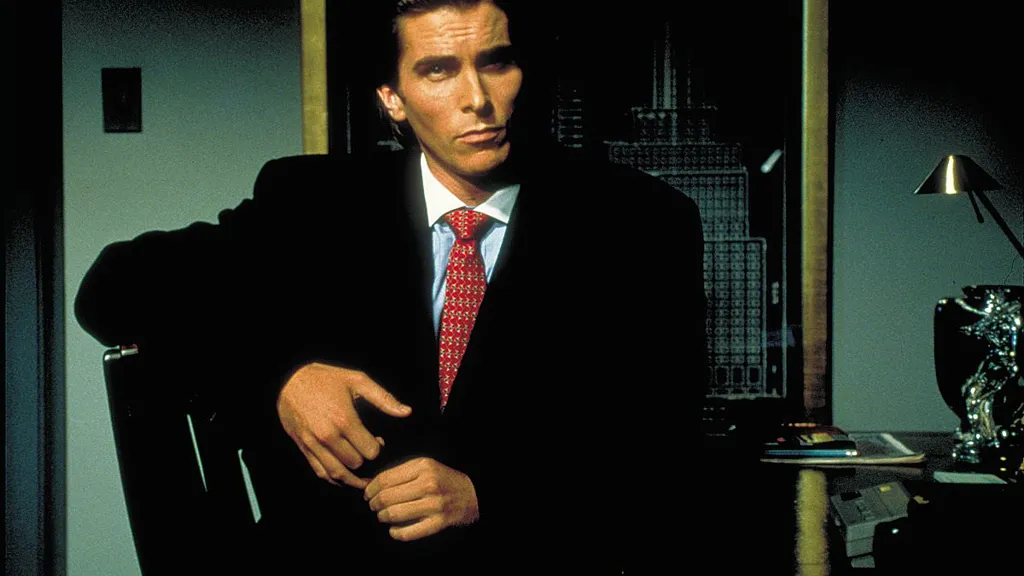
The term sociopath may conjure up mental images of serial killers like Bret Easton Ellis' Patrick Bateman, but according to experts it's a lot more complex
It is also not uncommon for sociopaths to act out more overtly. And with around one per cent of the UK's population falling somewhere on the spectrum, it is important to know what tell-tale signs to look out for - with a high number of CEOs falling victim to this specific pattern of behaviour.
But just because someone shows these traits, doesn't necessarily mean their a sociopath, but knowing what to look out for can help set firmer boundaries.
Experts also believe that these people can change, and if someone is willing to look inwards and recognise these sociopathic traits, they have the chance of making meaningful connections.
They will be aware of you every move and will never say sorry - and mean it
For centuries we've had a strong cultural sense of what a sociopath is: someone who takes no issue with inflicting pain and will manipulate and deceive those around them for personal gain.
From Bret Easton Ellis' Patrick Bateman to Brontë's Heathcliff, most of us feel pretty confident throwing this term around - but until recently, science hasn't been able to offer a true distinction.
But now, brain scans show that sociopaths have different brain chemistry from the rest of the population.
'Brain imaging studies show less activity in the circuits that generate fear and empathy,' Dr Caitlyn McClure explains.
'As a result, behaviour seems reward-focused, planned, and amazingly guilt-free.'
Therefore, it's not unusual for sociopaths to engage in obsessive behaviour - which at times can culminate in aggression or violence when things don't go their way.
And unfortunately, for many, this means their hunger for control and power trumps any interest for a deeper meaningful connection, leaving those around them feeling isolated and even gaslit at times.
Which is also why they find it very hard to apologise and actually mean it.
'If you observe someone who always overlooks other people's feelings, uses people to obtain what they want, or doesn't seem to feel bad about what they've done, you should be careful,' Brown warned.
'Don't get drawn in and set firm non-negotiable boundaries in your own mind. Focus on what you can control and decide how close you want to let someone like this into your life.'
No long-lasting relationships
While sociopaths have no problem charming a crowd, personal relationships tend to elude them.
This is mostly due to the fact that they struggle to understand and experience deeper more nuanced emotions like guilt, love and particularly, empathy.
And whilst their innate ability to mirror the positive attributes and behaviours of those around them may make it look like they have a lot of friends, when it comes to building more meaningful connections they often struggle.
Sociopaths can form attachments, but these are often shallow and driven by personal gain rather than mutual care
As Dr McClure explains: 'Instead of being absent, like psychopaths, attachment capacity is damaged in sociopaths, resulting in spontaneous outbursts that are motivated by frustration.'
This relates in part to how their brains are wired, meaning their capacity for emotional depth is usually somewhat limited, and can make them very unpredictable.
Claire Law, a psychotherapist and legal contributor at Custody X Change, added: 'Sociopaths can be warm one moment and angry the next.'
'Their reactions are emotional, and they often act before considering what might happen after. This impulsivity makes their relationships more chaotic and unstable.'
They live life on the edge - and will always work their charm for their own advantage
Unlike psychopaths, who tend to be more cold and removed from social circles,Sociopaths can be charming and tend to live very successful lives.
This is because they have a 'naturally low anxiety temperament', Dr McClure says,meaning that they are biologically predisposed to remain calm under pressure.
So while they may present themselves as attractive friends,colleagues or partners who have your best interest at heart,behind the scenes they are master manipulators.
As Sumeet Grover,a registered psychotherapist,explains:'Pulling you into their world gives them power and a sense of grandiosity.And it deflects what is really going on for them internally.
'Their sense of self is fragmented so they don't feel in the same way as most people.They can be very charming,believable and relatable while often lacking in a felt sense of empathy or remorse,'he told The Telegraph.
Studies have even shown that in stressful situations when most people's heart rate would increase,a sociopath's will remain the same or even go down.
This means that they often underestimate risk and experience a delayed response to fear—and big emotions are often the only way they can feel.
Experts have theorised that because sociopaths cannot experience emotion in the same way as people without the personality disorder they are driven to destruction by a subconscious desire to feel something.
As Patric Gagne,a clinical psychologist and self-proclaimed '21st century sociopath',writes in her book Sociopath:'I was starting to understand why doing bad things made me feel...
'However brief,it connected me to the way I imagined everyone else felt all the time...And we weren't 'bad' or 'evil' or 'crazy',we just had a harder time with feelings.We acted out to fill a void.'