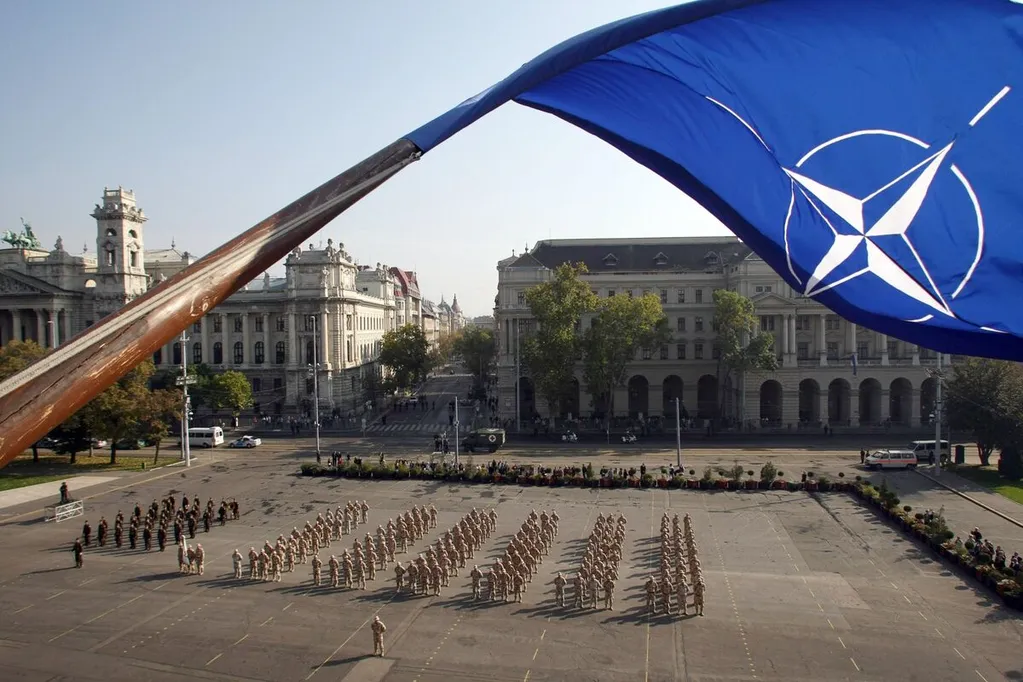
The ousting this month of Hungarian Prime Minister Viktor Orban in a landslide electoral defeat has generated a flood of commentary. Much of it has been about the implications for far-right populism in Europe. Others have focused on the potential impact to US politics, given the close ties of President Donald Trump's MAGA movement to Orban's Fidesz Party and the personal political capital expended by Vice President JD Vance.
What's gotten less attention is how Orban's departure will affect geopolitics and military strategy, both in Europe and more broadly. How will his fall change dynamics in the North Atlantic Treaty Organization, alter the calculus for Ukraine's future, and shape the US-European Union relationship?
I first met Orban soon after he was elected to the premiership for the second time, in the spring of 2010, as I traveled to Budapest in the company of the excellent US ambassador, Eleni Kounalakis (now the lieutenant governor of California). Orban struck me as charismatic and smart. His English was reasonably good, and his positions seemed well thought out. I walked away thinking he was someone I would enjoy working with. So much for first impressions.
We talked at length about NATO's mission in Afghanistan, where Hungary had more than 600 soldiers, most engaged in training the Afghan National Security Forces. Orban was generally supportive but clearly had his doubts about several other NATO missions, from peacekeeping in the nearby Balkans to counter-piracy off Somalia. When the war in Libya started a year later, Hungary declined to participate, and over the next decade Orban became a massive thorn in the side of the alliance.
Worst of all, he moved ever closer to Vladimir Putin's Russia, leading to controversial energy deals with Moscow and support for a variety of Russian positions in opposition to NATO's goals.
Given the alliance's requirement for full consensus on major issues, he was able to singlehandedly hold off Sweden and Finland's accession as members for more than a year. He did all he could to undermine European support for Ukraine. By the time of his rejection by the electorate, he was widely regarded as Putin's top ally in Europe and a Trojan horse inside the alliance.
With his defeat, three key geopolitical and military advantages have emerged for the West. The first and most obvious is that Hungary will no longer seek to hamper European engagement and support for Ukraine. While there could be some lingering trouble from the leader of Slovakia, Robert Fico, the most passionate opponent of NATO and EU positions is gone.
This means that more direct military, financial and humanitarian aid can flow to Kyiv. This is more vital than ever, given the near-total US withdrawal of support under the Trump administration. NATO will also have a freer hand to provide training, intelligence, technology and logistical support to the embattled Ukrainians. This is very bad news for Moscow.
A second strategic aspect of flipping Hungary back toward the West is geographic. Positioned at the heart of Central Europe, the Hungarians share borders with seven countries, including Ukraine. It is a crossroad nation that has been able to create strategic and logistical bottlenecks for NATO and the EU. (That role dates back to the Austro-Hungarian Empire of the 19th and 20th centuries when the Hungarians used their geographic location to power their mercantile economy.)
With the nation likely to swing away from Moscow, it's not just Ukraine but also its border with Serbia that looms large, given Putin's constant efforts to expand Russian influence across the Balkans. In addition, Papa Air Base in western Hungary is home to NATO's multinational Strategic Airlift Capability and the fleet of C-17 transport planes I depended on as supreme allied commander.
Finally, with Orban's departure, the Hungarian military can rapidly modernize and seamlessly integrate with NATO. While it has only around 30,000 troops, Hungary is investing in frontline, modern equipment -- including new German Leopard 2A7 tanks and formidable Swedish JAS39 Gripen fighters. While it is barely meeting the old NATO goal of spending 2% of GDP on defense, the incoming prime minister, Peter Magyar of the center-right Tisza party, has pledged to raise that to 5% by 2034.
The end of Viktor Orban's long political domination of Hungary is great news on many fronts, not least for the NATO alliance.