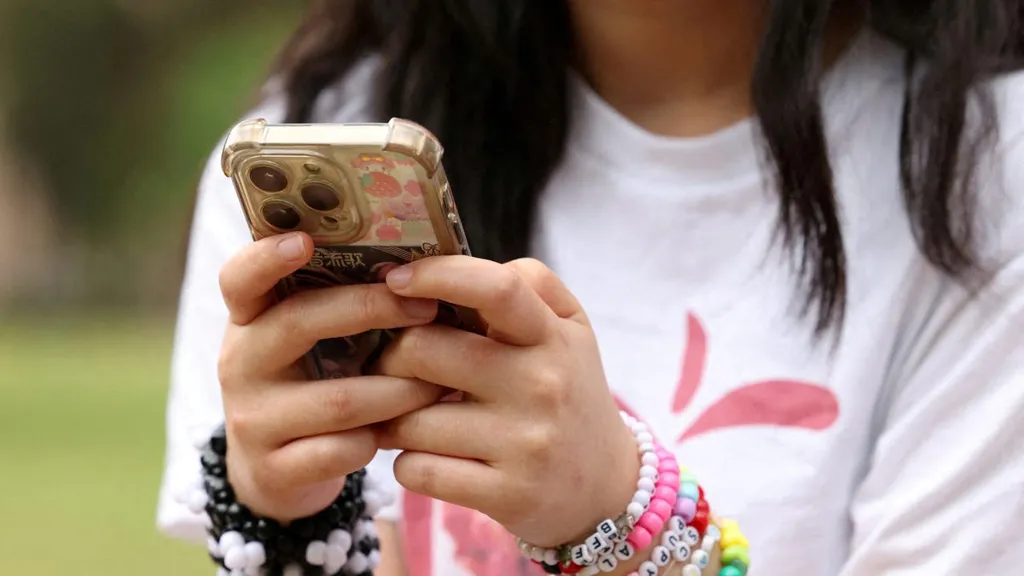
Australia became the first country to officially ban 10 of the largest social media apps for kids under 16.
I am not a believer in bans or closures, as I demonstrated during the COVID-19 pandemic when I pushed in the summer of 2020 for schools to remain open, warning, along with Danny Benjamin of Duke University, that school closures caused more damage to socialization and learning than any possible unproven benefit in terms of virus control.
That said, I must admit social media gives me real pause when it comes to bans because unrestricted use is leading to higher rates of anxiety, depression, bullying and poorer self-esteem across the world. Keep in mind, social media is most often a dangerous, misleading product, with no alternative information sources for many of our young.
As former U.S. Surgeon General Vivek Murthy wrote in an advisory in 2023, children and adolescents who spend more than three hours a day on social media face double the risk of mental health problems coupled with the fact that this exposure makes them feel worse about themselves and their bodies.
This is why I applaud Australia's move to ban social media for everyone under the age of 16.
Australia's social media ban is a start, not a fail-safe solution
Don't get me wrong: There are certain to be growing pains, as my sources in Australia tell me that many kids are already freaking out, trying to figure out how to message each other without Snapchat.
There are also workarounds, as facial recognition technology is allowing many children under 16 through, as it can never be 100% accurate, and kids are finding their way onto TikTok, anyway.
The Murdoch Children's Research Institute is performing the world's first direct research on the impact of the ban. Professor Susan Sawyer, chair of adolescent health at the University of Melbourne and director of the Centre for Adolescent Health at Royal Children's Hospital and the Murdoch Children's Research Institute in Melbourne, is in charge of the study.
It has been following a cohort of young people and their parents before the ban came into effect and will follow them for months to see what effects the ban has on social media use (does the ban work?), screen time, family functioning and relationships.
The project is called the Connected Minds Study, and I spoke to professor Sawyer about it. I agree with her that children need guardrails, but I don't believe that profit-hungry companies will ever be self-motivated to "protect children from algorithm-driven platforms designed to maximize engagement at any cost."
Social media and developing brains don't mix well
Sawyer wisely warned: "The stakes are highest for younger adolescents (10- to 14-year-olds). Puberty rewires their brains to be socially primed and emotionally reactive, but without yet the brain maturity and life experience needed to safely navigate these digital landscapes."
Sadly, unlike other protective actions that can be taken by parents, once a child has a smartphone, no amount of "good parenting" can overcome the dopamine-fueled algorithms of Big Tech.
Tech companies have abdicated responsibility for the torrent of harmful content flooding young people's feeds. This is not likely to change any time soon.
Yet Sawyer is optimistic that Australia's new Social Media Minimum Age Act will help decrease associated depression and anxiety, especially for younger adolescents.
Cell phones, with or without social media, carry risks
On top of restricting social media use, Sawyer believes that there needs to be a renewed emphasis on not giving younger children (ages 8 to 11) cell phones in the first place. Without the phones, it will be far more difficult for them to access social media and will helpfully spark dinner table conversation, especially if parents are phoneless, too.
"Keeping today's phoneless kids phoneless for longer could deliver substantial benefits for health ‒ way beyond mental health and wellbeing," Sawyer wrote.
A just-released study from the Children's Hospital of Philadelphia found that when children have cell phones at age 12, they have higher rates of depression, sleep disturbance and obesity.
Social media and the ability to access it are a cancer on the minds of our young. We owe it to ourselves as parents to try to prevent it because treating a cancer once it occurs is always far more difficult.
Marc Siegel, a professor of medicine at New York University Langone Health and a Fox News senior medical analyst, is the author of a new No. 1 New York Times best-selling book, "The Miracles Among Us."