"I'm obsessed with the monks," my friend Sam told me. "It's the only thing getting me through the violence of this second Trump administration. The monks, and my meds."
I nodded. I'd first heard about the monks walking for peace after my brother and sister-in-law traveled to hear them in Alabama, returning with stories of stillness and a grounded sense of hope.
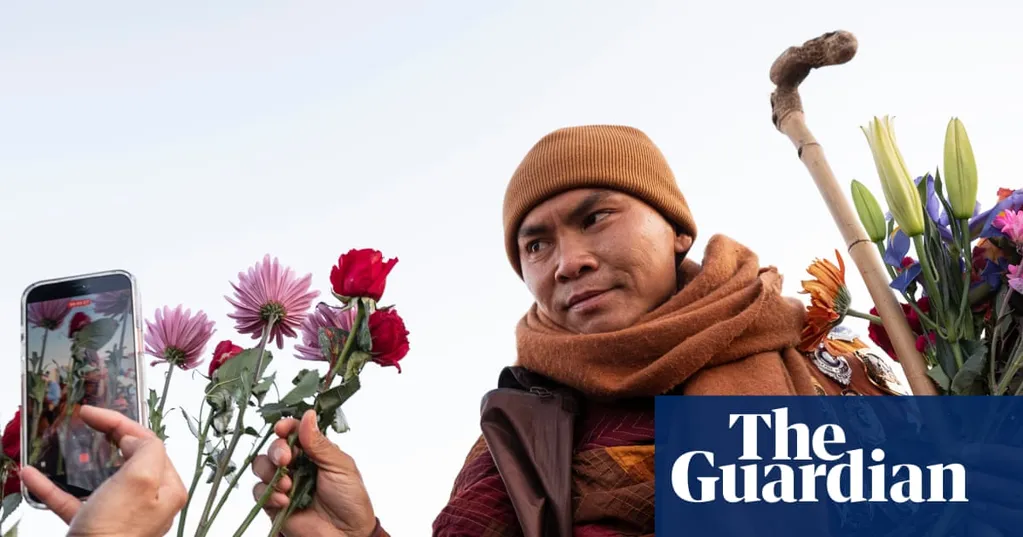
The monks are part of a 2,300-mile pilgrimage for peace from a Buddhist temple in Fort Worth, Texas, across nine states to Washington DC. Dressed in vibrant orange robes, they have walked about 20 miles daily, eating one meal a day and practicing loving-kindness—a form of mindfulness that can be thought of as a form of non-violent resistance.
Their journey is a slow-moving meditation meant to embody peace rather than argue for it. So far, they've faced extreme challenges. After a driver crashed into the group in Texas, one of the monks had to go through a leg amputation. They've also had to contend with the bitter, snowy cold that has engulfed this part of the country.
I've spent more than two decades working as an environmental educator, engaging college students in community action, from responding to climate disasters to growing food in school gardens. I believe that small acts, repeated over time, can make a difference. The monks' message, rooted in presence rather than protest, showed me an additional, quieter way to summon peace in my own life, my community and my country.
I decided to drive two and half hours to see them, leaving the Blue Ridge Mountains at sunrise for the flatlands of High Point, North Carolina.
Once there, I hustled to the street where about 20 monks were scheduled to pass and joined hundreds of people lining the sidewalks of this small southern town, waiting to witness the message of "unity, compassion, and healing for the nation". Later that day, thousands would fill a nearby stadium to hear them speak.
To my right, I overheard four silver-haired women my age tracking the route on their phones. They had beach chairs, blankets and snacks at the ready. Across the street, construction workers silenced their power tools as they kept watch from the second-story office building across the street.
A woman with dreads held up a poster with the words repeated by the monks: "Today is our peaceful day." I looked at her and smiled. She gave me a thumbs-up. I hadn't said a word to anyone in the crowd, but I felt a connection to our shared yearning for peace.
The live map predicted the monks would arrive between 10am and 11am, and at 10.45am, a woman called out: "Here come the sirens! I've gone to three different towns to see the monks, and first, a police car drives through and asks folks to get on the sidewalk!"
We all shuffled our feet, backing up while craning our necks to see. A few hawkers walked past carrying black T-shirts emblazoned with a color photo of the monks and Aloka, their companion dog.
"Get your monks T-shirt now before you see them! Twenty bucks a pop! Going once, going twice!" I clicked a picture and sent it to my friend Sam.
I'd vowed to observe the monks rather than take photos of them when they passed. Indeed, that night in nearby Greensboro, my younger daughter listened to their talk: "So often, people gather to watch us but all we see are their phones, their lovers," one of the monks said. (Yes, he called out our phones as a lover.) "But when you clasp your hands together, you have to put down your phone and be in the moment."
And in a heartbeat, we saw them turn the corner and head our way: men in silence with shaved heads and flowing robes, some barefoot, some in running shoes, all walking at a brisk pace, carrying and giving flowers along the way.
"This is the beautiful truth about peace: when you give it away, it doesn't diminish - it multiplies. When you share joy, you don't lose it - you create more of it," the monks had posted about giving away the roses, carnations and tulips handed to them on their journey.
Five minutes after rounding the corner, the men passed us. I bowed my head and held my palms in prayer, along with the construction workers above me, the family with three kids beside me, and the older women wrapped in blankets. A police officer lowered his gaze, and I burst into tears.
I realize five minutes of loving kindness might seem insignificant in the face of an authoritarian regime, but I looked at those around me in community as one nation, one Earth, one peace.
I didn't try to wipe the tears from my face. And when the monks leave our nation's capital this week, I'll hold that practice and gift of kindness with me forever.