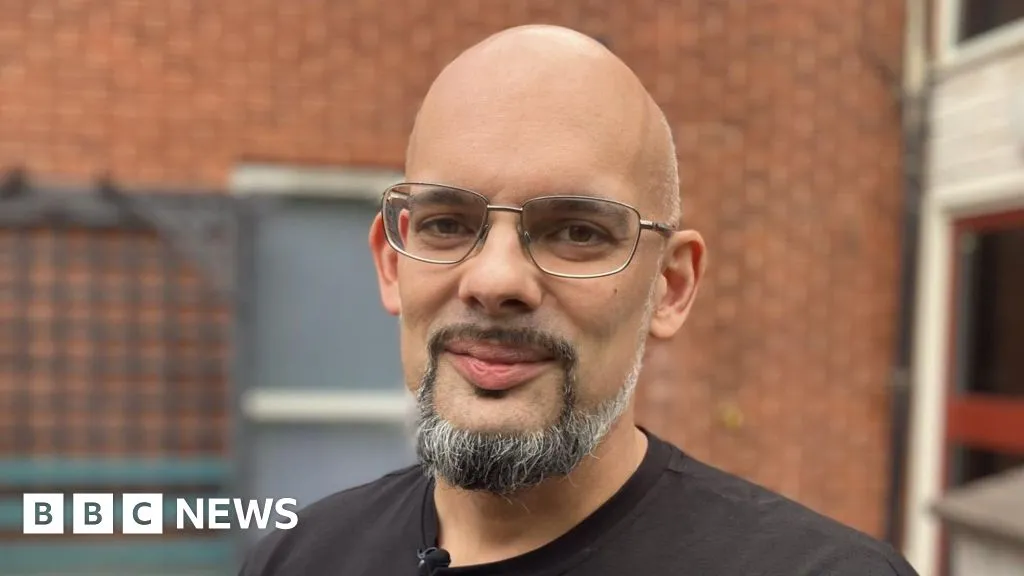
Luke Dadswell enjoys his job in social care so much, and says that "no two days are the same".
"I love the difference that we make, not just improving people's lives, but helping them hit their goals," adds Luke, an advanced support worker at Gilmorton, a supported living service in Leicester.
But the "low pay" is one aspect that he insists is a deep concern, not just for him, but for most colleagues.
A Department of Health and Social Care (DHSC) spokesman said: "This government is taking action to support our vital care workforce by putting more money in their pockets, through the first ever Fair Pay Agreement, backed by £500 million."
The DHSC added that this is a "major first step".
"Over this Parliament, care workers will receive one of the biggest upgrades in their pay, rights and conditions in a generation, alongside our changes to the minimum wage and new measures in the Employment Rights Act.
"We are also supporting carers by expanding career opportunities, and investing £12 million in learning, development and new qualifications."
The BBC has been talking to front-line staff at Gilmorton, which is run by one of the biggest charity providers of social care in the UK, Cheshire-based Community Integrated Care.
It recognises the government has committed to tackling low pay but wants it to go faster and further.
Emma, who has learning disabilities, is one of 13 residents with complex needs at Gilmorton and has her own flat there.
Fifty-eight staff are employed to support them. One of those is Luke, who was promoted to the role of advanced support worker in 2017.
He has worked in care for 18 years, but he regards his pay as basic.
Even on Luke's wage of £14.78 an hour, he concludes the financial reward does not match the responsibility - though he knows he earns more than many support workers in the sector, who are on the National Living Wage rates or not far above it.
Luke concludes: "Better wages can't come soon enough. Making ends meet is tough with rising food and fuel prices."
Luke's not-for-profit employer says it shares the concerns of its front-line workers.
Community Integrated Care's managing director for the East Midlands, Edd Terrey, says poor pay is the number one issue workers in the sector talk to him about.
The charity wades into the pay debate by publishing an annual report - Unfair to Care - which he says highlights the "disparity between social care workers and those with similar skills in the NHS." It argues the skills of support workers are similar to those of band 3 NHS workers.
Terrey, 44, says in 2025-6 "there was a 28% gap in pay, which equated to, on average, around a £7,000 difference in annual pay for pretty much the same job in two different parts of the (health and social care) system". Recent increases, he says, have done little to close that.
He says the government has committed to enhancing pay by implementing a Fair Pay Agreement in 2028, but he argues more action is needed.
The manager at Gilmorton, Gill Edwards, 47, says improving pay would boost morale, improve staff retention, and help with recruitment.
She says: "You have to be passionate to be a support worker. It is not just a 9 to 5 job, you take it home."
Emma's sister, Jenny Stiles, 65, says social care workers deserve a better deal.
"They make Emma happy. They look after her safety, health, and I don't honestly think you can put a price on that. They deserve everything."
Many support workers in the UK earn the minimum wage - the National Living Wage for people 21 and over - which is currently £12.71 an hour.
Community Integrated Care pays slightly more - £13.12 - which it hopes goes some way to helping retain staff who may be tempted to work in other sectors, such as retail and hospitality, where pay can sometimes be higher.
Support worker Yemi Abolade 32, says: "I'm helping people live their best life possible, but the pay is low and things are more expensive now."