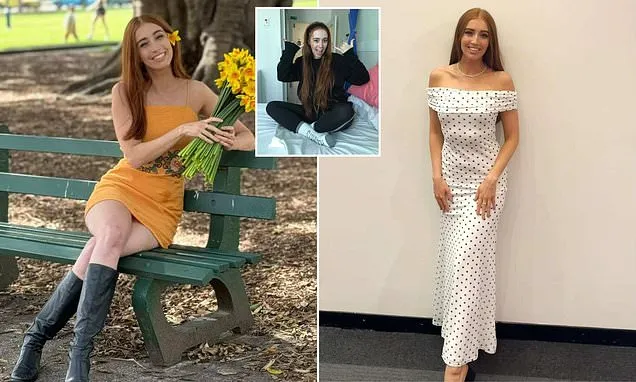
For years, the signs were there - but they didn't look like cancer.
At 19, Kodi Brown began experiencing a series of symptoms that, on their own, seemed ordinary enough to dismiss.
Persistent throat infections came and went, treated with routine courses of antibiotics.
A lingering coldness settled into her body, but it seemed uncomfortable instead of urgent. And then there was the exhaustion - heavy, unrelenting, but easy to explain away in the context of a busy life.
There was nothing about those early signs that clearly pointed to something serious. They were the kind of symptoms many young people experience and move through without a second thought, especially when life is full and demanding.
At the time, Kodi was studying, working, and navigating early adulthood. When she sought medical care, she was treated for what her symptoms most closely resembled - infections, fatigue, viral illness.
Each offered a temporary resolution, and so the pattern continued, building in the background.
By 20, she had moved from Brisbane to the United States to work at Walt Disney World, an opportunity she embraced fully.
Alongside the excitement, her symptoms worsened, and she began to feel a level of exhaustion each day that far exceeded her workload.
'I could see everyone else was tired, but for me, it felt different. It was really hard to wake up and function properly,' she told the Daily Mail.
The infections continued, requiring repeated treatment in a healthcare system that was both unfamiliar and expensive.
Around the same time, she became aware of a small lump in her throat.
Like the other symptoms, it existed within a broader context that made it difficult to isolate.
She was far from home, adjusting to a new environment, and trying to make the most of a once-in-a-lifetime experience. The possibility that these separate issues might be connected was not obvious.
When she returned to Australia in 2018, the symptoms did not resolve. The exhaustion lingered, the infections recurred, and the lump in her throat gradually became more visible.
It was the people around Kodi who helped bring that awareness into focus. Her mother noticed the swelling, and a colleague made a similar observation - their concern prompted further investigation, leading to an appointment that would ultimately change everything.
By the time Kodi underwent testing, she was 21, and the lump had grown significantly.
Initial blood work suggested her thyroid was functioning normally, but the size of the mass raised concerns for the doctors, leading to a biopsy and scan.
'I thought it would be something simple - cancer had still never crossed my mind,' she said.
'I booked a 15-minute appointment during my lunch break, thinking I'd just get antibiotics and go back to work.'
Instead, she left with a terrifying diagnosis.
'When it finished, I called my mum and said, 'Okay, yeah, I've got cancer.'
In the immediate aftermath, Kodi struggled to reconcile the diagnosis with the life she had been living just hours earlier.
Rather than going home, she returned to work, delaying the moment she would have to fully process what had happened and share it with her family.
Within weeks, she was preparing for surgery. Doctors initially hoped to preserve part of her thyroid, but once the procedure began, it became clear the cancer had spread throughout the gland. The entire thyroid was removed, marking the beginning of a lifelong reliance on hormone replacement medication.
'It's something I'll always have to manage. If my levels are off, I feel it straight away - the fatigue, the exhaustion.'
In early 2019, she underwent radioactive iodine treatment, a process that required complete isolation for several days. The experience, while medically effective, was deeply confronting.
'I was completely alone in a hospital room for four days. At meal times, someone would leave a tray of food by the door and I had to go all the way to the other side of the room.'
'I also used disposable cutlery and plates because nothing I touched could be reused. I was washing my hair several times a day just to try and get all of it out.'
'It was incredibly isolating. You’re completely cut off from everyone.'
Although the treatment itself was brief, its emotional impact lingered, particularly given her age.
'To go through that at 21, it stays with you,' she said.
Recovery extended beyond the physical. The surgery affected her vocal strength, requiring speech therapy – a significant challenge in a career built on communication. At the same time, she was determined to complete her university degree, continuing her studies through treatment and graduating shortly after her operation.
'It meant a lot to finish. I'm really proud I dragged myself out of bed and to my ceremony.'
But while her peers moved forward into full-time work, Kodi found herself navigating a slower, more complex path back to everyday life. The physical recovery was ongoing, but the psychological impact proved just as significant.
Now 29 and cancer-free, she describes her outlook as both altered and sharpened by the experience.
'It changes how you see everything. You realise how important it is to listen to your body and to take things seriously when they don't feel right.'
Her message is not about blame or regret but awareness—an understanding that symptoms do not always present clearly and that persistence matters when answers are not found.
Even years later, the way she interprets physical symptoms has shifted. Where she once dismissed signs of illness, she now approaches them with heightened vigilance.
'My brain doesn't go to 'it's probably nothing' anymore. It goes straight to the worst-case scenario.'
This change, she acknowledges, is rooted in her earlier tendency to minimise her symptoms.
'I ignored things for a long time. If I had pushed for answers earlier, the outcome might have been different.'
Support played a crucial role throughout her experience. Organisations such as Redkite provided practical assistance during her treatment—including grocery and fuel vouchers when she was unable to work—as well as access to social workers.
Similarly, Cancer Council offered a support line that allowed her to speak openly about her experience with someone outside her immediate circle.
Pilates teacher Lexy was living her dream life - until a gory and terrifying health episode
Her family remained a constant source of support. Her mother, who had previously undergone breast cancer treatment, understood the process in a way few others could. Her father returned from overseas to be present; friends provided practical emotional care during recovery.
In quieter moments,Kodi turned to small grounding rituals,包括折叠折纸鹤,这一灵感来自于佐佐木贞子,这一做法至今仍在继续。