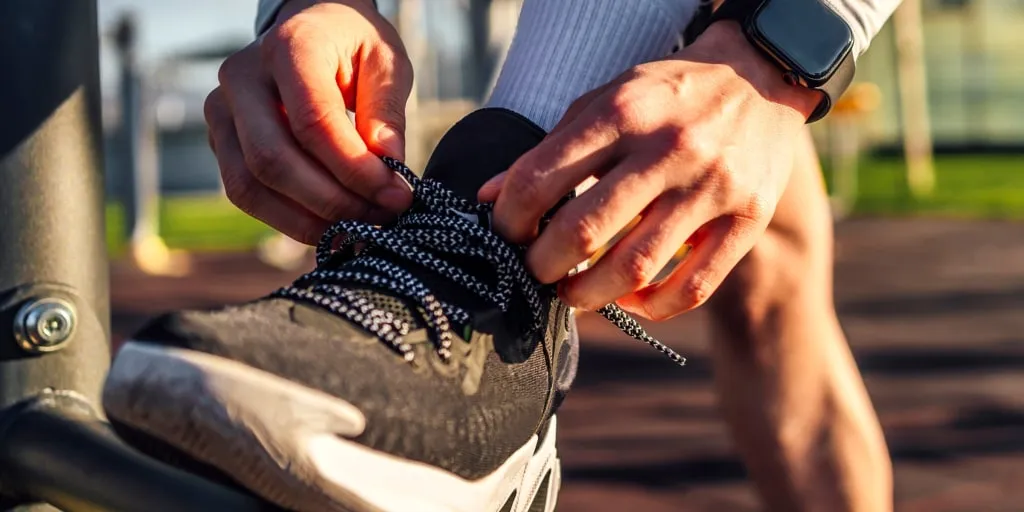
The best men's running shoes can help propel you to finish your morning jog or your marathon PR. Just like the best training shoes or even the best pickleball shoes, running shoes are designed to help make hitting your goal easy (or easier, at least).
Team NBC Select has raced in 5K, 10K, half marathons and marathons, so we know a thing or two about the importance of having the right pair of shoes. To find the best men's running shoes on the market, I spoke with fitness and medical professionals to better understand what to look for. Then, I ran all over New York City wearing dozens of the top models, assessing fit and feel, shock absorption, durability and speed.
My recommendations come from a mix of expert, NBC Select staff and personal picks from brands like Brooks, Hoka, Asics and Saucony. Each brand offers dozens of different models -- this is not an all-inclusive list of every shoe you may (or may not) enjoy.
All our recommendations are road running shoes. You can find shoes for rough terrain in my trail running shoes and hiking shoes guides.
I've worn a few different versions of the Brooks Ghost over the years. They are one of my go-to shoe recommendations for someone just starting to run, or anyone unsure of what they need out of their running shoes. They are well balanced and they have enough support to be comfortable, enough cushion to go the distance and enough toe box space to accommodate a variety of foot shapes. Plus, they come in four different width options and loads of colors.
This model from Asics is more responsive than the Brooks Ghost, and is a great fit for all-around training at most paces. The shoe feels roomy enough to avoid pressure points and cushioned enough to handle longer runs without being so tall that they feel unstable. And like many Asics models, the back of the heel and top of the upper have fabric loops that make it easier to slip the shoe on.
Compared to super cushioned shoes, I can feel the ground more, primarily in the toe box, making it easier to push off for a burst of speed. However, there is a little straining depending on your distance and tolerance for repetitive impact.
I ran in these shoes for most of 2025, and they have quickly become a favorite for steady, comfortable miles. They balance weight, cushion, responsiveness and traction well, making them a good fit for most kinds of running outside high-speed training.
Plus, they are easy to wear: the tongue is stretchy and comfortable; the laces are long and durable; and I've never had any issues taking the shoe on and off.
If you are looking for a more affordable running shoe, Dr. Miguel Cunha, podiatrist and founder of Gotham Footcare, recommends the Cohesion line from Saucony. They are comfortable, supportive, durable and provide great shock-absorption for everyday running, says Cunha. They are the most affordable of all our top picks at around $80.
Multiple NBC Select staffers (myself included) love the New Balance Fresh Foam X series for daily running, walking and everything in between. They are more cushioned than a daily trainer, which makes them excellent for running at a casual pace over long distances and hard pavement.
The slightly knobby tread on the outsole gives added confidence and traction on uneven surfaces and unpleasant weather. This latest v15 is lighter and has more mesh in the upper compared to the v14.
I rarely feel joint or knee pain running in these max cushion shoes, regardless of the distance. They are very comfortable at every touch point (all the places your foot makes contact with the shoe), thanks to the stretchy tongue, soft knit lining around the upper and extra padding around the ankle. Plus, there is an exterior loop near the heel that makes them easy to put on and take off.
I wouldn't recommend them for setting any personal records during a race, but for recovery runs or long, steady miles pounding pavement, these are a great option.
These cushioned, chunky shoes have a spacious and wide toe box -- Cunha recommends them for people with wide feet or bunions. The seamless elastic upper mesh reduces pressure and friction on bunions during runs, says Cunha.
While I do not have wide feet, I've tried a few Cliton models over the years: the toe-box is always roomy and never scrunched my toes. Despite the cushioning, they are surprisingly lightweight; more so than many of our other top picks.
Cunha recommends Brooks' Adrenaline GTS for anyone who needs reliable arch support. He points to the shoes' EVA foam midsole, running from the heel to the front of the shoe. This midsole increases cushioning and adds pronation control, says Cunha. If you tend to roll your foot inward (overpronate) or outward (underpronate), this pronation control can help guide and balance your stride.
All Brooks GTS shoes have extra support around the rear of the shoe to reduce excess movement and help keep your stride natural and neutral, according to the brand. I've worn both Adrenaline and Adrenaline GTS shoes before. I found that the GTS version did help me keep a more natural stride.
The Saucony Endorphin Speed series has long been a favorite tempo shoe for runners on team NBC Select. They are the lightest non-race shoes on our list, and you notice it when you lace them up -- they are light, fast and bouncy.
The shape naturally rolls from step to step, encouraging a speedy pace -- standing still or running slowly felt unnatural. Part of that speed comes from the winged nylon plate in the footbed, which delivers energy return without being quite as stiff as a carbon-plated race shoe.
The Hoka Mach series is an excellent choice for a fast, lightweight shoe that still has a bit more cushioning than speed-first alternatives. They strike a great balance between cushion and responsiveness -- I feel fast, but not so connected to the pavement that every crack or crevice on the street feels like a surprise. They are a little more durable than the Saucony Endorphin Speed above, but have a relatively low heel drop of five millimeters that might not be for everyone.
If you want to splurge on marathon-day running shoes, Cunha recommends the Nike Vaporfly. They are the lightest shoes on our list by far at 6.7 ounces. Inside is a full-length carbon fiber plate—a common addition to race shoes that helps propel you forward—but feels a bit stiffer underfoot.
There are hundreds of running shoes on the market from dozens of big brands. I spoke with experts to help narrow down what goes into the perfect pair.
I have been running regularly as part of my fitness routine for the past six years. I live in New York City and typically run outside on pavement two to three times a week. My distance ranges between three and seven miles; I use fitness trackers to help guide my pace. I wear size 10 shoes in medium width; generally prefer cushioned shoes with neutral support as they mitigate knee pains more than other shoes I've tried.
To try new running shoes, I wore them for at least a week and followed my usual routine. I did at least one normal run, one tempo run and one long run to see how the shoes handled different speeds and distances.
There are hundreds of running shoes to choose from in the men's section alone. Our experts highlighted a few essential things to keep in mind as you shop for your next favorite pair.
Both Cunha and Zach Moxham, a certified personal trainer at Physical Equilibrium in New York City, recommend going to a local running shoe store for the best fit possible. Specialty running shoe stores tend to have knowledgeable staff who can better inform you about running shoe options and recommendations,” says Cunha.
They also typically have more measuring tools to take advantage of, including foot scans, gait analysis and treadmill analysis -- try everything and anything,” says Moxham.
A poor-fitting running shoe isn't going to be comfortable no matter how stylish it may look.
If you plan to buy shoes in person, buy them at the end of the day when your feet are most swollen,” says Cunha. That’s because if they feel comfortable when your feet are most swollen, they will likely feel comfortable throughout the day. Cunha also says to try on at least three different models of shoe even two different models at the same time one on each foot to get a good feel for fit.
Pay special attention to toe box -- area around your toes,” says Cunha and Moxham. “Make sure there is enough room to slightly wiggle your toes,” says Cunha. “If you can't move your toes at all then the shoes are too tight and will eventually become painful. The tip of your thumb should fit between the end of the shoe and the end of your longest toe.”
At NBC Select we work with experts who have specialized knowledge and authority based on relevant training and/or experience. We also take steps to ensure all expert advice and recommendations are made independently and without undisclosed financial conflicts of interest.