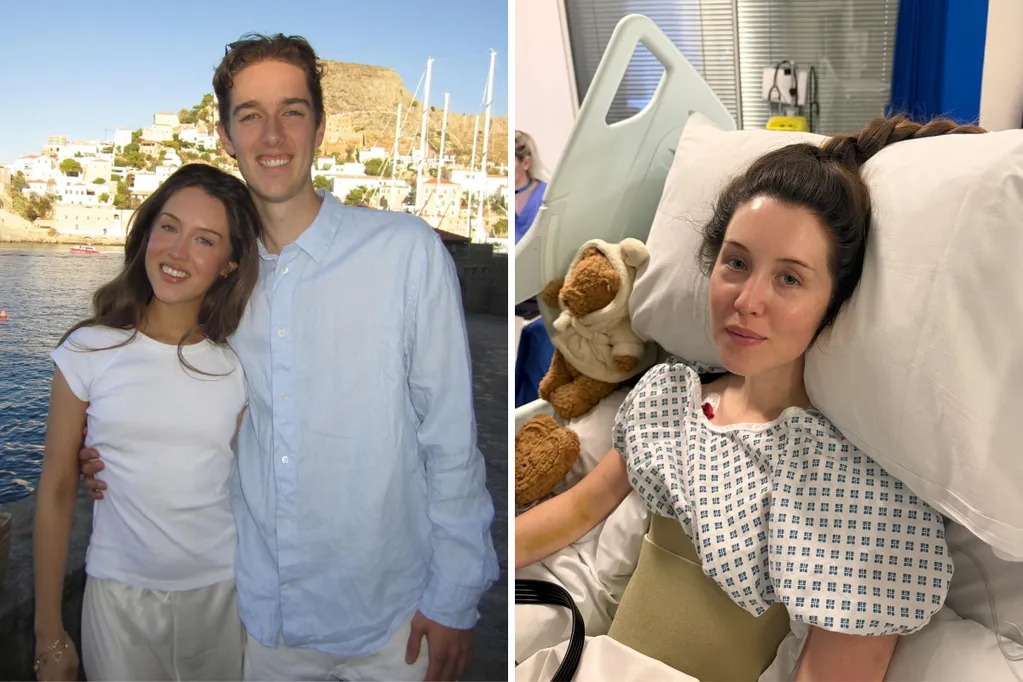
At the start of 2026, Rebecca Waller's life was everything she hoped for. She was planning her wedding, loved her career and had a supportive friendship circle. This year looked set to be one of her best yet, until a sharp pain in her back led to a life-changing diagnosis.
Waller, 27, was working from home on January 9, 2026 when she felt an unusual pressure in her back during a call. This was closely followed by pins and needles in her arms, and, despite her best efforts to shake it off, the pain got progressively worse.
"By the time the call ended, I was writhing in pain on my bed and struggling to breathe. I remember thinking I was having a heart attack and genuinely feared for my life," Waller, from London, in the U.K., told Newsweek.
Waller's fiance, James, called an ambulance, and paramedics suggested she was having a panic attack. As time progressed, however, Waller started to lose control of her limbs, beginning with her hands and arms.
After rushing to the bathroom to vomit, she was stuck laying on the bathroom floor for nearly two hours, unable to move. The sudden paralysis was a major warning sign that led paramedics to transport Waller to hospital. She underwent several MRI scans on her spine, brain and heart, all while paralyzed from the shoulders down.
Waller continued: "I was diagnosed with a rare condition called fibrocartilaginous embolism (FCE), with only 67 documented cases in medical history, according to my doctors. They believe that a fragment from a disc in my cervical spine (C4) came loose, entered a blood vessel, and blocked the blood supply to my spinal cord."
The day prior to the stroke, Waller and her fiance confirmed the venue for their upcoming wedding. The couple were so excited for what was to come -- they never imagined this reality. Waller continued hoping that she would wake up and everything would be back to normal. It felt like a terrifying nightmare that didn't seem to end.
The BMJ Neurology Open describes FCE as a rare cause of spinal cord stroke in which material from the soft, cartilage-like center of a spinal disc is forced into blood vessels supplying the spinal cord, blocking blood flow and causing sudden nerve injury. FCE is thought to be triggered by intense physical strain that increases pressure on the spine -- such as heavy lifting, sudden impact, or prolonged strenuous exercise.
Waller spent over five weeks in intensive care before being moved to another hospital ward. In March, she was then transferred to a spinal rehabilitation center for specialized care.
"Unfortunately, there isn't direct treatment for my condition," Waller said, "but the focus over the coming year will be intensive physiotherapy and other supportive therapies to help me regain as much mobility as possible. Recovery takes a long time as you have to rebuild neural pathways, but I'm prepared to put in as much effort as it takes to walk again."
She continued: "After the stroke, I could only move my shoulders and above. However, I had a small twitch in my right arm, which developed significantly over the past three months. I've also regained some movement in my left arm, and I've regained activity in my abdomen."
Staying optimistic has certainly been a challenge at times, but Waller is determined to regain some semblance of her former life. Waller said she still dreams of being able to walk down the aisle during her wedding next year, telling Newsweek that remaining hopeful gives her "the best chance to heal."
Waller said: "In the lead-up to my injury, James and I talked a lot about our wedding. Since then, everything has been put on hold. We don't know how long my recovery will take or how much mobility I'll regain. I don't want to imagine a world where I can't walk down the aisle, but only time will tell. We may postpone the wedding until I'm better. Ultimately, I believe we'll find happiness regardless of what happens."
Waller's family set up a GoFundMe fundraiser for her ongoing recovery, and her sister Caroline Waller took to TikTok (@carolinecwaller) to document this life altering experience. The TikTok post, showing photos from before and after the spinal cord stroke, has gone viral with over 512,000 views and almost 50,000 likes at the time of writing.
The response has been overwhelmingly supportive, with many people reaching out to share words of encouragement and their own recovery stories. Hearing so many other success stories has been a huge boost for Waller, who says it helps her keep fighting.
"I know my life isn't over even though it can feel that way at times," Waller said, "but I hope my experience serves as a reminder to appreciate your health and the small things in life and not to wait to do the things you want."
"If you knew you were going to have a stroke that would leave you paralyzed," Waller asked rhetorically, "what would you do differently?"