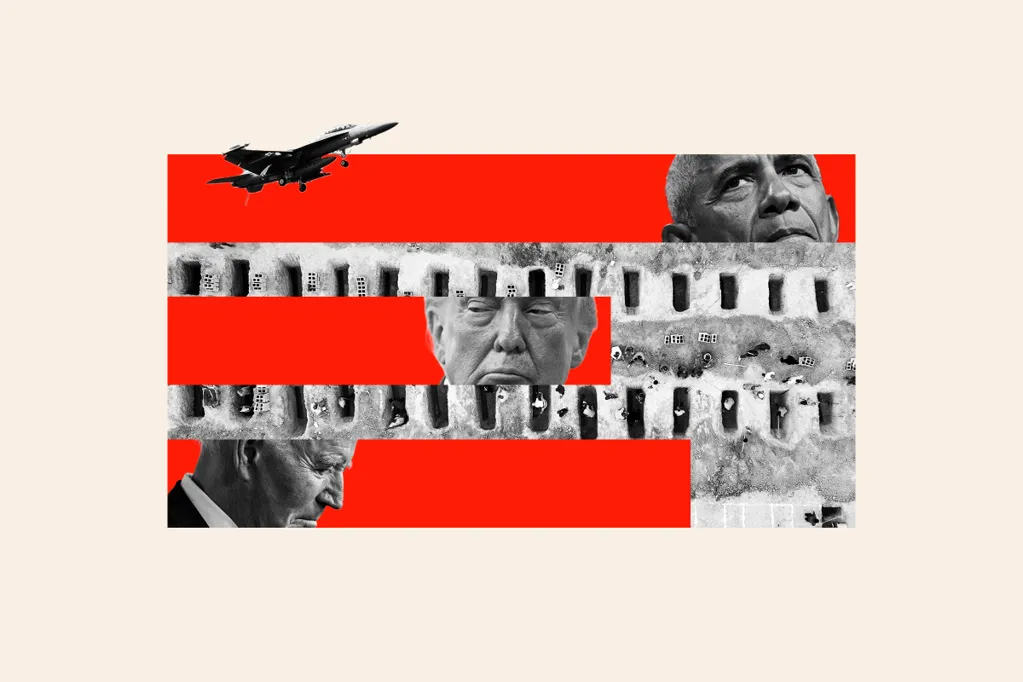
More than 175 people, most of them small children, were killed in a likely U.S. missile strike on a girls' elementary school in southern Iran on February 28, according to preliminary findings from a U.S. military investigation per The Associated Press (AP).
The mass casualty figure highlights the civilian toll of war and has focussed renewed attention on past U.S. military conflicts under multiple administrations. The U.S. has repeatedly been accused of war crimes and violations regarding civilian deaths and attacks, including in Vietnam, Iraq, Afghanistan, Syria and Yemen. Civilian death tolls are often difficult to verify because of conflicting reports from authorities and the challenges of identifying victims and potential combatants.
The attack on the school in Minab, a small town in Hormozgan province, was near the barracks for the Islamic Revolutionary Guard Corps (IRGC) naval brigade. The U.S. has said its forces were targeting Iranian naval assets in the region.
The Shajareh Tayyebeh Elementary School, which had murals painted on its external walls, was on a U.S. target list and may have been mistaken for a military site, several people familiar with the strike told The Washington Post.
The aerial strike occurred during school hours on Saturday, the first day of the school week in Iran, killing teachers and children. The facility has been operating as a school for over a decade, and "there is no evidence of any military function in that school compound" The New York Times reported.
The U.S. military opened an investigation into the incident, and two people briefed on the preliminary findings told the AP that outdated intelligence likely led to the strike. U.S. Central Command (CENTCOM) relied on target coordinates for the strike, but was reportedly using outdated data provided by the Defense Intelligence Agency, the AP reported.
The strike, which the Iranian Teachers' Trade Associations told TIME killed at least 108 children, has drawn widespread international condemnation and accusations of possible war crimes, with satellite imagery, munition analysis and experts pointing to likely U.S. involvement. Photos of mothers wailing over their children's coffins and the mass graves for those killed have sparked outrage and resistance to the ongoing war efforts.
A mass funeral ceremony for the girls took place last week, with photos showing thousands in attendance. Iran has accused Israel and the U.S. of the attack. President Donald Trump initially blamed Iran for the attack, and then later said he would accept the results of the Pentagon's investigation. Israel has not claimed responsibility.
There have been several other cases in which civilians were reported killed in military operations carried out under Trump, both in his first term and in the current administration. Many of them took place in the Middle East.
ProPublica reported: "Even before the Iran campaign, the number of strikes worldwide since Trump returned to office had surpassed the total from all four years of Joe Biden's presidency."
Trump's first operation as commander in chief in 2017 involved a raid on an Al-Qaeda site in Yemen, in which an estimated 30 people, including 10 women and children, were killed, according to Reuters. Human Rights Watch said at least 14 civilians, including 9 children, were killed. CENTCOM released a statement saying "regrettably...civilian non-combatants were likely killed."
Two years later, in 2019, the New York Times reported a U.S. strike on Baghuz, Syria, killed around 80 people, making it one of the largest civilian casualty incidents in the war against the Islamic State. Several bombs were dropped on a crowd of mostly women and children. The New York Times investigative team brought their findings to CENTCOM who acknowledged the strikes and said they killed 16 fighters and four civilians. Regarding the other 60 people who were killed, the statement said it was not clear if they were civilians or could be linked to IS.
In Trump's second term, a U.S. airstrike on the Ras Isa oil port in Yemen killed more than 70 people. The U.S. was targeting the Houthis, and the rebel group issued a statement calling out the Trump administration for targeting "a vital civilian facility that has served the Yemeni people for decades." The exact death toll is not clear.
Civilian deaths during Obama's tenure were reported in U.S. operations in Yemen, Afghanistan, Iraq and Syria. Obama authorized over 500 drone strikes while in office, with the Council on Foreign Relations reporting that in total around 3,800 people were killed including 324 civilians.
Two of the most widely cited incidents are a strike on a wedding convoy in Yemen and the October 2015 strike on a Medecins Sans Frontieres (MSF) hospital in Kunduz, Afghanistan.
In December 2013, the U.S. launched several missiles at a convoy of cars in Yemen, killing around a dozen people and wounding at least a dozen others, according to Human Rights Watch. The procession was for a wedding, with reports that all those killed were civilians.
MSF said that early in the morning on October 3, 2015 "a United States AC-130 gunship fired 211 shells on the main hospital building where patients were sleeping in their beds or being operated on in the operating theatre." At least 42 people were killed and 37 injured. Many of those killed were patients. Obama acknowledged the strike and extended his "deepest condolences to the medical professionals and other civilians killed and injured in the tragic incident."
A series of airstrikes between July 2015 and April 2016 targeting Al-Qaeda and Islamic State in Iraq and Syria killed 14 civilians, the U.S. military reported.
During Biden's presidency, civilian deaths tied to U.S. military action were linked to strikes in Afghanistan, Syria, Iraq and Yemen. Some civilian casualty claims in some cases are disputed or are still under review.
One of the more recent and public incidents took place during the Biden administration's withdrawal from Afghanistan in 2021, when a missile killed an aid worker and nine members of his family, including seven children.
"This strike was taken in the earnest belief that it would prevent an imminent threat to our forces and the evacuees at the airport," General Kenneth McKenzie, CENTCOM commander, said after, adding "Our investigation now concludes the strike was a tragic mistake."