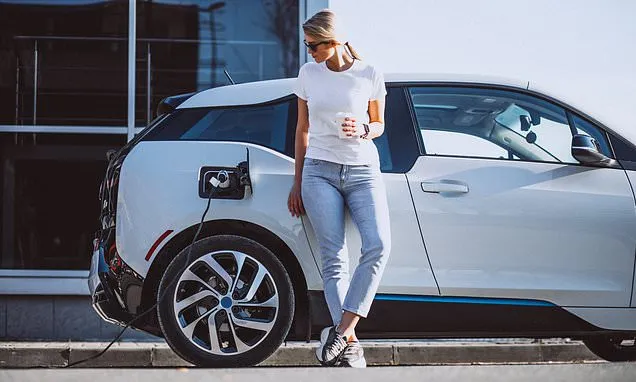
Rachel Reeves could cut VAT on public EV charging to reduce the cost for drivers without home chargers as concerns grow that electric car demand will tank when pay-per-mile tax comes in.
Treasury officials are looking at slashing public charging VAT to five per cent - down from the 20 per cent it currently is, according to The Telegraph.
This would bring the level of public charging VAT in line with the reduced VAT rate those with home chargers pay, eradicating the EV 'pavement tax'.
The move - which the car industry has been campaigning for for years - was touted as a possibility in the Autumn Budget, but has since reportedly been prioritised after worries mounted over the impact of the Chancellor's controversial road pricing move which will see EVs pay 3p-per-mile from 2028.
A source involved in the discussions told The Telegraph that anxiety is growing within the Treasury that the levy will 'kill EV demand'.
Officials have reportedly met industry experts in recent weeks to discuss the matter.
The Government is also said to be looking at reducing the VAT rate charged at service stations and supermarket, as well as residential streets - with all cut by 15 per cent.
It often costs four times less to charge an electric car at home than it does to charge using the public network.
A Whitehall source told The Telegraph: 'The way we convince people to switch to EVs is by showing people it is easy and it is cheap. There are savings to be had here for many people.'
Another source added that the Treasury has accepted that tax cuts may be needed to soften the impact of pay-per-mile.
When Ms Reeves introduced pay-per-mile in the Budget, it was estimated that it would cost the average EV driver (who drives 8,500 miles) around £255 extra a year.
The OBR said this would 'reduce demand for electric cars as it increases their lifetime cost', with an estimated 440,000 fewer EV sales across the next five years.
However, the Treasury disputed the OBR's figures, saying it will be closer to a 120,000 EV shortfall between now and the end of the decade.
The Treasury commented: 'The Government is boosting the EV transition by saving drivers up to £3,750 off a new car, with almost 50,000 people benefitting already, and investing over £7.5billion into the UK electric vehicle sector.
'We're also reviewing the cost of public EV charging which will look at the impact of energy prices, wider cost contributors, and options for lowering these costs for consumers.'
How much does the 'pavement tax' cost in reality?
What is pay-per-mile tax?
It's a road pricing scheme which will see EV owners having to pay a 'modest' 3p charge for ever mile they drive.
This is on top of the £195-a-year VED standard rate, which was only levied on EVs from April this year.
Plug-in hybrid cars will also be hit with eVED at a reduced 1.5p per mile charge to reflect the fact they're also paying fuel duty on petrol.
The charge, which will arrive in 2028, is predicted to raise the Government £1.9billion by 2030.
It's been introduced to fill the £40billion fiscal black hole created by the switch to EVs and the loss of motoring taxes including fuel duty.
The revenue will go towards maintaining the UK's roads and infrastructure in the same way fuel duty does.
This is Money has reached out to The Treasury for comment.