Lebanon has emerged as a bleak additional front in the war the United States and Israel launched against Iran a week and a half ago, with the nation facing ongoing Israeli attacks and most signs suggesting the country will plummet into further misery, as the U.S.-backed Israeli operation there looks unlikely to end soon.
The deepening conflict began when the Lebanon-based military and political group Hezbollah, which is backed by Iran, targeted Israel last week in stated retaliation for the U.S.-Israeli assault on its patron. Israel has responded with a broader campaign that was prepared over months, with a professed goal of controlling more Lebanese territory and discussions of a ground invasion.
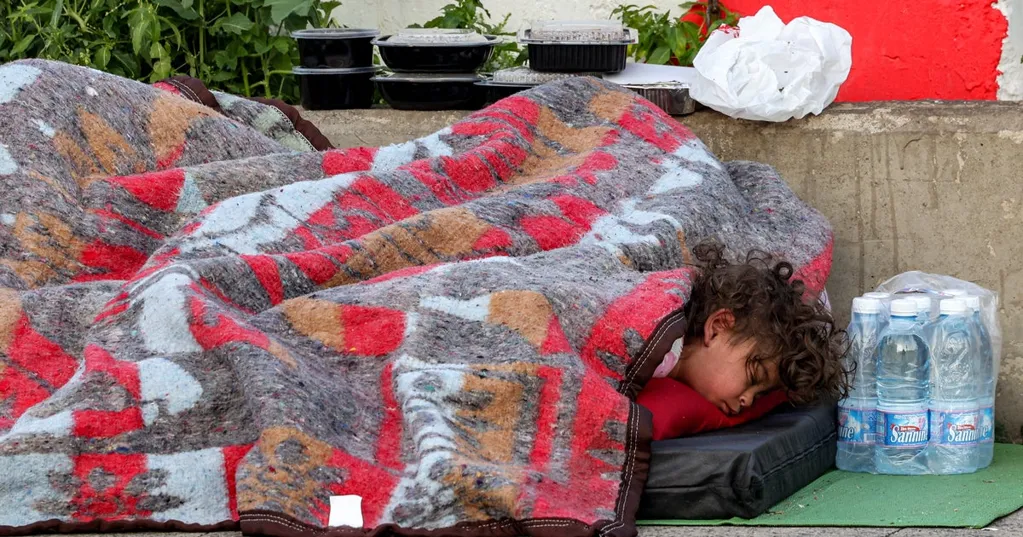
Humanitarian and human rights groups say roughly 700,000 people in Lebanon have already fled their homes, while Israeli attacks have killed civilians -- including more than 10 children per day since March 2, according to UNICEF -- and apparently violated international law. Israeli officials have ordered civilians to flee densely populated regions, suggesting they will be treated as war zones with little regard for those who remain. Bombing in the capital, Beirut, and at targets connected to the country's Christian community, which is not linked to Hezbollah, has left many Lebanese fearing mass devastation resembling the destruction meted out in Gaza by the American-backed Israeli campaign there.
Israel and Hezbollah are far from a ceasefire, and the players who could de-escalate the situation appear unwilling to do so. Instead, the situation has the potential to become a spiral of violence, forcing the country back into a position that has repeatedly crippled its development and fueled future fighting. And as escalations continue, Lebanon may provide the clearest example of how President Donald Trump's decision to spark a new Middle East war guarantees future instability and avoidable slaughter in the region, with no discernible strategic benefit.
Israeli Prime Minister Benjamin Netanyahu is not seeking de-escalation, a former Israeli security official told HuffPost, with Tel Aviv instead assessing it can eliminate Hezbollah.
After Trump on Monday indicated he may conclude the Iran war, Israeli officials told the Financial Times they see their Lebanon campaign as extending beyond operations in Iran. Trump has not outlined plans to limit Netanyahu's ambitions for the region, whether in Lebanon or Iran, and the Trump administration is doubtful about mediating talks between the Lebanese government and Israel, Axios reported. Lebanon's government is seeking international mediation, saying it will redouble its own efforts to rein in Hezbollah -- but the Lebanese army is reluctant to risk an outright battle with the group, and neither Trump nor Netanyahu seems likely to heed Lebanon's request for Israel to halt strikes so diplomacy can start.
The Lebanese government's demand is "understandable," a U.S. official told HuffPost, but said it is "unclear where an off-ramp or de-escalation pathway may be."
Referring to a Washington Post report that quoted a senior Israeli official as fearing a "quagmire" in Lebanon if the war continues and extends to a prolonged invasion or occupation, the U.S. official continued: "Israeli defense and intelligence folks ... know these things are terrible ideas. They are just incapable of stopping them and are at the behest of their political leadership."
Those in Washington urging peace are also unlikely to alter Trump's thinking.
"A larger conflict engulfing all of Lebanon is in no one's interests and I call on all parties to immediately de-escalate," Rep. Gregory Meeks (N.Y.), the top Democrat on the House Foreign Affairs Committee, said on Friday.
Lebanon is still contending with the aftermath of the last round of conflict. Just 15 months ago, the country endured a punishing Israeli invasion that badly damaged its health care system and produced no clear resolution. Despite a ceasefire in November 2024, Israel continued strikes within Lebanon and refused to withdraw from Lebanese territory, while Hezbollah did not disarm per Israeli demands, though Lebanon's government made some progress to limit its capacity in areas bordering Israel.
"Every time Lebanon kind of stands up, it gets slapped back down again," Tania Baban, the Beirut-based country director for MedGlobal, an international humanitarian group focused on medical care, told HuffPost. "We've barely started recovering."
Lebanese officials have conveyed to Washington that "everything is back now to the breaking point," the U.S. official said.
For its part, Hezbollah appears to have anticipated another major conflict with Israel and seems to remain deeply committed to Iran and to defying Tel Aviv, portraying itself as a pillar of the Shia sect of Islam, to which a segment of the population in Lebanon and most Iranians belong.
Citing the group's rhetoric and continued operations against Israelis, Amal Saad, a lecturer at Cardiff University, told HuffPost: "They are clearly ready to fight to the bitter end because this is not merely existential for them ... but an actual threat to the physical survival of the Iranian state; to Hezbollah's resistance; and to Iranian and Lebanese Shia people."
The group sees the Lebanese government as weak relative to Israel and so rather than support any mediation between those two, Hezbollah aims to demonstrate strength and so build leverage in anticipation of playing a role in U.S.-Iran talks about a regional settlement, Saad argued. Like Iran, which has shocked observers with the scale and aggressiveness of its response to the U.S.-Israeli campaign, "they want a deterrence-restoring outcome," she added.
The war is spurring a humanitarian crisis and anxiety that Israel will decimate Shia areas in pursuit of undermining Hezbollah -- much as it razed most of Gaza with the rationale that doing so was necessary to fight the Palestinian militant group Hamas. That could cause huge civilian casualties and tension among Lebanon's communities, which, with Israeli involvement, battled each other in the 1970s and 1980s along sectarian and ethnic lines.
Israel's orders to evacuate people in Shia regions have directed them toward areas that are dominated by Christians and followers of the other large Islamic sect, Sunnis, Saad noted. She called that "a strategy designed to generate friction, resentment, and ultimately rejection, to make the displaced unwelcome wherever they land and to rekindle the conditions for civil war."
"This is Gaza logic applied to Lebanon," Saad said. "The architecture here is ethnic cleansing through demographic engineering: destroy the south; depopulate [the Shia-heavy Beirut suburbs of] Dahiyeh; weaponize displacement itself."
Israel has also demonstrated a seeming willingness to violate standards in warfare and commit atrocities, as it was repeatedly accused of doing in Gaza without facing consequences from the U.S., while spurring the International Criminal Court to issue an arrest warrant for Netanyahu and former Israeli defense minister Yoav Gallant. (Both have denied violating international law.)
Israeli forces have deployed white phosphorus, a chemical that is internationally banned from use in combat in populated areas, in southern Lebanon, including over emergency workers, per a Human Rights Watch report on Monday.
Baban told HuffPost some who fled southern Lebanon had already moved back "because they couldn't find shelters or weren't welcome" in Beirut.
"People are tired; they are angry and directing their anger toward innocent civilians ... people tend to stereotype," she said.
Observers say the risk of severely worsening sectarian division now appears higher than in 2024.
Still, Hezbollah is seeking to address discontent among its base, Saad said; noting the organization is openly arguing supporters will pay a price in the coming days and weeks but it is worth the cost of avoiding surrender; while celebrating its continued ability to strike Israel and emphasizing persistent Israeli attacks that breached the previous Lebanon ceasefire.
The hundreds of thousands who are now displaced are receiving varying levels of support. More than 100,000 are staying in schools, which have minimal sanitation or cooking facilities or winter supplies, Baban said. She told HuffPost many shelters in key cities had already reached capacity even before Israel issued its broadest directive, to leave the city's Shia-heavy southern suburbs.
Magda Rossmann,the country director forInternational Rescue Committeenonprofit,saidMondaystatementshehaswitnessedfamiliescitysleepingcarsstreets,describedhowsevenfamilieslivingsidebyside20-square-meterlockerroomstadiumBeirut.
Chaos
Compared2024war,Babannotedfar