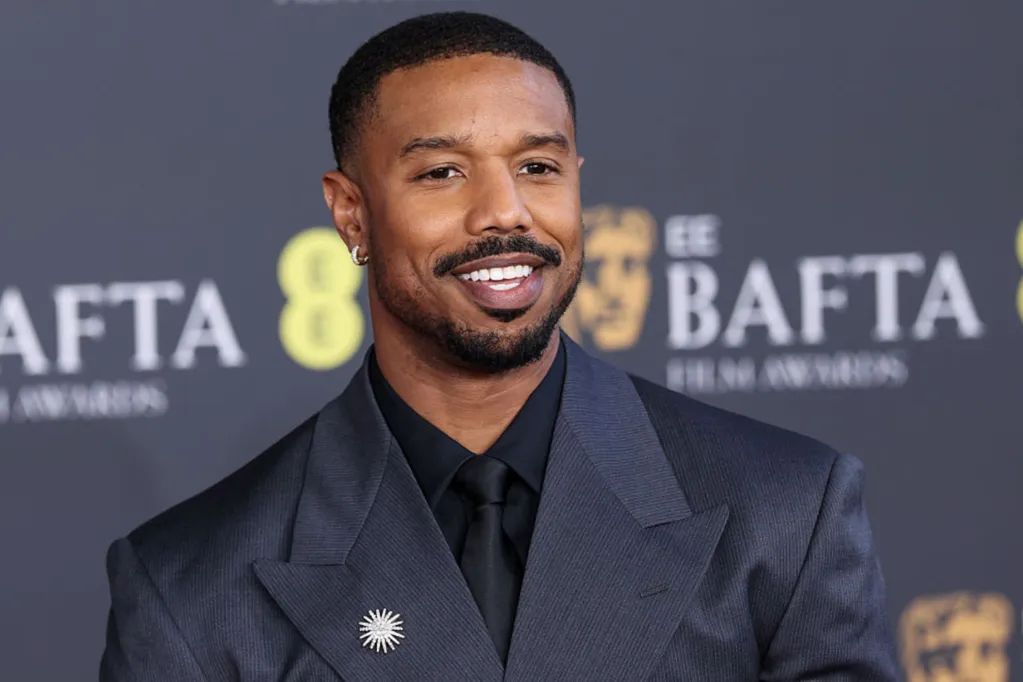
Actor Jamie Foxx has reacted after a Tourette syndrome campaigner shouted a racial slur as Michael B. Jordan and Delroy Lindo presented an award at the British Academy Film Awards (BAFTAs) on Sunday.
John Davidson, who has Tourette's, shouted the n-word when the actors presented the Best Visual Effects award to Avatar: Fire and Ash. Jordan had started to introduce the award when he was interrupted at the awards evening hosted at London's Royal Festival Hall.
Footage of the incident has since gone viral on multiple social media accounts, with Davidson coming under fire despite verbal tics and the involuntary use of inappropriate language being a symptom of Tourette syndrome.
Tourette's is a neurological condition marked by involuntary tics whose symptoms included coprolalia, which causes the involuntary use of obscene or socially inappropriate language.
Davidson was the inspiration behind I Swear, the BAFTA-nominated movie chronicling his life. Robert Aramayo won the BAFTA for Leading Actor on Sunday for his performance as Davidson, beating Hollywood royalty.
In the comments on a video shared by The Neighborhood Talk, Foxx shared his reaction.
He wrote: "Nah he meant that s*" and added, "unacceptable." Foxx provided no evidence for his assertion that Davidson had meant what he said rather than it being a result of his condition.
Newsweek reached out to Jamie Foxx's publicists for comment via email and to John Davidson via Instagram.
Davidson shouted a number of phrases during the first 20 minutes of the awards ceremony including "Boring!", "Bullshit!" and "Shut the f* up" during remarks by BAFTA chair Sara Putt.
Host Alan Cumming thanked the audience for their patience and understanding and said: "You may have noticed some strong language in the background. This can be part of how Tourette's syndrome shows up for some people as the film explores that experience. Thanks for your understanding and helping create a respectful space for everyone."
He later said that the disability can cause sufferers to "have no control over their language" and apologized for any offence.
The BBC said: "Some viewers may have heard strong and offensive language during the BAFTA Film Awards. This arose from involuntary verbal tics associated with Tourette syndrome, and as explained during the ceremony it was not intentional. We apologise that this was not edited out prior to broadcast and it will now be removed from the version on BBC iPlayer."
Tourette's syndrome is a neurological condition marked by involuntary, rapid and repetitive tics -- both motor and vocal. Vocal tics can range from throat‑clearing and grunting to repeating other people's words or uttering phrases unexpectedly. In a smaller subset of individuals, a symptom known as coprolalia causes the involuntary use of obscene or socially inappropriate language, including profanity and slurs
Symptoms of Tourette's can intensify in high‑stress or highly stimulating environments such as live televised events. Tics can intensify when a person is nervous, excited or physically uncomfortable -- all factors that can trigger sudden, context‑inappropriate outbursts.
John Davidson is a campaigner from Scotland who entered the public eye in 1989 after appearing in the BBC documentary John's Not Mad, which shed light on the realities of living with the condition.
Davidson, now 54, first experienced symptoms when he was 12 and was diagnosed aged 25. He has spent four decades advocating for a better understanding of Tourette's.
Robert Aramayo told the BBC of Davidson's comments: "They're tics, he [Davidson] is ticking, and we have to understand that the way we perceive Tourette's is a joint responsibility.
"It's not shouting obscenities, it's not being abusive, it's Tourette's and they're tics."
Tourette's Action UK -- a charity supporting those living with the condition across the U.K. -- said they were "incredibly proud of John, and everyone involved in I Swear" after the BAFTA Awards. The charity said the film had already raised major awareness around Tourette's and the realities people with the condition face.
The charity acknowledged that critical comments such as that from Foxx directed at Davidson after the awards ceremony had been painful to see, but said it was essential for the public to understand that "tics are involuntary" and not a reflection of someone's beliefs or intentions. They added that people with Tourette's can say words they "do not mean, do not endorse, and feel great distress about afterwards," emphasizing that these symptoms are neurological and not intentional.
The charity said the backlash was saddening given Davidson's long‑standing work to educate others, and noted that the night became overwhelming enough that he chose to leave midway through -- something they said reflects the isolation and misunderstanding Tourette's often brings.
"We hope that those commenting will take the time to watch the film, learn about Tourette's, and understand the experiences behind moments like these. Education is key, and compassion makes a world of difference,"