Ahead of the local elections on Thursday 7 May, we have produced short guides to London's 32 boroughs.
Where is it? The London Borough of Camden is in north London and borders the City of London, Westminster, Islington, Haringey, Barnet and Brent.
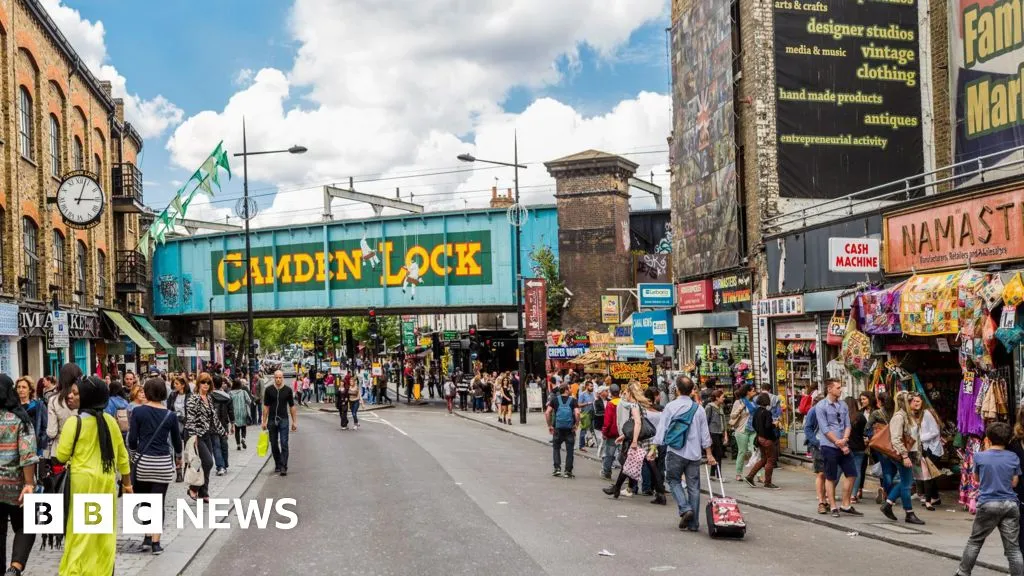
What's it like? A central hub of culture and tourism, Camden is known for its famous markets, artistic heritage and vibrant music scene - but the borough also stretches far into suburban north London.
Neighbourhoods: Bloomsbury, Camden Town, Kings Cross, Holborn, Kentish Town, Euston, Hampstead, Highgate, Primrose Hill, Swiss Cottage and Fortune Green.
Places of interest: British Museum, British Library, the Roundhouse, Camden Town markets, (most of) Hampstead Heath, Primrose Hill, London Zoo, Wellcome Collection, Highgate Cemetery, Kenwood House.
Pub quiz fact: A proposed name for the borough was Fleet, after the subterranean river that runs most of its course through the area.
Population (2024 estimate): 216,943.
Demographics: according to the 2021 census, 59.5% identify as white, 18.1% as Asian, 9% as black, 6.6% as mixed race, and 6.8% as other.
Around 21.3% of residents use a main language other than English, with Bengali, French, and Spanish being prominent.
Average property price: According to the Office for National Statistics (ONS), the average house price in Camden in December 2025 was £784,000.
Average monthly rent: The ONS reported that the average monthly rent in January 2026 in Camden was £2,614.
Council tax: Band D council tax in the borough for 2026/27 is £2,207.
Transport: TfL says there are 17 Tube stations, one Elizabeth line station, nine London Overground stations and around 435 bus stops, as well as Euston, Kings Cross and St Pancras railway stations.
Local history: The area is named after the first Earl Camden, Charles Pratt, who initiated the construction of Camden Town in 1791.
Camden borough has many distinct neighbourhoods with long histories, such as the discovery on Hampstead Heath of human life from around 7000 BC.
For centuries, the area that makes up much of the borough remained undeveloped with the Fleet, Tyburn and Westbourne rivers, and other streams, running through the thick forests.
Swiss Cottage is a relative newcomer, named after a Swiss-style tavern built in the early 19th century, which served as a tollgate. It later became a popular venue, and possibly London's first sports bar.
What is the electoral history?
In 1965, Camden replaced the metropolitan boroughs of Hampstead, Holborn and St Pancras.
Since its formation Camden has mostly been in Labour's hands. The Conservatives ran the council from 1968 to 1971, while there was no overall control from 2006 to 2010.
It has generally been regarded as a safe Labour council. The prime minister, Sir Keir Starmer, is MP for Holborn and St Pancras, which is in the south of the borough.
What happened in 2022?
There was a 35.5% turnout and Labour retained control of the council, winning 47 seats, an increase of four.
- Labour: 47 seats (+4)
- Lib Dem: 4 seats (+1)
- Conservative: 3 seats (-4)
- Greens: 1 seat
Since the election the Lib Dems have won two by-elections.
Professor Tony Travers, of the London School of Economics, said Camden is strongly Labour-held at the moment, but it's one of the boroughs where the Greens are hoping to do really well.
Judging by what we've seen in by-elections in London and other parts of the country, certainly Labour are going to lose seats to the Greens.
The only question is which of those parties remains the biggest but it's likely Camden will go to no overall control.