Tucked away in a small industrial estate in a village is a small team of people who dedicate their working lives to transforming the others' self-confidence.
Banbury Postiche, which has been serving the hair loss and hairdressing industry since 1914, is believed to be one of only two wigmakers in the country still producing wigs from scratch.
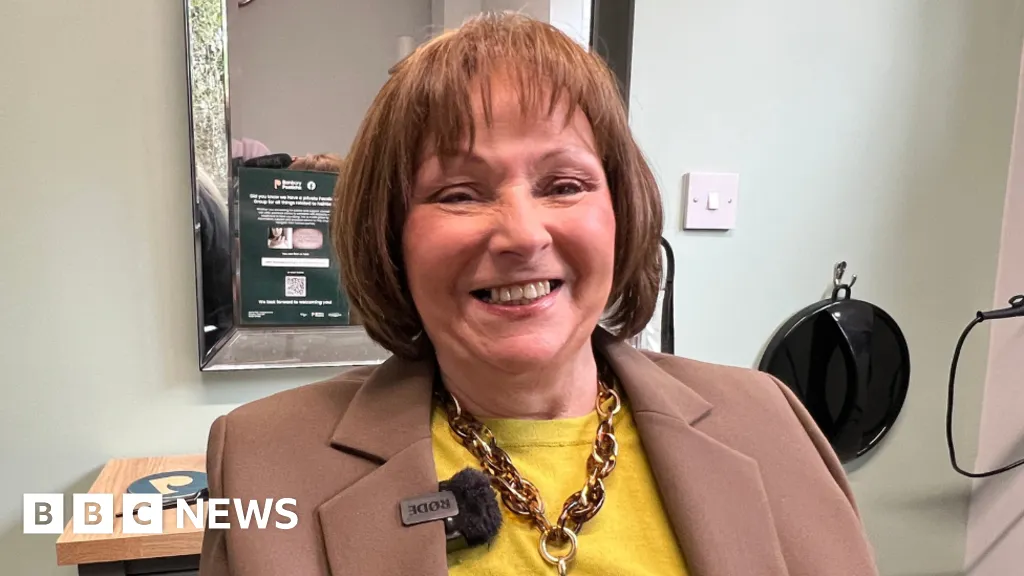
Liz Campbell, who has worn its wigs for many years after losing nearly all of her hair as a young girl, told the BBC that wigs changed her life.
But sales director and co-owner Nick Allen is concerned that wigmaking is becoming a "dying craft".
Campbell, from Northampton, was just two years old when she lost nearly all of her hair in a burning accident, which also resulted in permanent scarring.
The now 78-year-old had seven skin grafts over a period of six years which stopped most of her hair from growing, with some of her hair continuing to grow down the back of her neck.
Despite her and her mum's efforts to hide her baldness, Campbell was bullied in secondary school.
However, as a young adult she discovered a hairdresser in Glasgow who made hairpieces, which gave her confidence "for the first time in a long time".
Then, in her 40s, staff at her local Northampton General Hospital introduced her to Banbury Postiche who made her a bespoke, real-hair "half-head" wig.
Her wig, made of human hair, costs £1,500 and is replaced every year.
Campbell has kept this a secret from many of the people in her life, including from her twins - who are now in their 50s - until they were young teenagers.
"They couldn't understand why I wouldn't go swimming with them," she said.
"It was something that simple and of course I had to just brush that aside, but in the end I spoke to my husband and we decided that we would talk to them and they weren't fazed."
Even today, Campbell has people in her life who have no idea that she wears a wig.
However, she has now decided to speak about it publicly for the first time because "it's not something to be hidden".
"It's not a crime and I'm not ashamed," she said, adding that wearing a wig has made an "immense" difference to her life.
"I had no confidence before... I gained a lot of confidence," she said.
"I wasn't afraid to be in company socially, which I had been.
"It changes your life."
Campbell described the first time she wore a wig as "joyous".
"It was exciting, terrifying, wondering if I could actually handle this, but it was a revelation.
"It was the most wonderful feeling and I couldn't stop smiling all the time.
"I think I probably cried as well."
Banbury Postiche, based in Wroxton, predominantly provides wigs for the NHS and recently shipped off its one millionth to the health service.
It also supplies the materials for wigs for West End theatre productions, including The Greatest Showman and Paddington, and has a working partnership with the Little Princess Trust charity.
Allen says most of the wigs for the NHS are partly funded; however, the bespoke handmade pieces - which can cost anywhere between £1000 and £4000 - are privately funded.
A single wig can take anywhere from 50 to 70 hours to complete, depending on the style and density, with only between eight and 10 wigs produced every month.
Typically, three or four specialists will work on a wig from start to finish, knotting individual hairs one at a time onto a custom fit base.
Wearing a bespoke wig has changed Campbell's life for the better, but there are fears that wigmaking is dying out.
Sales director and co-owner Nick Allen said: "In some ways it is a dying craft and it is a worry."
"I'm really passionate about investing in people and trying to keep this skill within the UK to pass on to other generations."
Niamh McCarthy is a trainee wigmaker learning the skill from Jean Armstrong, who has been making wigs by hand for nearly six decades.
McCarthy said: "This is such a beautiful skill, and it's so important to keep that up.
"It's such a big thing for someone's confidence when someone loses their hair; it can really be a horrible tragedy for someone. So I think to be able to help them in that way is really rewarding."
Myra Cunningham, production manager for The Real Hair Room and wigmaker at Banbury Postiche, holds consultations with people experiencing hair loss—which includes total hair loss, frontal hair loss and thinning hair from the menopause—and sees the process all the way through to the end result.
"We spend a lot of time getting to know people... it can take a long time sometimes for people when they come in to even take a wig off to show us there what's going on underneath," she said.
"I always say it's like asking someone to take their clothes off."
Cunningham said some clients have been coming to Banbury Postiche for decades and are now "like family".
"You build up a friendship," she said.
"There's so much that we've done that's made so much difference to people's lives - it's quite overwhelming to be honest."
And despite Allen's fears about wigmaking being a dying craft, he is feeling hopeful about the future of the industry.
"I am keen to invest in people to keep this craft going," he said.
"I hope I'm doing all I can and I know I've got help from industry to pass on these skills and make it viable.
"It is a difficult economic environment we are in at the minute but we do our very best to make sure that wig making in the UK does continue."