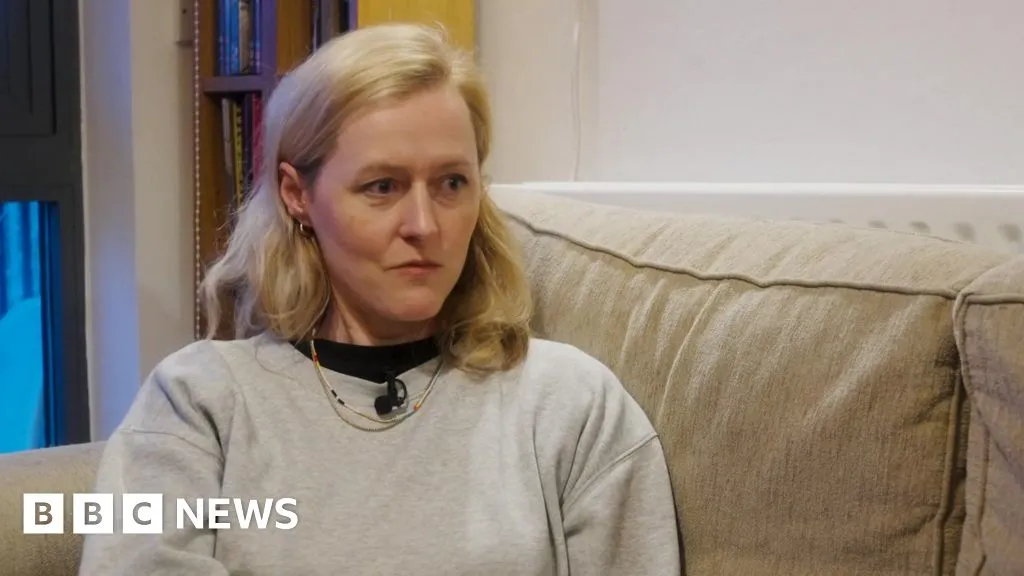
For nearly 20 years, Jordan Rivera has worked as an occupational therapist at Homerton Hospital, while raising her two children in Hackney.
But as rents and property prices continue to rise, she fears she may no longer be able to afford to stay in the east London area she has long called home.
"I really want to stay in this area because I've been living here a long time now. I want to be near my children's school, I want to be near my workplace, but my flat's too small now," she told BBC Politics London.
Her experience reflects wider changes highlighted in new research into gentrification across London, which suggests some neighbourhoods are being transformed at an accelerating pace.
"It's going to be difficult, I think, to find a bigger flat that we can afford in this area," she added.
The analysis, commissioned by Trust for London and carried out by University College London, tracked 25 years of data and focused on 53 neighbourhoods previously identified as gentrified in research published in April.
It found that wealthier people are increasingly moving into these areas from further away, while long-term residents are more likely to be moving out, meaning neighbourhoods are changing quickly and becoming more expensive.
The research also showed those neighbourhoods saw sharp income rises between 2012 and 2020, alongside significant demographic change, including fewer families with children and a drop in the number of black residents.
"These 53 neighbourhoods all had lower than average incomes in 2012 and saw big increases by 2020," the research notes.
"This new analysis illustrates the pace of change and population churn that gentrification is causing."
In Hackney Wick, the transformation is visible street by street, said H Hussein, who has owned Mapps Cafe for 35 years.
"Oh, this has changed a lot, obviously," he said.
Pointing to nearby buildings, he added: "Behind there used to be the bagel factory. That's now, they've still got the name, but it's all flats now."
Hussein said the area was far less desirable when he first arrived in the 1990s.
While he described the new homes as "very nice", he said they were out of reach for many locals with some priced at "over £600,000 for a two-bedroom".
Manny Hothi, chief executive of Trust for London, said the demographic changes highlighted by the research were particularly concerning.
"So in these areas we're seeing a disproportionate drop in black households. We're also seeing really worryingly a drop in children in these neighbourhoods and that's something that's different," he said.
"So if you look back into past the gentrification, you would have still seen children, but now we're seeing less and less children, schools closing, and that is really worrying."
While regeneration has made some neighbourhoods look smarter and feel safer, the research suggests gentrified areas are experiencing housing pressures more intensely than the rest of London, leaving many long-term residents with little choice but to move away from the communities they know.