Nebraska has advanced Medicaid work requirements in a test case for states facing similar decisions by January 2027.
Nebraska's decision to implement federally mandated Medicaid work requirements ahead of schedule marks a pivotal shift in U.S. social safety net policy.
By requiring tens of thousands of low-income adults to document work or qualifying activities to maintain health coverage, Nebraska will become the first state to enforce a significant provision of the 2025 federal law signed by President Donald Trump.
Nebraska will begin enforcing Medicaid work requirements for expansion enrollees on May 1, 2026, eight months before the federal deadline.
The early action follows meetings this week, as reported by local outlet KSNB Hastings, between state Department of Health and Human Services (DHHS) officials and the Centers for Medicare & Medicaid Services (CMS) to coordinate implementation and ensure federal compliance.
It highlights ongoing national debates about public assistance, work incentives, and access to health care for vulnerable populations.
There are fears from health policy experts at Nebraska Appleseed's Health Care Access Program and the health nonprofit KFF that such rules could lead to needy Americans losing Medicaid coverage.
And according to an impact assessment from the Congressional Budget Office, millions are set to lose Medicaid coverage over the next 10 years as a result of new federal policies.
The policy affects able-bodied adults aged 19-64 who qualify for Medicaid under expansion rules (incomes up to 138 percent of the federal poverty level -- $21,610 for individuals, $44,380 for a family of four in 2025).
Affected individuals must complete at least 80 hours of work per month, job training, volunteering, or education to maintain coverage.
The state is notifying nearly 70,000 expansion recipients about the new rules, which stem from HR1, also known as the "One Big Beautiful Bill," signed into law in July 2025.
HR1 bars waivers for the work requirements and prescribes outreach, documentation, and disenrollment procedures for non-compliance.
Exemptions cover categories such as disabled people, foster youths up to age 25, pregnant women, caregivers of young or disabled children up to age 13, disabled veterans with total disability status, medically frail individuals, those compliant with Supplemental Nutrition Assistance Program or Temporary Assistance for Needy Families work requirements, participants in substance abuse treatment, recent inmates, and American Indian tribe members.
Outreach efforts will use mail, phone, and electronic notifications, and Nebraska's DHHS has launched a dedicated website for information and questions.
Nebraska Governor Jim Pillen, a Republican, described the reform as a way to encourage self-sufficiency and connect Medicaid recipients to employment opportunities.
Governor Jim Pillen said in a late-December press conference: "This is a hand up, not a handout. I think it's also important for all of us how rewarding work is. It's a key piece of giving the discipline for our families to be successful. It's a key piece of self-worth. It's a key piece of mental health and stability."
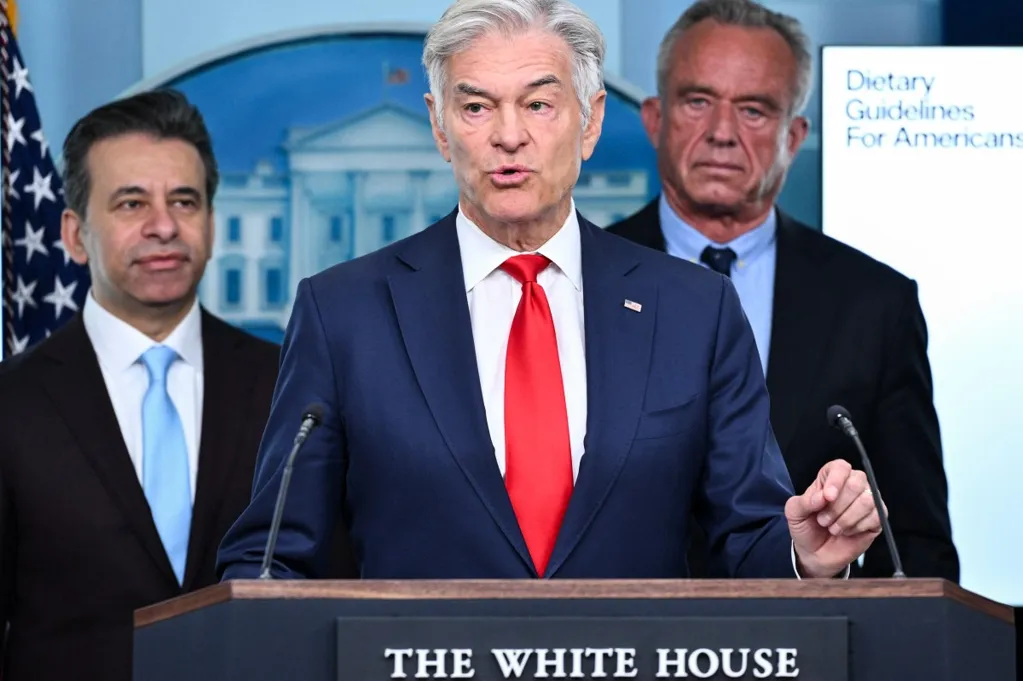
Dr. Mehmet Oz, the federal Centers for Medicare and Medicaid Services administrator, said: "We're connecting these individuals on Medicaid who want Medicaid, free insurance, with options around jobs, education, volunteering."
He added: "We're just going to connect the people who are struggling to find their way with the job opportunities that can allow them to get back on their feet and get back to full employment."
Steve Corsi, director of Nebraska's Department of Health and Human Services, said: "We're initiating the implementation of work requirements by May to ensure that we're ready for the start date by the beginning of next year as laid out in HR1."
Sarah Maresh, program director for Nebraska Appleseed's Health Care Access Program, said: "When you put up more requirements that are unnecessary as well, that you'll see an increase of state errors.
"So we're in particular concerned about that for Nebraska...because we know we're going to be rushing to implement this early and not taking the time Nebraskans deserve...for a variety of reasons, we're anticipating a lot of state errors coming in and causing people to lose coverage.
"We're very, very concerned that we're going to see high rates of error and staff aren't going to be available to help people navigate these significant changes."
Larry Levitt, executive vice president for health policy at KFF, said: "Conceptually, a work requirement for Medicaid enrollees is simple, but actually making it work, especially in a way that avoids eligible people falling through the cracks, is anything but simple."
Nebraska's experience is likely to influence the 41 other states required to implement similar Medicaid work rules for expansion populations by January 1, 2027.
The CMS is scheduled to publish further guidance by June 2026, but Nebraska must navigate exemptions, compliance technology, and outreach during its early rollout.
According to the Congressional Budget Office, as many as 11.8 million Americans could lose Medicaid coverage over 10 years due to provisions in HR1, with approximately 4.8 million losses directly attributed to work rules.