Forbes contributors publish independent expert analyses and insights.
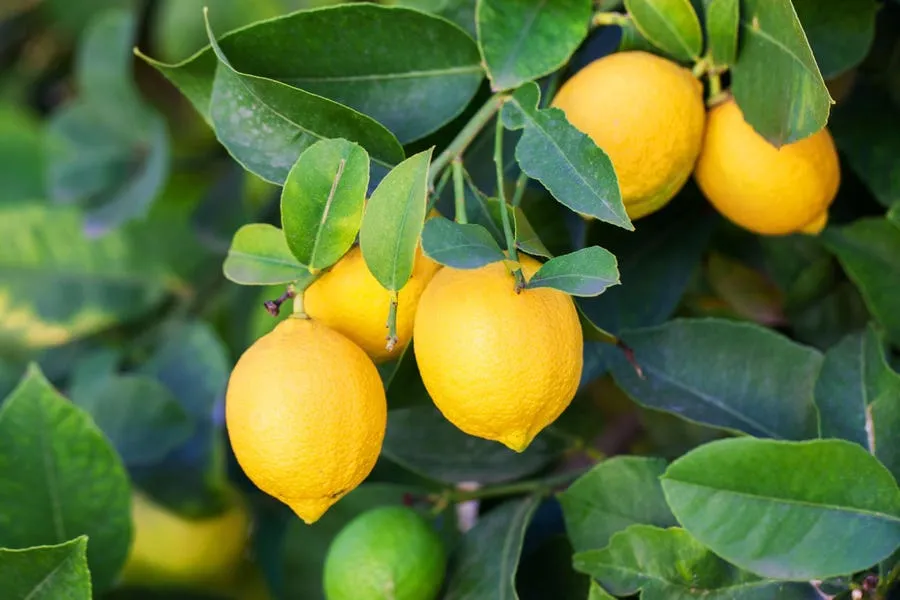
Most people see the lemon as one of countless simple products of nature: a bright yellow fruit that has always existed on its own terms. However, the lemon is not a gift from the wild in the same sense that most fruits are. In reality, it's actually a biological invention that we humans shaped as a result of ancient hybridization events and centuries of careful cultivation.
Long before genetics or plant breeding were well-established fields of research—in the 1st millennium BC—early growers in Southeast Asia were already making decisions that would transform wild citrus species into the sharp, aromatic fruit we know today. Here's how, according to research.
As classic botanical research published in the Bulletin of the Torrey Botanical Club explains, the lemon (Citrus limon) is the child of two older fruits: the bitter orange (Citrus × aurantium) and the citron (Citrus medica). Yet, strangely, neither parent resembles the bright, intensely acidic fruit we know today. Instead, thousands of years ago, humans selected for highly specific traits that didn't naturally occur: higher acidity, thicker rind and a sturdier peel that could travel well.
According to the Bulletin of the Torrey Botanical Club study, the lemon appears to have been created somewhere in northern India or northern Myanmar. Thereafter, over the following centuries, it was refined through selective cultivation. This means that, much like domestic dogs emerged from wolves through selective breeding, lemons emerged from the deliberate crossing and selecting of ancestral citrus. In other words, nature didn't make lemons; people did.
The reason for the lemon's emergence is simple. That is, humans wanted a fruit that did what no natural fruit could at the time: preserve food, mask spoilage flavors, disinfect surfaces and add an intense punch of acidity to cooking. Once it had been created, lemons spread rapidly along trade routes as biochemical multipurpose tools, which could be used as medicine, seasoning and as a long-distance preservative.
For decades, the precise botanical origins of the lemon have been debated. Fortuitously, a 2016 study published in Annals of Botany used a massive genetic analysis—combining chloroplast DNA, mitochondrial markers and over 120 different nuclear markers—across 133 citrus varieties and wild relatives. In doing so, the researchers were able to reconstruct how modern lemons and limes came to be.
The results showed that lemons are highly heterozygous and the product of multiple interspecific hybridization events involving several ancestral citrus taxa. This means, in simple terms, that their DNA is highly diverse; there are traces of various different citrus fruits, with citron being the ultimate common ancestor.
It's worth noting, however, that lemons aren't the only selectively cultivated fruits in history. All citrus fruits are unusually easy to hybridize, and humans took full advantage of this. A separate 2016 DNA-marker study published in PLOS One traced lemons' parentage across hundreds of citrus varieties and confirmed just how tangled citrus family trees really are:
This means that the citrus aisle at your local grocery store is essentially a showroom of human‑shaped biodiversity. Unlike many "wild" fruits—that are typically small, seedy and bitter—the citrus we know were refined meticulously for flavor, ease of harvest, storage, as well as culinary and cosmetic utility. Human beings, as early farmers, traders and horticulturalists, fundamentally altered the course of citrus evolution intentionally or otherwise.
However, citrus' natural biology also played a pertinent role in this process. The genus tends toward hybridization, which makes it possible for many species to interbreed. This, in turn, gives both humans and pollinating insects a rich palette to mix and match traits across species. Once early hybrids with useful traits emerged, they were easily propagated by means of grafting and cuttings. Ultimately, this process ensured that desirable traits were preserved generation after generation.
So even if the initial hybridization event was "natural"—whether that was courtesy of cross‑pollination, bees or overlapping growing zones—humans were nevertheless the ones who recognized the utility of this; we chose the fruits worth keeping, and we propagated them widely.
Over centuries and millennia, this is what shaped citrus from an obscure forest fruit to the global staple we know today.
Understanding the origins of the citrus fruits we enjoy today reveals how profoundly early humans have shaped modern-day ecosystems and biodiversity. Fascinatingly, they did so long before modern genetics or laboratory science existed. In this sense, cultivation and domestication might just be ancient human arts rather than the "modern" inventions we think them to be.
When we describe fruits as "organic" or "natural," we often only mean to imply that they simply grow on trees. Yet many of the fruits we consider natural (lemons included) have forms that are deeply shaped by human intervention. Acknowledging this helps us rethink our assumptions about what "natural" or "authentic" foods are.
There are important implications for biodiversity as well. Modern lemons descend from a relatively narrow genetic base that traces back to a few hybridization events. Because many commercial varieties are propagated clonally, they may be more vulnerable to disease, pests, or environmental change. Protecting wild citrus relatives and maintaining genetic diversity is critical for long-term crop resilience.
The story of the lemon is ultimately a story of human ingenuity. Every time you squeeze one over a dish or into a glass of water, you are using a tool shaped by countless generations of growers.