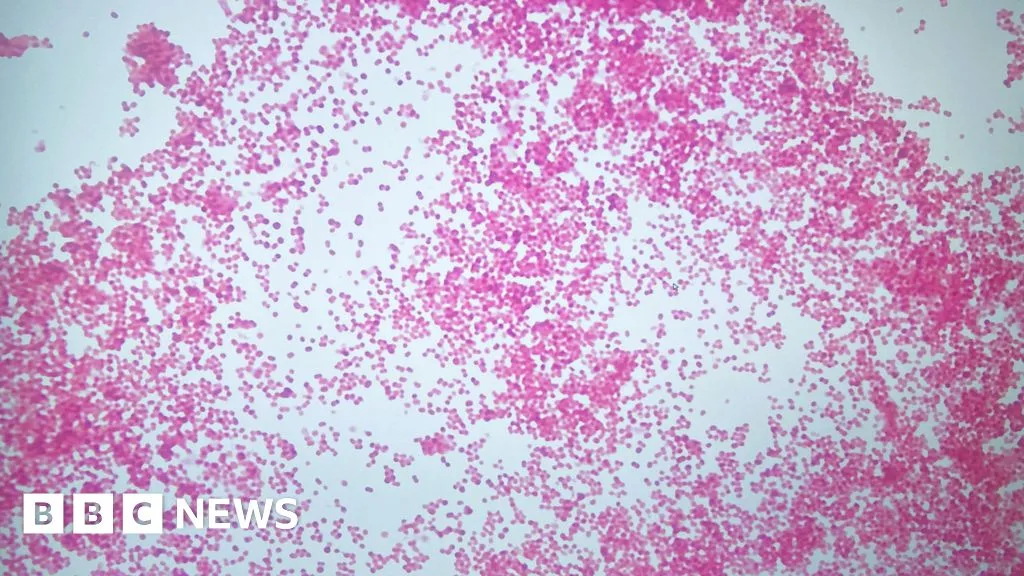
Health officials in Northern Ireland have reassured parents that a suspected case of a disease that can cause meningitis in a school pupil is not related to the ongoing outbreak in England.
The suspected case of Meningococcal disease has been detected in a student at Bloomfield Collegiate School in Belfast.
Dr Jillian Johnston, from the Public Health Agency (PHA), said the person is in hospital and is receiving treatment but it is not yet confirmed whether they have meningitis.
The Meningococcal disease can cause meningitis which is a bacterial infection that can infect both the brain and or cause general septicaemia.
The PHA said there is no increased risk to the population in Northern Ireland.
"We are quite content that this is not in any way related to what is happening in England," Johnston said on Good Morning Ulster.
She added that doctors by law have to inform the PHA of suspected cases of Meningococcal disease and "we have standard actions we have to take".
"For any cases we follow the national guidance and for a single case where we feel it is most likely to be meningitis, we will do what is called contact tracing and identify close contacts."
She said for a single case the close contacts are those who are in a prolonged close contact which tends to be people living in the same household.
In this case, Johnston said: "We have identified those living in the household and they have been offered antibiotics."
She added that it as important for people to be aware of the signs and symptoms of meningitis and take action if anyone is concerned.
Symptoms of meningitis develop suddenly and can include:
- a high temperature (fever) over 37.5C (99.5F)
- being sick
- a headache
- a blotchy rash that doesn't fade when a glass is rolled over it (this won't always develop)
- a stiff neck
- a dislike of bright lights
- drowsiness or unresponsiveness
- seizures (fits)
Babies may also:
- refuse feeds
- be agitated and not want to be picked up
- have a bulging soft spot on their head (fontanelle)
- be floppy or unresponsive
- have an unusual high-pitched cry
- have a stiff body
These symptoms can appear in any order and some may not appear.
There are five main groups of meningococcal bacteria that can cause meningitis and septicaemia - A, B, C, W and Y.
In Northern Ireland, young babies receive the Men B vaccine as part of the childhood immunisation programme.
The MenACWY vaccine helps protect young people against four different causes of meningitis and septicaemia: meningococcal groups A, C, W and Y disease.
You only need one dose of the vaccine, it is given as a single injection in the upper arm.
Pupils in Year 11 are automatically offered the vaccine in school by the school health team, with a second chance to have it again in Year 12, if they missed out the first time.
If you're aged 25 or under, at university for the first time and have not yet had the MenACWY vaccination, you can ask your GP for the vaccine.
The PHA said if your child has missed a vaccination, contact your GP practice to book an appointment to make sure they have maximum protection against disease.